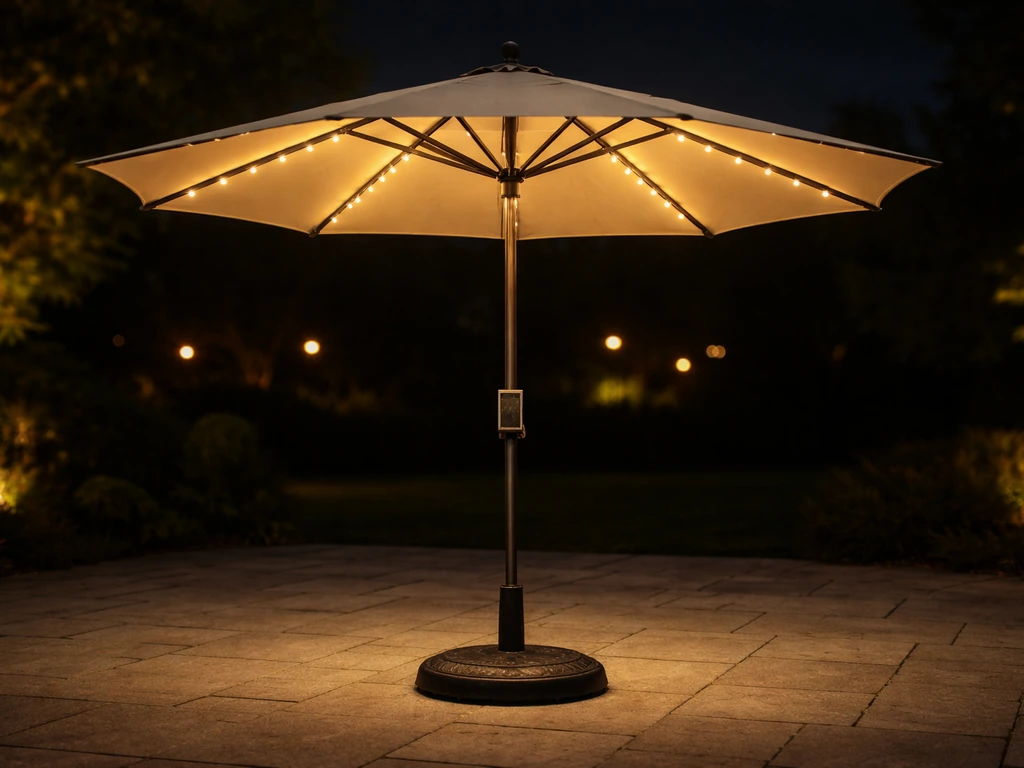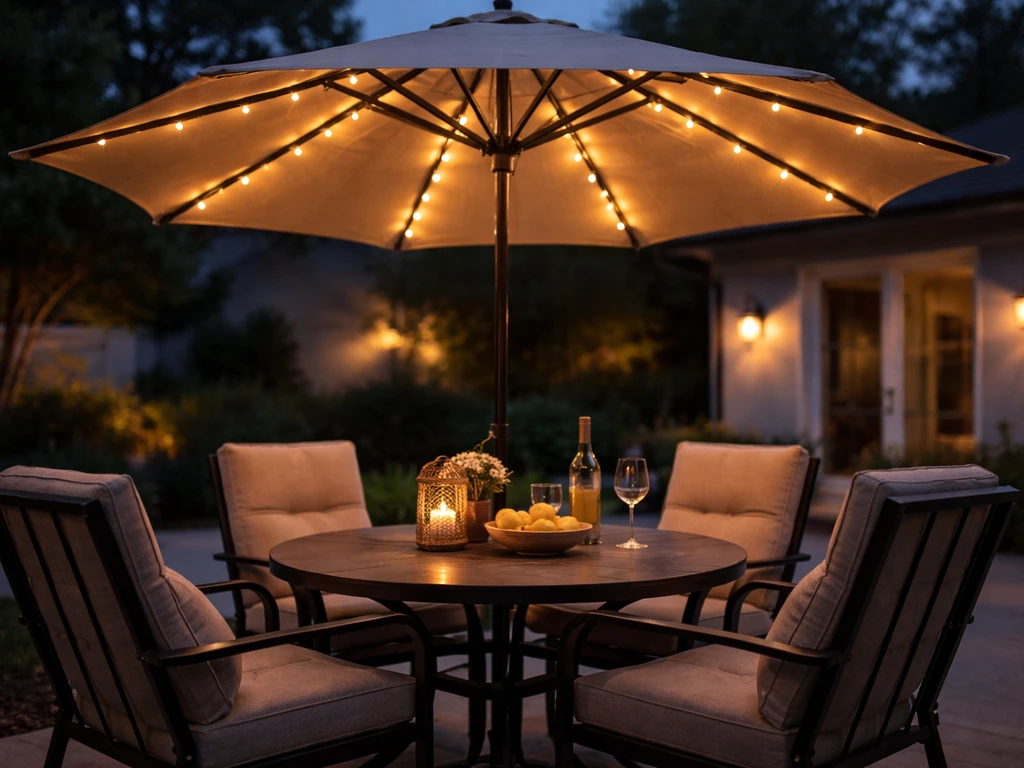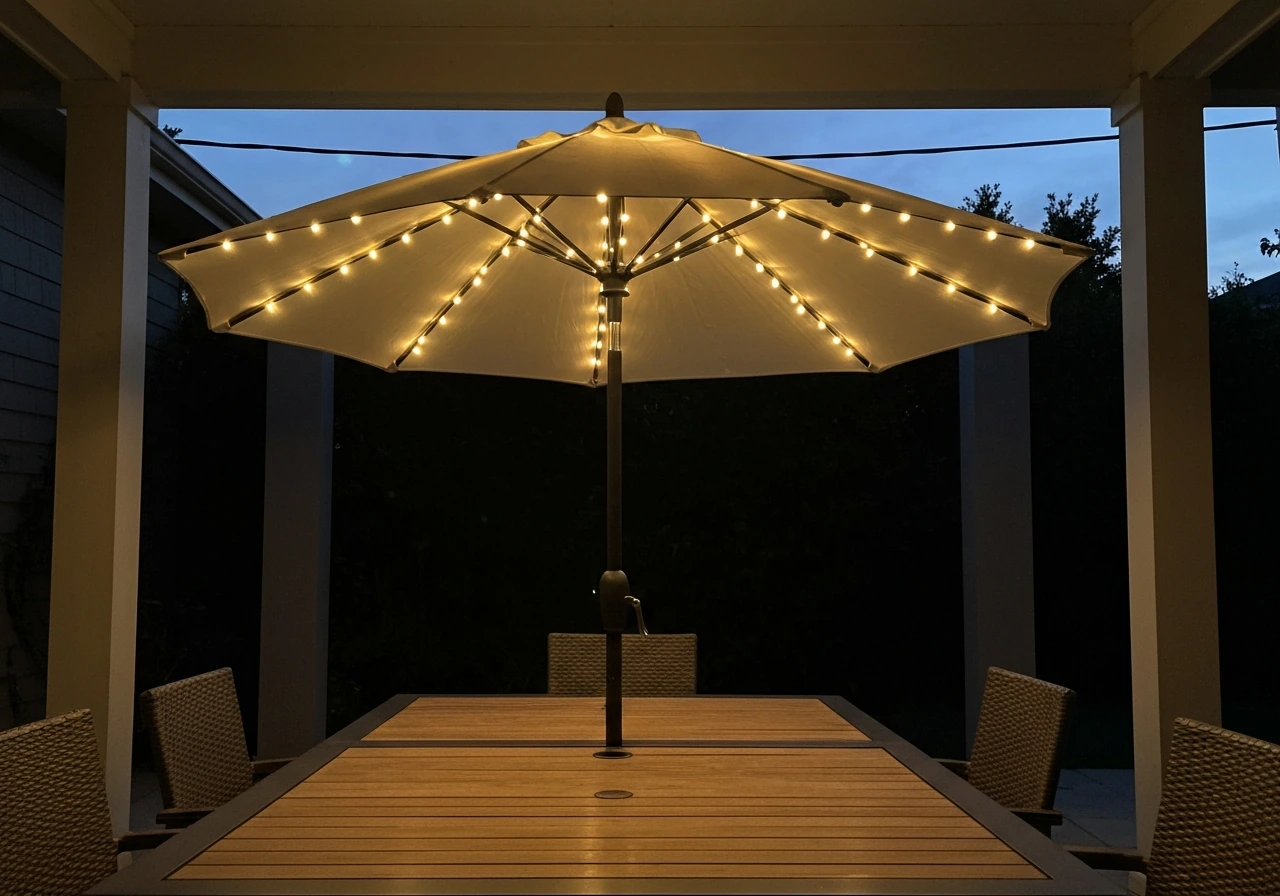
Solar patio umbrella lights give you 6 to 12 hours of ambient illumination on a full charge, but the real-world gap between a good setup and a frustrating one comes down to three things: whether the solar panel gets enough direct sun, whether the IP rating actually matches your weather, and whether the light configuration fits your specific umbrella style and size. Get those right and you'll have a reliably lit patio all summer. Get them wrong and you're left with dim, flickery lights that die by 10 PM.
Solar Patio Umbrella Lights Reviews: What to Buy and Expect

Kent Lang
30 Jun 2026
What solar patio umbrella lights are and how they actually work
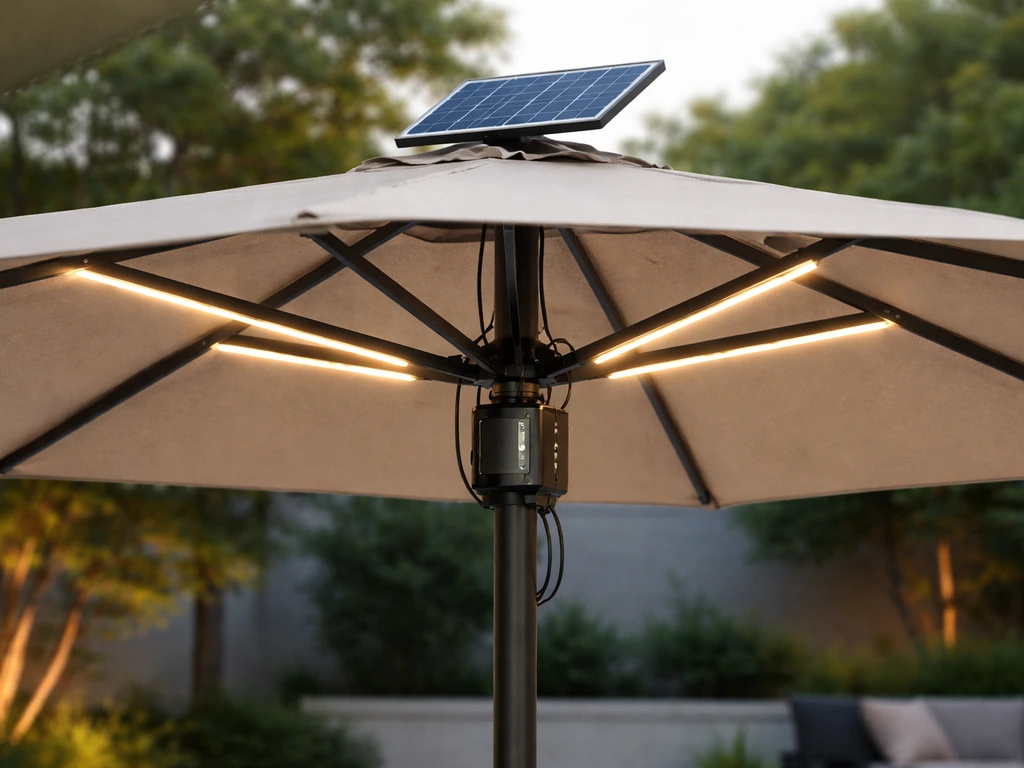
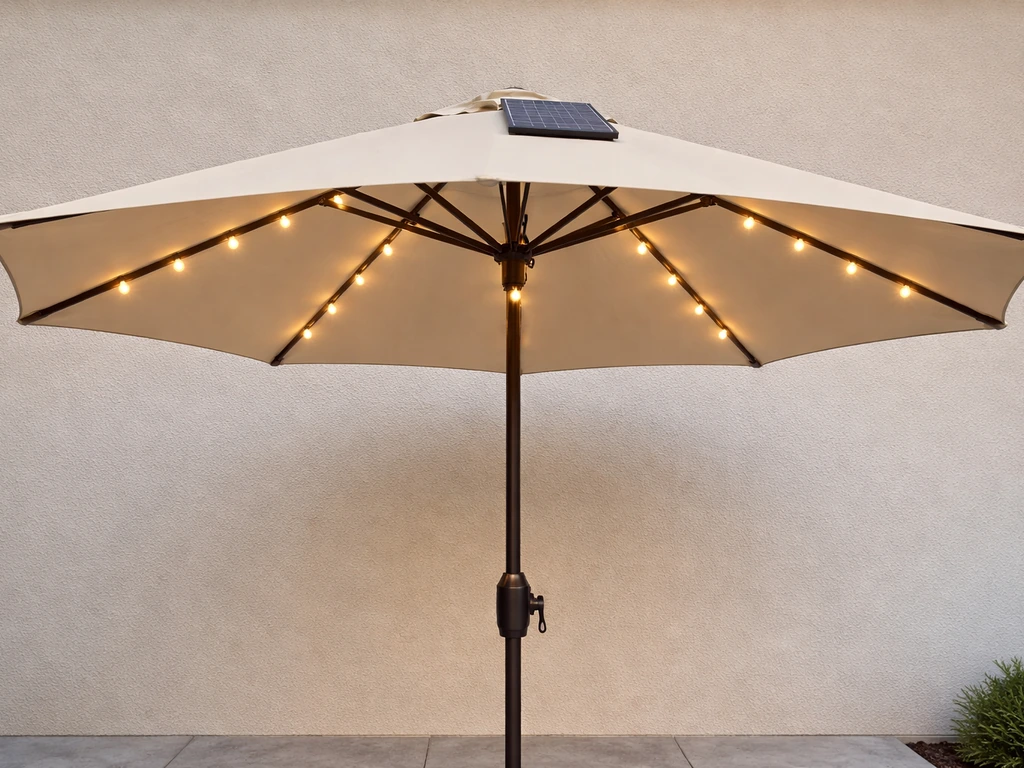
Solar patio umbrella lights are LED lighting systems built specifically to run off a small photovoltaic panel mounted on or integrated into the umbrella itself, usually near the finial or canopy ribs. The panel charges a rechargeable battery during daylight hours. At dusk, a built-in photocell sensor detects the drop in light and triggers the LEDs automatically. Most systems are self-contained: no outlet, no extension cord, no electrician needed.
The physics are simple. A solar panel converts sunlight into electrical current, which flows into a lithium-ion or NiMH battery pack. Better systems use lithium-ion because it handles more charge cycles and tolerates temperature swings better. The panel needs a meaningful daily dose of direct sun to top off the battery. Most manufacturers specify 6 to 8 hours as the target, and that first-charge recommendation (charge 8 hours before initial use) appears in nearly every manual for a reason: the battery ships partially depleted and needs a full cycle to establish capacity.
On the output side, expect warm-white LEDs in the 3000K range and a total output somewhere between 50 and 150 lumens across the full canopy. That's ambient, atmosphere-level lighting, not task lighting. You can read a menu under it, but you're not going to replace a floodlight. Anyone who buys solar umbrella lights expecting to light up a large entertaining space like overhead string lights is going to be disappointed. To choose the best outdoor patio umbrella lights, focus on even coverage, realistic runtime, and weatherproofing like an IP65 rating. Set the expectation correctly and these systems are genuinely satisfying.
Key features to look for before you buy
Brightness and coverage
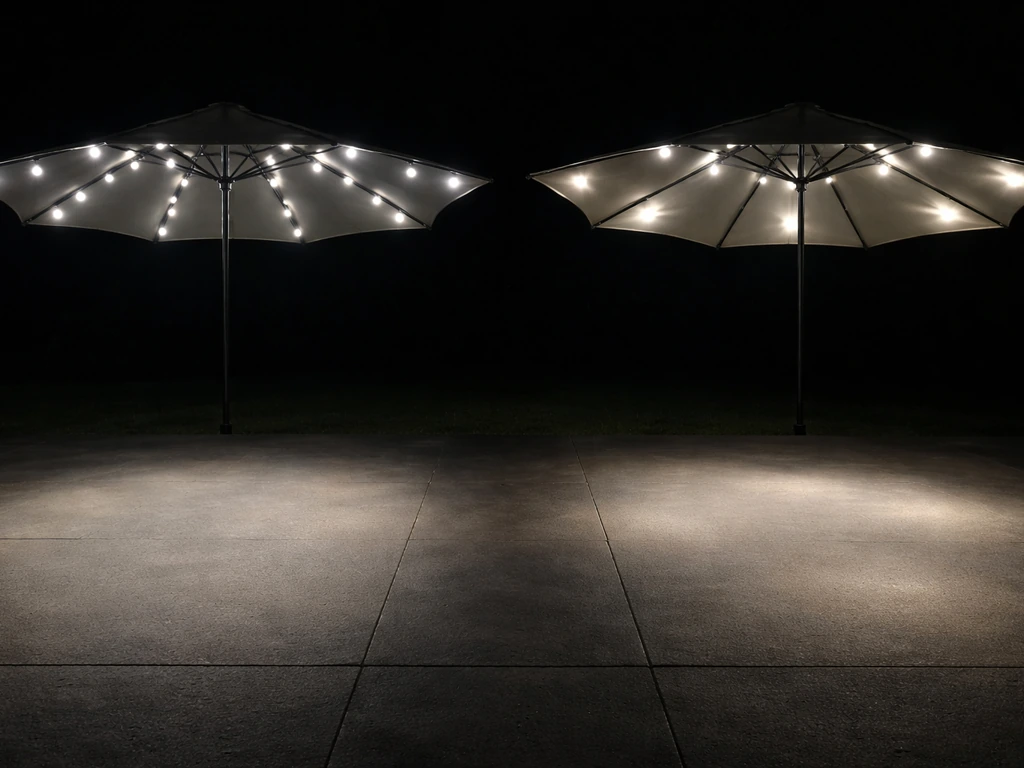
Total lumen output matters less than how the LEDs are distributed. A 100-lumen system with LEDs spaced evenly along all eight canopy ribs will feel noticeably brighter and more pleasant than one with 120 lumens clustered near the center. Look for products that specify LED count per rib and total LED count. For a 9-foot umbrella, 24 to 32 LEDs spread across the ribs gives decent even coverage. Fewer than 16 LEDs on any canopy larger than 7.5 feet will feel sparse.
Battery capacity and runtime
Battery capacity is listed in milliamp-hours (mAh). For a standalone clip-on or add-on solar light string designed to fit an umbrella pole, a 3600 mAh pack (sometimes sold as two 1800 mAh cells) is a reasonable baseline for 6 to 8 hours of runtime on a standard brightness mode. Integrated umbrella systems can go much larger: premium canopy-integrated designs list capacities in the 38,000 mAh range, which supports the 10-hour runtime claims you'll see. Runtime claims in manufacturer listings are almost always measured on the lowest brightness setting with a fully charged battery in warm conditions. Real-world runtime is typically 15 to 20 percent shorter.
Light modes and controls
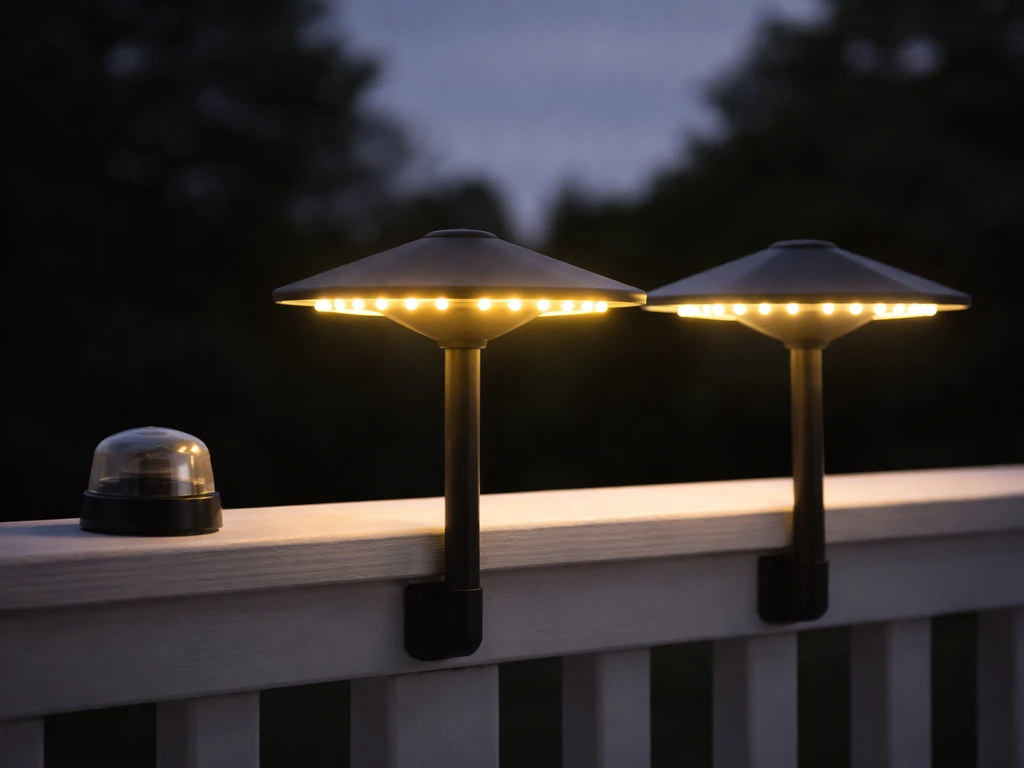
Most systems offer at least two modes: steady-on and a lower-power mode like a slow fade or reduced brightness. A dusk-to-dawn photocell sensor handles automatic on/off for integrated umbrella lights, which is convenient but can malfunction (more on that in the troubleshooting section). Add-on string-style lights often include a remote or a simple push-button cycle. If you entertain into the late evening regularly, prioritize systems with a manually selectable high-brightness mode rather than relying solely on auto-dim.
IP weatherproof rating
IP ratings follow the IEC 60529 standard. The second digit (the one after 'IP6X' or 'IP4X') describes water resistance. IPX4 means the unit survives splashing water from any direction. IP65 means it handles low-pressure water jets. IP67 means it can be submerged briefly. For a patio umbrella light that will see rain and morning dew, IP65 is the practical minimum for peace of mind. IPX4 is adequate in mild climates but marginal in areas with heavy rain or coastal humidity. Critically, an IP rating only covers water ingress at the time of testing. It does not guarantee UV resistance, corrosion resistance, or long-term sealing after thermal cycling across seasons. A product rated IP65 can still fail in year two if the seals degrade from UV exposure.
How to evaluate reviews: the framework that actually matters
Most solar umbrella light reviews fall into two camps: manufacturer spec sheets dressed up as reviews, and genuine user feedback buried in product listings. The useful framework focuses on whether advertised runtime looks achievable based on battery capacity and LED draw, how the product holds up after a full season rather than just unboxing, and whether coverage is actually even on a real canopy rather than a studio photo. When reading user reviews, filter for comments left after 3 to 6 months of ownership. That's when battery degradation, seal failures, and sensor problems show up.
The specific factors worth comparing across products are: actual lumen output vs. claimed, battery capacity in mAh, solar panel size (larger panels charge faster and matter more in partially shaded yards), IP rating and real-world weather reports from users in rainy climates, attachment method (rib clips, pole wrap, or integrated), cable routing and strain relief quality, and availability of replacement batteries. That last one is underrated. A light system that delivers two good seasons and then requires a full product replacement because the battery isn't user-replaceable is a worse value than a slightly dimmer system with a swappable cell.
| Feature | Minimum Acceptable | Better Target | Why It Matters |
|---|---|---|---|
| Battery capacity | 1800 mAh | 3000+ mAh | Longer runtime, more charge cycles |
| IP rating | IPX4 | IP65 or higher | Real rain protection, not just splash |
| LED count (9ft umbrella) | 16 LEDs | 24–32 LEDs | Even coverage across ribs |
| Charge time (full) | 8 hours direct sun | 6–7 hours | Usable in less-than-perfect sun |
| Runtime (high mode) | 5 hours | 8+ hours | Covers a full evening |
| Panel size | Not specified | Larger clip/panel | Faster charge in partial shade |
| Battery replacement | Not possible | User-replaceable | Multi-season longevity |
Which lights work best for your umbrella style and size
Market umbrellas (7.5 to 11 feet)
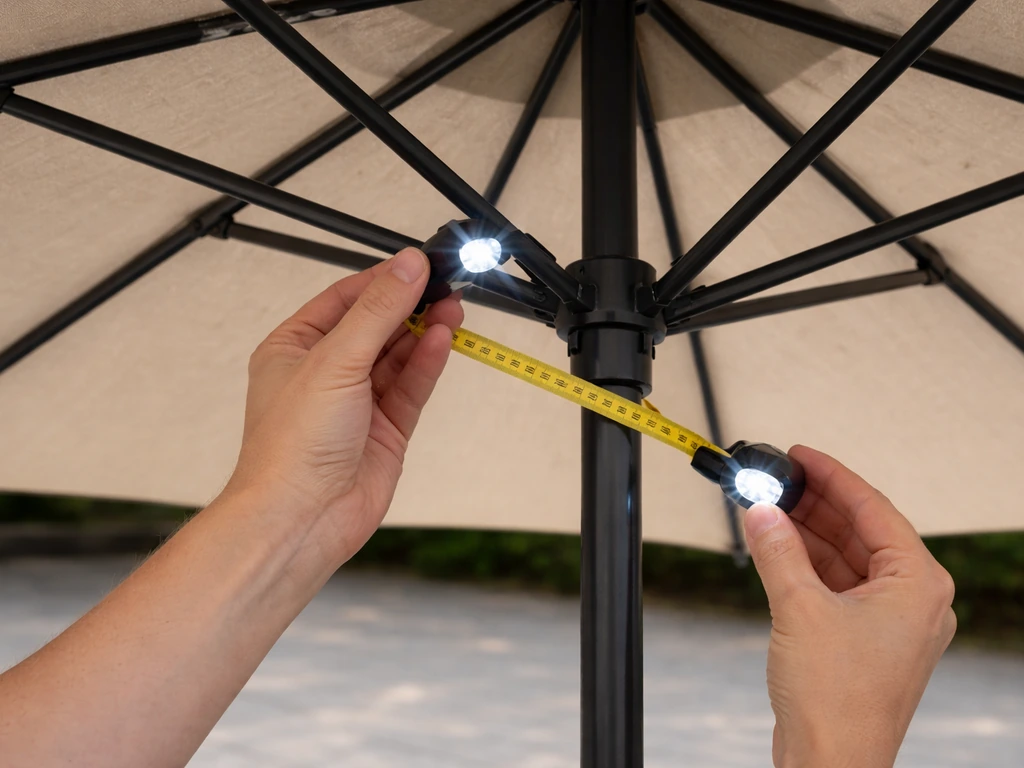
Market umbrellas are the most common setup and have the most compatible lighting options. The straight center pole and standard rib configuration (usually 8 ribs) make clip-on rib lights and pole-mounted solar panels easy to attach and route. For a 7.5-foot market umbrella, a 16 to 24 LED system is sufficient. For a 9-foot canopy, aim for 24 to 32 LEDs. If you want the easiest shopping path, start by comparing the best solar patio umbrellas for your exact umbrella size and mounting style. For 11-foot canopies, you want 32+ LEDs or a system specifically designed for larger spans, because standard 9-foot kits will look dim at the perimeter. The solar panel on market umbrella systems typically clips to the top of the pole near the finial, where it gets the best sun exposure. Make sure any clip-on system you buy specifies pole diameter compatibility: standard market umbrella poles run 1 inch to 1.5 inches in diameter.
Offset and cantilever umbrellas (9 to 11 feet)
Offset and cantilever umbrellas are trickier. Because the pole is off to the side or the canopy hangs from an arm, the solar panel placement is less predictable and the canopy may spend part of the day in its own shadow depending on how it's positioned. Integrated lighting systems (where the LEDs and panel are built into the umbrella at the factory) are a significantly better fit for cantilever setups than aftermarket clip-on kits. Integrated lighting systems (where the LEDs and panel are built into the umbrella at the factory) are a significantly better fit for cantilever setups than aftermarket clip-on kits, which is why they often show up in the best patio umbrellas with solar lights short list. Factory-integrated designs route the wiring through the ribs and housing cleanly, which reduces failure points. If you're adding lights to an existing cantilever, look for kits that include a separate mounting option for the solar panel on the post rather than the canopy, so you can angle the panel toward the sun independently of where the shade is pointing. The assembly manuals for cantilever solar umbrella systems consistently reinforce the same first-use guidance: blank" rel="noopener noreferrer">charge 8 hours in direct sun before first use, and make sure the LED switch is in the off position while charging so the panel isn't wasting stored energy.
Large-canopy and premium integrated setups
For 10-foot and larger canopies where you want serious coverage, integrated systems using flexible photovoltaic cells built into the canopy ribs are the top-tier option. These avoid the single-point solar panel bottleneck entirely by harvesting light across a larger surface area. Claimed runtimes of up to 10 hours with large lithium-ion packs are more credible in this category than in clip-on aftermarket products. The trade-off is cost and the fact that when the integrated lighting system eventually fails, you're often looking at replacing the entire umbrella rather than a modular component.
Installation, panel placement, and keeping the battery healthy
Installation on market umbrellas is usually straightforward: clip the LED strands to the ribs, route the wire down the pole, and attach the solar panel to the top. If you also want shade, pick a patio setup like the best patio parasol models that work well with solar lighting solar umbrella lights. The detail most people skip is checking that the panel has a clear, unobstructed line to the sky. Partial shade from nearby trees or the umbrella canopy itself during afternoon hours will cut charging significantly. If your umbrella is in a spot that gets direct sun for less than 5 hours, solar umbrella lights are going to underperform regardless of what the product page promises.
For battery longevity, a few habits make a meaningful difference. Always do the full 8-hour initial charge before first use. Turn the LEDs off (or cover the panel) when you won't use them for several days so the battery doesn't sit at a very low state of charge. Before storing for winter, charge the battery fully, then switch the system off. Leaving lithium or NiMH batteries fully discharged for months accelerates permanent capacity loss. Some manuals specifically recommend removing the battery for extended off-season storage to prevent discharge-related damage. Clean the solar panel with a damp cloth periodically: even a light film of dust or pollen can cut charging efficiency noticeably.
Common problems and how to fix them
Lights too dim or uneven coverage
This is the most common complaint, and it's usually a spec mismatch, not a defect. A kit designed for a 7.5-foot umbrella stretched across a 9-foot canopy will look dim at the tips. Before assuming your lights are failing, check whether the LED count and canopy size match. If you want a specific option, look for a better homes and gardens patio umbrella with solar lights that matches your umbrella size and expected runtime solar umbrella lights. If they do match and output still seems low, the battery may not be fully charged: move the umbrella to the sunniest spot in your yard for a full day and retest.
Short runtime (lights dying before midnight)
Runtime drops for three reasons: battery hasn't been fully charged (insufficient daily sun), battery capacity has degraded over time, or the lights are running on the highest mode. Try switching to a lower mode if available, and run a dedicated full-charge day in direct unobstructed sun. If runtime was previously better and has shortened over one or two seasons, the battery is degrading. For systems with user-replaceable batteries, a fresh cell will restore most of the original performance.
Flicker or unreliable on/off
Flicker usually points to a loose connection, a corroding contact, or a failing photocell sensor. Check that all connector junctions are fully seated and that water hasn't gotten into the connection points. The photocell sensor issue is less obvious: a malfunctioning sensor can read ambient light incorrectly and cycle the lights on during the day (draining the battery) or fail to trigger at dusk. One diagnostic: if shining a flashlight directly on the solar panel causes the lights to behave strangely, the photocell or its logic circuit is likely failing. Replacing the full light module (rather than just the panel) is usually the fix at that point.
Lights not turning on at all after rain or storage
After extended storage or heavy rain, the first step is always a full recharge in direct sun for 8 to 12 hours with the LEDs switched off. Many apparent failures after winter storage are simply deeply discharged batteries that need a full recovery charge. If the panel is visibly clean and positioned correctly and the battery still won't hold a charge after a full day in the sun, the battery has likely reached end of life. For systems where the panel can be carefully twisted off for service (as described in some cantilever umbrella manuals), you can replace the battery without buying a new system.
Your buying checklist before you commit
Before settling on a specific solar umbrella light system, work through this checklist. It saves a return trip and a lot of frustration.
- Measure your umbrella canopy diameter and pole diameter. Confirm the lighting kit is rated for that size canopy and that pole clips fit your pole (standard range is 1 to 1.5 inches).
- Count your ribs. Most kits assume 8-rib umbrellas. A 6-rib or 12-rib canopy needs a different LED spacing or a flexible kit that can accommodate non-standard rib counts.
- Check how many daily direct sun hours your umbrella location gets. If it's fewer than 5 to 6 hours, no solar system will perform reliably. Consider a hardwired or battery-only LED kit instead.
- Require at least IP65 waterproofing if you live anywhere with regular rain or coastal humidity. Accept IPX4 only in genuinely dry climates.
- Look for battery capacity of at least 3000 mAh for a 9-foot umbrella. For larger canopies or longer evening entertaining, push for 3600 mAh or higher.
- Confirm whether the battery is user-replaceable. For anything you plan to use more than two seasons, this matters more than most people realize.
- Verify the solar panel placement works for your umbrella style. For cantilever setups, look for a kit where the panel can be positioned independently of the canopy angle.
- Check for a high-brightness manual mode if you want flexibility for late evenings rather than relying solely on the auto-dim dusk sensor.
- Read reviews from verified buyers who have owned the product for at least one full season, specifically looking for comments on weatherproofing and runtime consistency over time.
- If buying an integrated umbrella with lighting built in, ask how the lighting module is serviced or replaced. The best umbrella in the world becomes frustrating if the lights fail and there's no path to repair.
If you're still deciding between a lighting-integrated umbrella and adding aftermarket lights to an umbrella you already own, the integrated route wins on reliability and aesthetics while the aftermarket route gives you more flexibility to upgrade or replace components independently. Either way, the specs above are your baseline: 3000+ mAh, IP65, a panel in direct sun, and a LED count matched to your canopy size. Hit those four targets and you'll have a setup that performs through a full outdoor season without the headaches that dominate the one-star reviews.
FAQ
Why do solar patio umbrella lights reviews disagree so much about runtime?
Look for at least two things on the listing: a realistic claimed runtime that matches the battery size and mode (high vs low) and an LED distribution detail (LED count per rib or along the canopy). If a review only mentions “10 hours” without stating brightness mode, treat it as a best-case low-mode number and plan on shorter performance in real yard conditions.
My solar umbrella lights used to last longer. What should I check before assuming they’re defective?
First confirm you are meeting the charging requirement: the panel needs direct sun for most of the day, ideally uninterrupted. Then check whether the lights are stuck in the highest-brightness mode, which can cut runtime dramatically. If runtime used to be better, battery aging is the most common cause after 1 to 2 seasons.
Can solar patio umbrella lights work in a yard with afternoon shade?
Yes, but only if the installation keeps the panel’s view of the sky clear. For many kits, a shaded or partially blocked panel (trees, nearby umbrellas, or a wall) can reduce charge so much that evening brightness feels “broken” even though the LEDs are fine. Integrated or rib-harvest designs usually tolerate partial shading better than single-panel clip kits.
If the lights are IP65, should I expect them to survive heavy rain and winter?
Water resistance (IP rating) does not equal corrosion-proof longevity. Even an IP65 product can still fail over time if seals degrade from UV exposure, repeated heat-cool cycling, or repeated cycles of wet then freezing conditions. If you live where it freezes, look for user comments about winter survival and keep the umbrella covered when not in use.
Are solar patio umbrella lights batteries replaceable, and does it affect value?
For integrated systems, the battery is often not meant to be swapped by users, so you may have to replace the umbrella or the full light module when the pack ages. For aftermarket string or add-on kits, prioritize products that explicitly offer replacement batteries (often as a separate SKU). This is one of the biggest drivers of long-term value.
How do I know whether my solar light kit is the wrong size for my umbrella?
If your umbrella is larger than the kit’s intended canopy size, brightness will look weak at the perimeter no matter what the lumen claim says. Match the LED count and spacing to your umbrella diameter, and if you have a 9-foot (or larger) canopy, avoid kits intended for smaller umbrellas even when the panel and battery seem “strong enough.”
Are warm-white (around 3000K) solar umbrella lights actually the color I’ll want at dusk?
Warm white is common, but “3000K” on a spec sheet is not the same as actual perceived color in your specific shade and surrounding lighting. If you dislike the look, check user photos at dusk (not only daytime photos) and look for descriptions of color quality (yellowish vs neutral).
How should I interpret mAh and claimed “hours” on product pages?
Battery capacity claims in mAh are most useful when you also account for the brightness mode. High mode can draw enough extra power that the same battery delivers noticeably shorter runtime. If the product offers a low mode like a fade or reduced brightness, it’s typically the mode most consistent with manufacturer runtime claims.
Why might my lights charge fine some days but look dim other evenings?
Yes, and it’s a common setup issue. Make sure the solar panel is the highest point available and is not partially covered by the canopy in afternoon. For clip-on systems, confirm the panel angle and line of sight to the sky, and verify the panel is not blocked during the part of the day when your yard actually gets the strongest sun.
For add-on solar umbrella lights with a remote or button, what’s the most common user mistake?
Remote-controlled or button-cycle add-on systems usually do not have a photocell sensor, so the main mistake is leaving the system in an always-on or high-brightness setting longer than you intend. If you want predictable evening lighting, use manual modes (or a low mode) and switch to off during daytime rather than letting it run.
What’s the fastest way to troubleshoot flicker or daytime cycling?
If you see flicker, re-seat and inspect all junctions and connectors, and look for corrosion from trapped moisture. If flicker includes daytime cycling or the lights turn on unexpectedly, suspect the photocell logic rather than the LEDs themselves. A quick field test is to temporarily shield the sensor or cover the panel and observe whether behavior changes.
How can I tell whether the photocell sensor or the wiring is the problem?
Shining a flashlight on the solar panel is a good diagnostic, but also check the sensor placement and wiring during installation. If the sensor is covered by ribs or routed near a bright reflective surface, it can misread ambient light. In that case, reroute wiring or reposition the sensor/panel if the kit instructions allow it.
How often should I clean the solar panel, and what cleaning method is safest?
Use a damp cloth to wipe the panel, let it dry fully, then test with a full-day recharge. Avoid abrasive cleaners because micro-scratches reduce panel efficiency. Cleaning schedule matters most in pollen, coastal salt spray, or areas with heavy dust (do it more often than you think).
What’s the best way to store solar patio umbrella lights for winter?
To prevent rapid capacity loss, store the umbrella with the battery charged and switched off, and avoid leaving it fully depleted through long periods. If the manual allows battery removal, take the battery out for winter storage in a dry location. A full 8 to 12 hour recharge before first use each season also helps.
Should I prioritize total lumens or even coverage when choosing solar patio umbrella lights?
For most people, choose the light system based on coverage quality and weather rating rather than headline lumens. A lower lumen system can look brighter if LEDs are distributed evenly across ribs, while higher lumens can still look sparse if they’re clustered near the center. Confirm LED placement details, not just total lumens.
My lights are dim and inconsistent, what pattern should point me to the real cause?
If the lights were dim from day one, start with size mismatch and panel sun exposure (direct sun hours). If the lights were fine then shortened after 1 to 2 seasons, battery aging is the usual culprit. If runtime drops suddenly after a heavy rain or long storage, try the full recharge procedure first, then inspect for water intrusion at connectors.