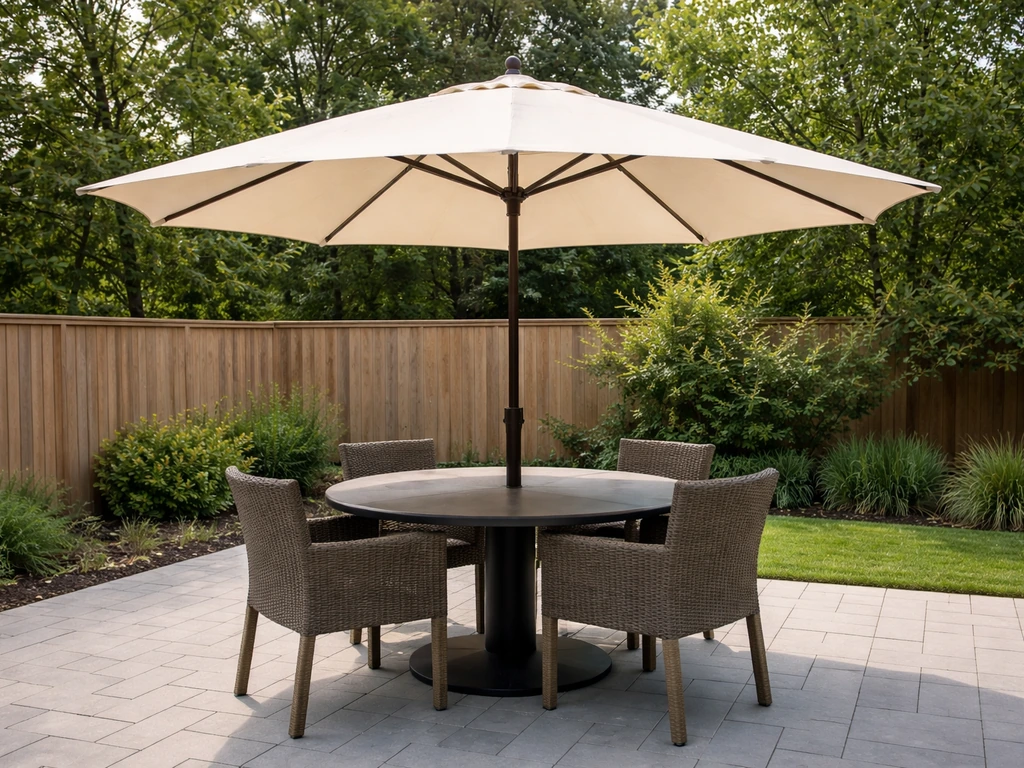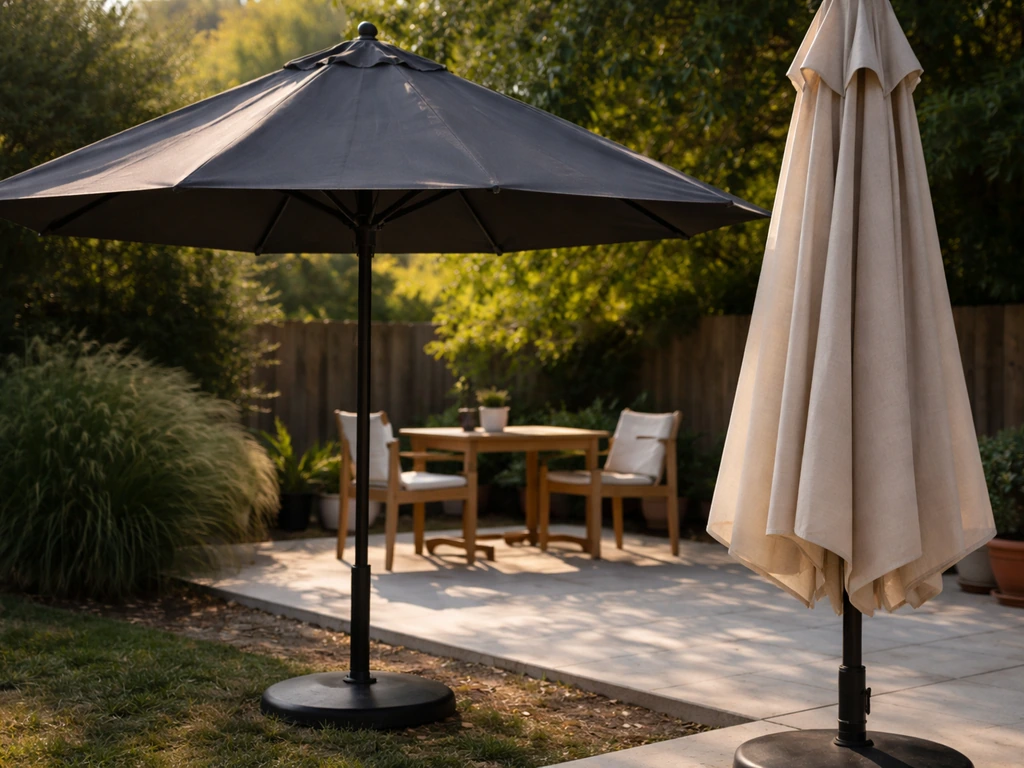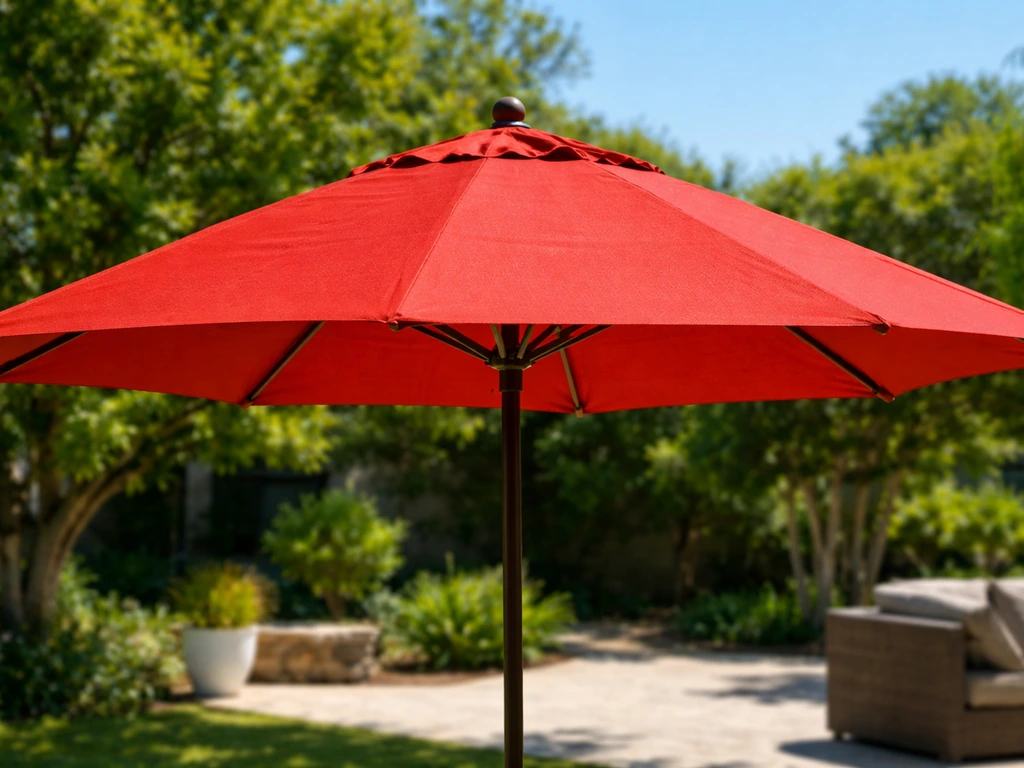
White, off-white, or light cream is the coolest color for a patio umbrella. Lighter colors reflect more solar energy instead of absorbing it, which keeps the canopy surface cooler and reduces the radiant heat that gets pushed down onto you. In real outdoor conditions, the difference between a white canopy and a dark navy or charcoal one can be 10 to 15 degrees Fahrenheit under the shade. If your main goal is staying comfortable on a hot afternoon, start with the lightest color you're willing to live with aesthetically and work from there. You can use these tips to narrow down options and land on the best patio umbrella color for your space how to choose patio umbrella color.
What Color Patio Umbrella Is Coolest for Summer Heat

Kent Lang
26 Jun 2026
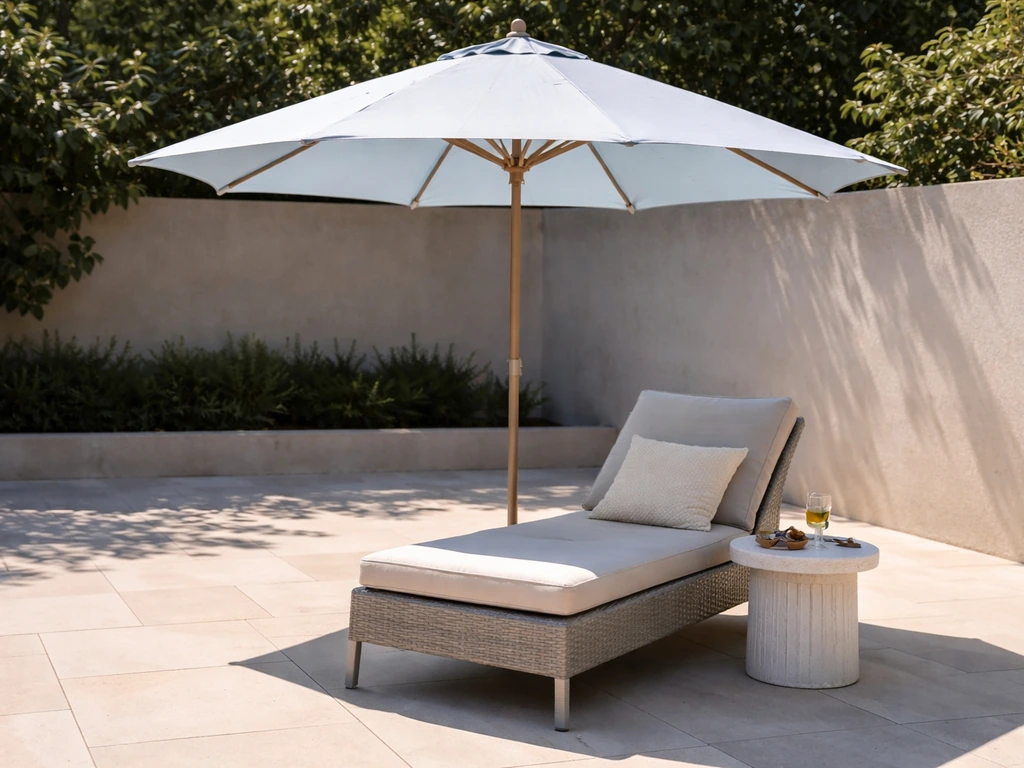
How umbrella color actually changes the temperature under your canopy
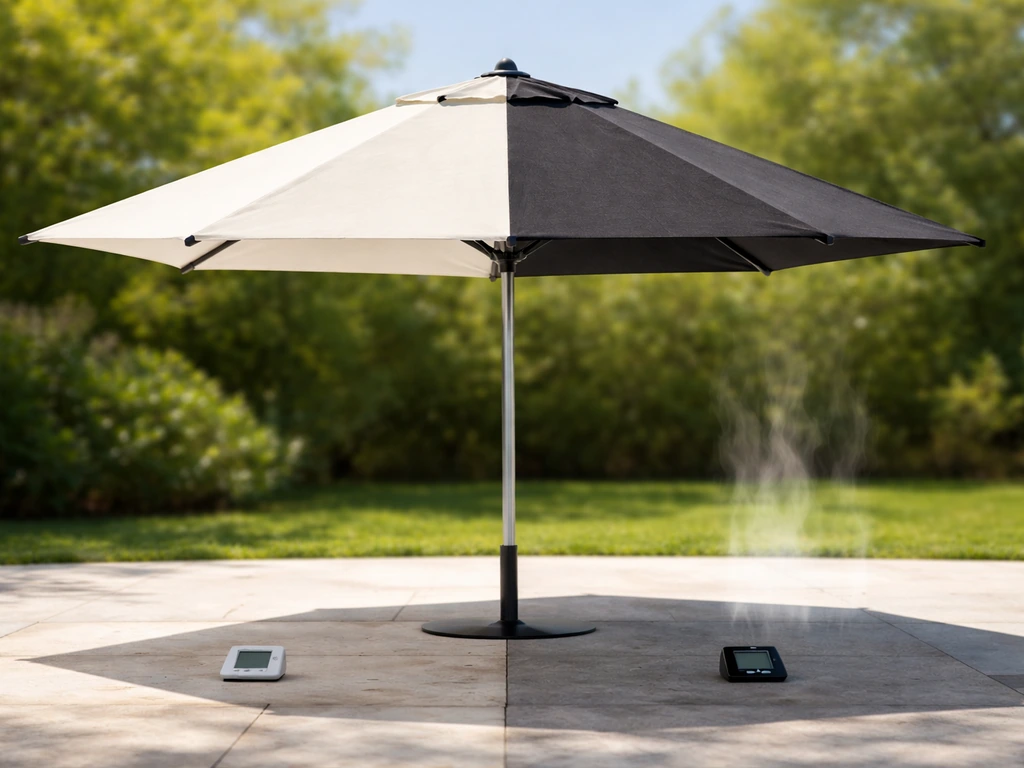
The physics here is straightforward. Dark colors absorb more solar radiation. Light colors reflect more of it. When a fabric canopy absorbs that energy, it heats up, and some of that heat radiates downward onto the people sitting beneath it. That's the radiant heat load you feel even when you're in the shade.
Solar reflectance numbers tell the story clearly. Measured reflectance values for very light surfaces (think near-white) can run around 0.50 or higher, while very dark surfaces (near-black) can drop as low as 0.07. The Solar Reflectance Index (SRI) tells a similar story: Snow White scores around 78, while a medium blue like Harbor Blue scores around 25. That gap translates directly to how much heat your canopy absorbs and re-radiates.
One nuance worth knowing: visible color alone doesn't perfectly predict thermal behavior. A Nature Communications study found that surface temperature depends on the full spectral and infrared absorption profile of a material, not just its visible hue. That means two canopies that look the same shade of beige can actually perform differently depending on their pigments and coatings. Still, as a practical rule, lighter equals cooler the vast majority of the time.
Best color picks for keeping your patio coolest
If you're shopping right now and want the simplest answer, here's how the color tiers stack up for heat management:
| Color / Range | Heat Performance | Best Use Case |
|---|---|---|
| White / Off-White | Coolest baseline | Hot, sunny climates; south or west-facing patios |
| Cream / Ivory / Light Sand | Near-white performance, slightly warmer | Most residential patios; easy to match outdoor furniture |
| Light Gray / Pale Beige | Good, slightly more absorption than white | Patios where bright white looks too stark |
| Light Pastels (sky blue, soft sage) | Moderate; better than mid-tones | Coastal or shaded patios; lower heat load situations |
| Medium Tones (tan, terracotta, medium blue) | Noticeably warmer than light colors | Use only if aesthetics are a priority and climate is mild |
| Dark Colors (navy, charcoal, forest green, burgundy) | Warmest; can run 8–15°F hotter than white/cream | Avoid in hot sun; workable in mild climates or part-shade |
For most homes, light cream or off-white is the practical sweet spot. It performs nearly as well as pure white on heat, it doesn't show grime as aggressively as bright white, and it's neutral enough to work with most outdoor furniture. If you're in a hot, sunny climate like the Southwest, Florida, or anywhere with long summer afternoons of direct sun, going as light as possible is the right call.
When lighter colors win big (and the one case where dark can work)
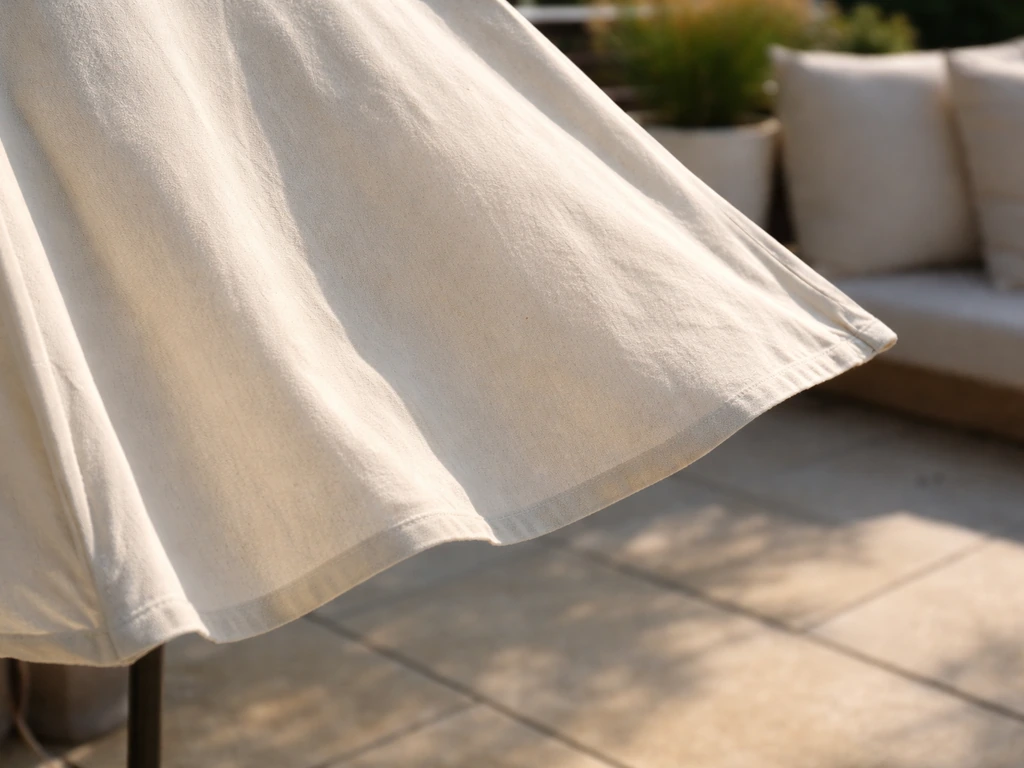
Lighter colors outperform darker ones most dramatically when: the patio gets direct afternoon sun (west-facing exposure), the umbrella is large and sits close to head height, the climate is hot and humid (because radiant heat combines with humidity for serious discomfort), and there's limited airflow around or through the canopy. In those conditions, the heat trapped under a dark canopy is noticeable and uncomfortable.
Light colors don't win in every situation, though. If your patio is mostly shaded by trees or a structure for most of the day, the umbrella color becomes a lot less impactful. Same goes for temperate climates where afternoon temperatures rarely push past the low 80s. In those settings, you can choose based on aesthetics without much thermal penalty.
The one legitimate case for darker colors: UV blocking. Dark fabrics do filter out more UV radiation than lighter ones, which matters if you're using the umbrella primarily for UV protection rather than heat management. For sun protection, you can also focus on a canopy that’s rated UPF 50+ for stronger UV blocking. This is the argument some Australian shade-product brands make, especially for high-UV environments where the UV filtering ability of a darker, denser canopy might outweigh its heat penalty. But for most backyard use in North America, a quality light-colored canopy rated UPF 50+ handles UV protection just fine. More on that in the UV section below.
Material and finish factors that can override color
Here's something a lot of people miss: the fabric type and canopy design can matter as much as color. Two umbrellas in the same off-white shade can feel dramatically different underneath if one has a vented canopy and the other doesn't.
Ventilation is probably the biggest variable. A double-vented canopy design lets hot air escape from the top of the umbrella rather than pooling under it. This improves airflow, reduces the heat that builds up directly under the canopy, and also helps with wind resistance. If you're choosing between a vented and non-vented umbrella in the same color, the vented version will almost always feel cooler, especially in still or humid conditions.
Fabric openness and weave also play a role. Shade mesh or open-weave fabrics allow more air to pass through the canopy surface, which improves convective cooling even in light breezes. Dense, tightly woven fabrics block more radiation but also trap more heat when airflow is low. The best setup is a light-colored, vented, or moderately open-weave canopy.
Fabric type affects durability and color stability too. Solution-dyed acrylic (Sunbrella is the most recognized brand) is the gold standard for outdoor umbrellas. The color pigment is locked into the fiber during the extrusion process rather than applied to the surface, which makes it far more resistant to fading and UV degradation. Quality solution-dyed acrylics typically achieve lightfastness grades of 7 to 8 on the ISO 105-B02 scale and can hold up to 2,000-plus hours of UV exposure in accelerated testing. Real-world longevity comparisons back this up: solution-dyed acrylic canopies routinely last 8 to 10 years, while budget polyester canopies often fade and degrade in under two years. If you choose a light color for its heat benefits, you want that color to actually stay light. Solution-dyed acrylic keeps its color; cheap polyester doesn't.
How your climate, sun direction, and usage timing change the answer
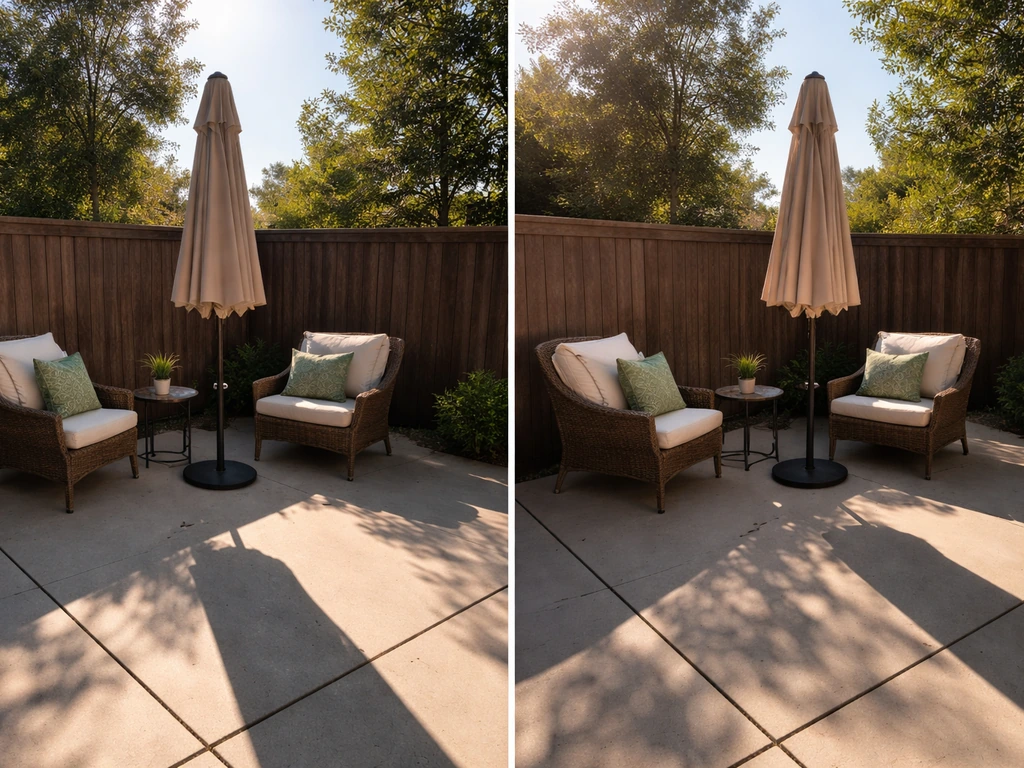
Sun angle and patio orientation matter more than most people realize. A patio that faces south or west gets the most direct, intense sun in the afternoon hours, when temperatures are already at their peak. That's the situation where umbrella color has the most impact and where going light matters most. A north-facing patio or one that's naturally shaded by the house in the afternoon has a much lower heat load, and color becomes a secondary concern.
Hot and humid climates (the Gulf Coast, Southeast, and Hawaii, for example) amplify the radiant heat effect because humidity reduces the body's ability to cool itself through sweat. Under those conditions, every degree of radiant heat reduction from a lighter umbrella color adds up. Dry desert climates like Phoenix or Las Vegas have even more intense direct radiation, so a white or very pale canopy makes a bigger difference there than in, say, Seattle.
Timing also shifts the equation. If you use your umbrella primarily in the early morning or late afternoon, the sun angle is lower and the total heat load is reduced regardless of color. If you're regularly sitting outside between 11am and 4pm in July, that's when heat management counts the most and a light color does the most work.
Coastal glare is a specific use case worth flagging. In very high-glare environments near water, some people find bright white too blinding, especially when the sun is reflecting off the water's surface. In those situations, a light sand, ivory, or pale gray can be a better choice: still thermally efficient, but easier on the eyes.
The other quality factors that determine how good your umbrella actually is
Color is one piece of the puzzle, but buying the right color in the wrong umbrella is a frustrating outcome. Here are the other factors that matter just as much for real-world performance.
UV protection
Look for a canopy rated UPF 50+. That rating means less than 2% of UV radiation passes through the fabric, blocking around 98% of UV exposure. Some Sun explains that UPF 50+ corresponds to fabric allowing no more than 1/50th of UV radiation to pass through, based on controlled testing UPF 50+ corresponds to a fabric allowing no more than 1/50th of UV radiation to pass through. Most quality umbrellas from reputable brands meet this threshold, but cheap canopies often don't. The UPF rating is separate from whether the umbrella blocks heat: a canopy can be rated UPF 50+ regardless of color, but darker colors tend to test at slightly higher UPF naturally. For most buyers, a light-colored UPF 50+ canopy is the right call: maximum UV protection without the heat penalty.
Wind resistance
An umbrella that tips over or gets destroyed in the first wind event is a waste of money regardless of what color it is. Look for a sturdy pole (aluminum or fiberglass at minimum, stainless steel hardware), a quality tilt mechanism, and a canopy design with ventilation that reduces wind catch. A vented canopy isn't just cooler: it handles wind significantly better than a solid canopy of the same size because the vent allows air to escape upward rather than acting as a sail. Pair any large umbrella (9 feet or bigger) with a base that weighs at least 50 pounds, and more if you're in a wind-prone area.
Shade coverage
A 7.5-foot umbrella covers roughly a 4-person table. A 9-foot canopy covers a 6-person table comfortably. If you're shading a larger seating area or a sectional, you're looking at an 11-foot market umbrella or a cantilever/offset umbrella that can position the pole out of the center of the space. Getting the coverage size right is more important to your comfort than any color decision.
Durability and fade resistance
As touched on above, solution-dyed acrylic fabric is the right choice for anyone who wants their umbrella to actually look good after a few seasons. Lighter colors that fade toward yellow or gray look worse than darker colors that fade, which is a practical reason to invest in quality fabric when you go light. Fade resistance and color choice are closely linked topics worth thinking through together.
Quick decision checklist before you buy
Run through these questions before settling on a color and model: If you want a clear starting point, this guide explains how to choose patio umbrella color and features together for the right heat control.
- Does your patio get direct afternoon sun (south or west-facing)? If yes, prioritize white, off-white, or light cream.
- Are you in a hot or humid climate? If yes, go as light as possible and look for a vented canopy.
- Is glare from water or reflective surfaces a concern? Consider light sand, ivory, or pale gray instead of bright white.
- Is UV protection your primary goal (over heat reduction)? A UPF 50+ rating matters more than color here; get the rating confirmed before you buy.
- Do you care about how the umbrella looks at parties or in photos? Lighter neutrals photograph well and stay versatile. If aesthetics are the priority and the climate is mild, a medium tone like tan or dusty blue is a reasonable compromise.
- Is the fabric solution-dyed acrylic? If not, a light color will fade faster and look worse over time. Make sure the quality matches the color choice.
- Does the canopy have a vent? A double-vented canopy improves both airflow and wind resistance, and it makes the color choice more forgiving.
- Is your base heavy enough? Size up the base before worrying about the canopy color. A 50-pound minimum for umbrellas 9 feet and up is a reasonable starting point.
If you're still undecided after running through that list, the safe default is: a light cream or off-white, solution-dyed acrylic, vented canopy in the right size for your table. That combination handles heat, UV, wind, and longevity well and works aesthetically in almost any backyard. From there, you can explore how to match color to your outdoor furniture, what fade-resistance specs to verify on the label, and whether a cantilever or market umbrella better fits your layout.
FAQ
Is white always the coolest choice, or is off-white/light cream sometimes better?
White is typically the coolest thermally, but off-white and light cream can match it closely while looking cleaner for longer. The practical benefit is that lighter cream tones often hide dirt and pollen better than bright white, so the canopy stays visually acceptable without needing constant cleaning.
Will a light-colored umbrella stay cool if it fades to yellow or gray?
Fading can increase heat absorption over time because the fabric’s reflectance changes when the pigments degrade. That is why choosing solution-dyed acrylic matters for light colors, it helps keep the canopy near its original brightness so you keep the heat advantage longer.
Do vented umbrellas feel cooler even if the canopy color is the same?
Yes. A vented (often double-vented) design reduces heat pooling under the canopy by letting hot air escape upward. In still or humid conditions, ventilation can noticeably reduce the “hot lid” feeling, sometimes more than the difference between two nearby light shades.
What color is coolest if the patio is shaded most of the day?
If your umbrella is rarely exposed to direct sun, heat performance differences by color become much smaller. In that case, prioritize UV rating, fabric quality, and ventilation first, then choose the color based on style and glare preferences.
What should I pick for a west-facing patio that gets strong afternoon sun?
Go as light as you can tolerate visually, light cream or off-white, and pair it with a vented canopy. Also check that the umbrella size and placement shade your seating between roughly 11am and 4pm, since coverage time often affects comfort more than color alone.
Does umbrella fabric type matter for heat as much as color?
It can. Even with the same visible color, openness of the weave and how the fabric is constructed affects airflow and convective cooling. Shade mesh or moderately open weaves can feel cooler than tightly woven, dense fabrics, especially with a light breeze.
If I want UV protection, should I still choose a light color?
Usually yes. A light-colored canopy rated UPF 50+ can block most UV while still delivering the thermal benefit. The main reason to consider darker fabric is when you are optimizing for UV filtering above all else in extremely high-UV settings, and you are comfortable trading some heat performance.
Is a lighter umbrella still a good choice near the ocean if glare is intense?
Often, yes, but you may want to avoid pure bright white. Sand, ivory, or pale gray can keep reflectance relatively high while reducing glare that comes from sun reflecting off water.
Will a cooler color help in humid climates, or does humidity override everything?
Humidity makes radiant heat feel worse because it reduces evaporative cooling from sweat. That means the umbrella color choice still matters, and light colors can provide more noticeable comfort gains than you would get in a dry climate with the same sun exposure.
How important is umbrella size compared to color for staying cool?
Very important. If your seating area is only partially shaded, you will feel direct sun and radiant heat regardless of canopy color. Use the table coverage guidance as a rule of thumb, for example a larger 9-foot canopy for bigger tables, or consider an offset/cantilever style if you need more usable shade without obstructing movement.
If I buy a light umbrella, what is the most common mistake people make?
Choosing a light color with a fabric that fades quickly. Once it shifts toward yellow, gray, or dullness, it can lose some of its reflectance and look worse. Paying attention to solution-dyed acrylic or similar high-fade-resistant fabrics helps protect both the heat benefit and the appearance.