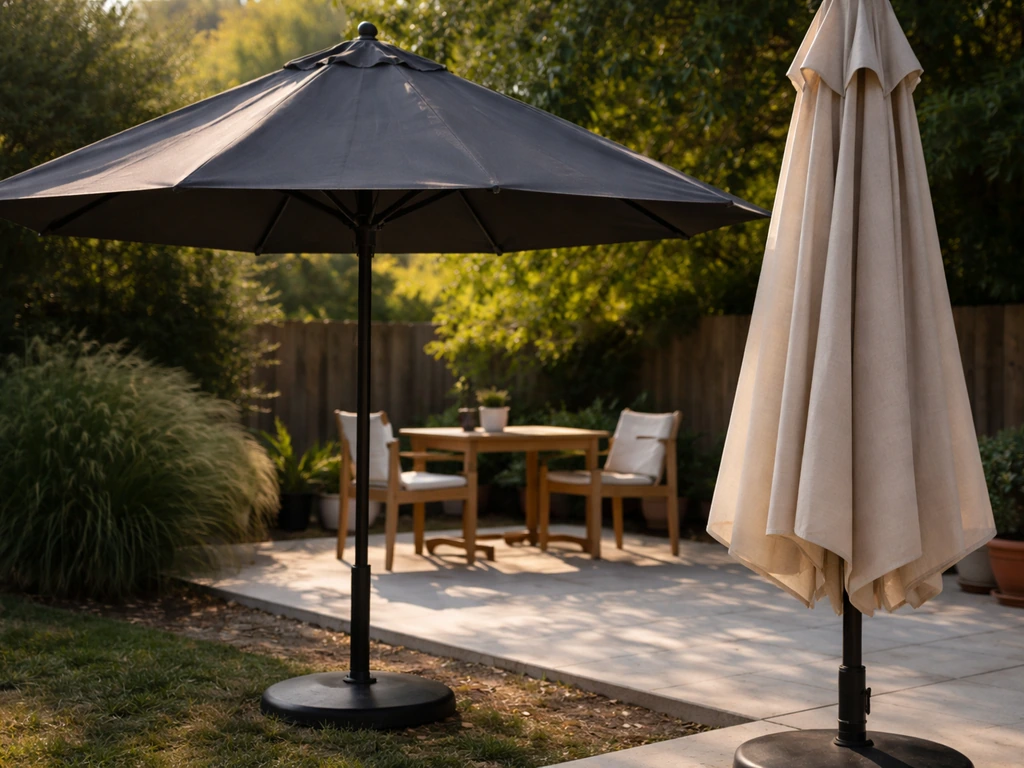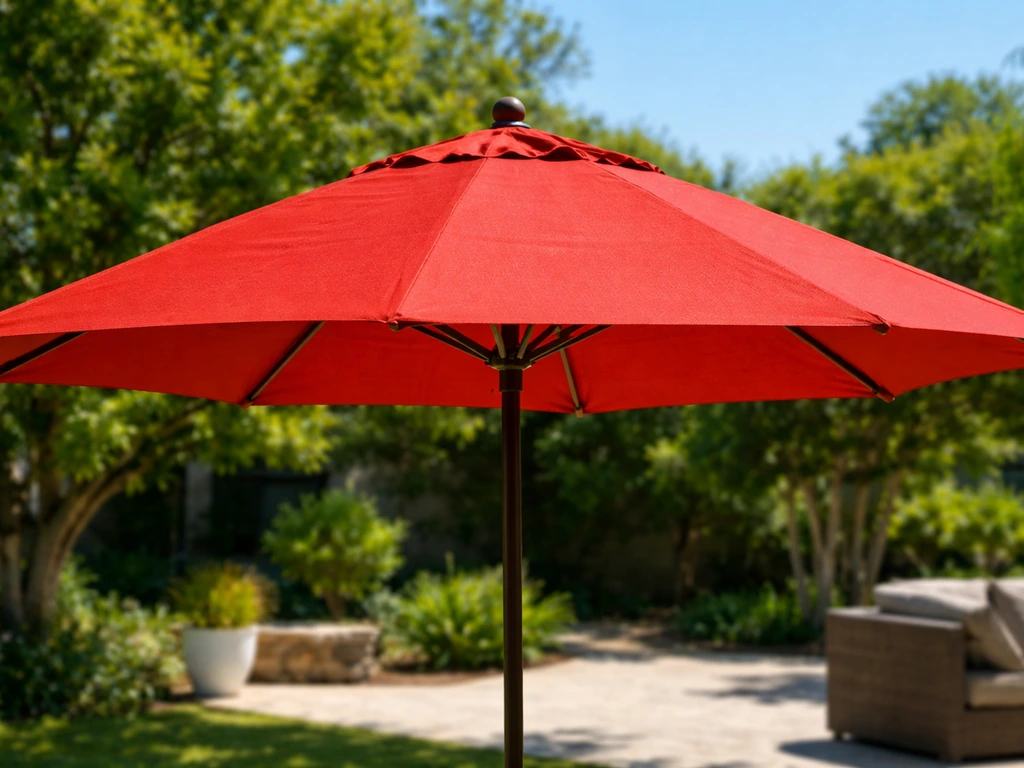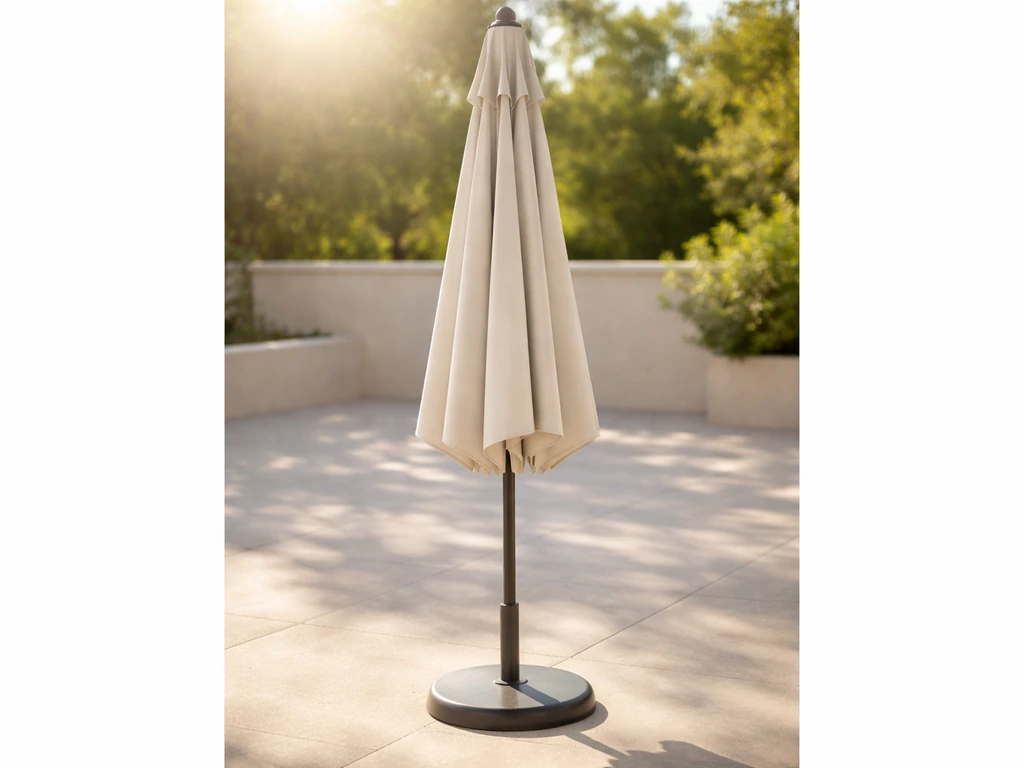
To choose the right patio umbrella, start by measuring your space and table, then pick a style (market pole umbrella or cantilever/offset) based on your layout, size the canopy so it extends at least 2 feet beyond your seating on all sides, choose a fabric with real UV and fade resistance, verify the wind rating and canopy venting, and match your base weight to the umbrella size. Get those fundamentals right and everything else is preference.
How to Choose Patio Umbrella: Size, Wind, and Fit Guide

Kent Lang
2 Jun 2026
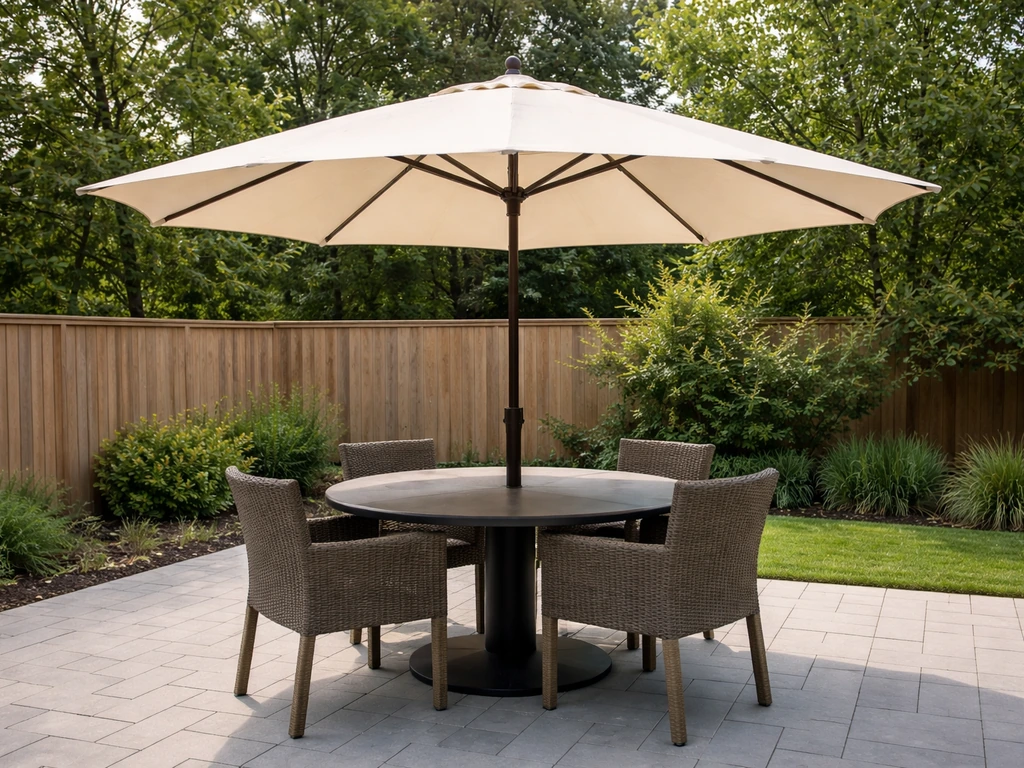
Start with your patio and measurements
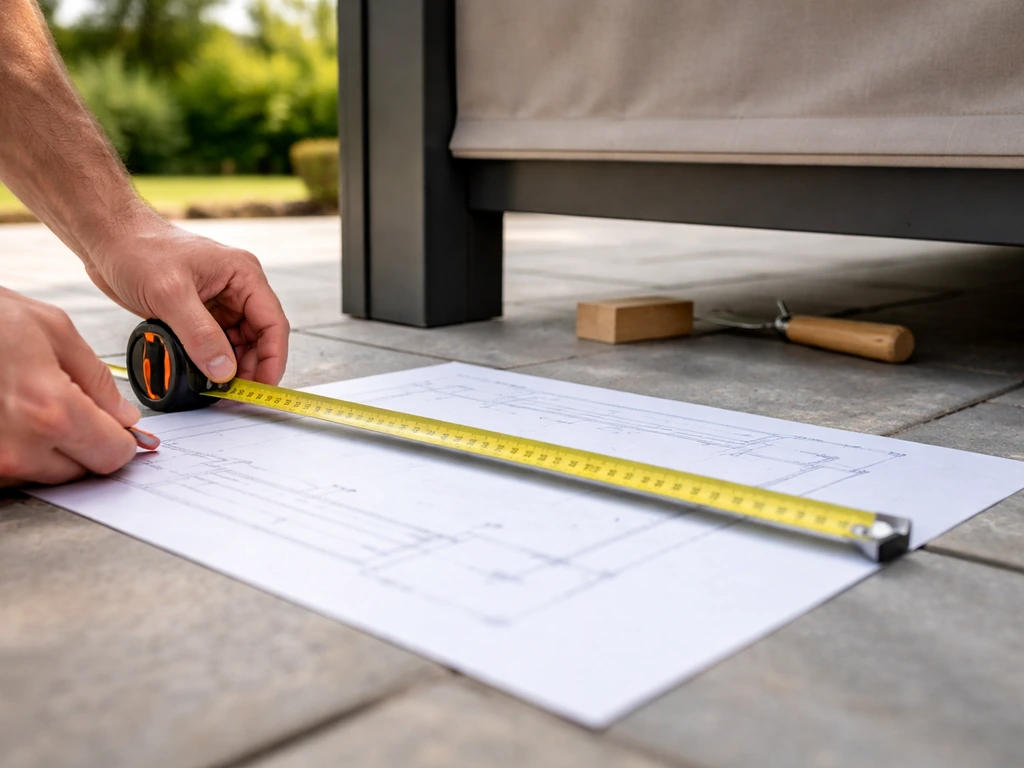
Before you look at a single umbrella listing, grab a tape measure. You need two numbers: the footprint of the area you want to shade and the clearance you have overhead and around any obstacles. The shaded footprint is what actually matters when sizing a canopy. Manufacturers like Treasure Garden calculate canopy size by doubling the rib length (rib length × 2 = actual umbrella diameter), and the practical shade area is determined by the canopy's full open width, not just the labeled diameter. A product listed as "9 ft" should open to roughly 9 feet across, but always confirm by checking the rib measurement if the spec sheet shows it.
Clearance is the part people forget. If you have a pergola, awning, or low eaves nearby, measure how much vertical room you actually have when the umbrella is closed and cranked upright. A manufacturer-style buying guide also recommends using closed-clearance or obstacle-clearance dimensions for overhead elements and obstacles when the umbrella is closed and upright closed-clearance (obstacle-clearance) dimensions. A standard market umbrella pole can run 7.5 to 8.5 feet tall before the canopy even opens, and a cantilever arm adds more horizontal reach on top of that. Check both the closed height (pole fully extended, canopy furled) and any lateral clearance if the canopy will swing near a wall or railing.
Choose the right umbrella style for your layout
There are two practical categories for most homeowners: market (center-pole) umbrellas and cantilever/offset umbrellas. Which one fits your patio comes down almost entirely to where you need the shade to land and whether you have a table with an umbrella hole.
Market (center-pole) umbrellas
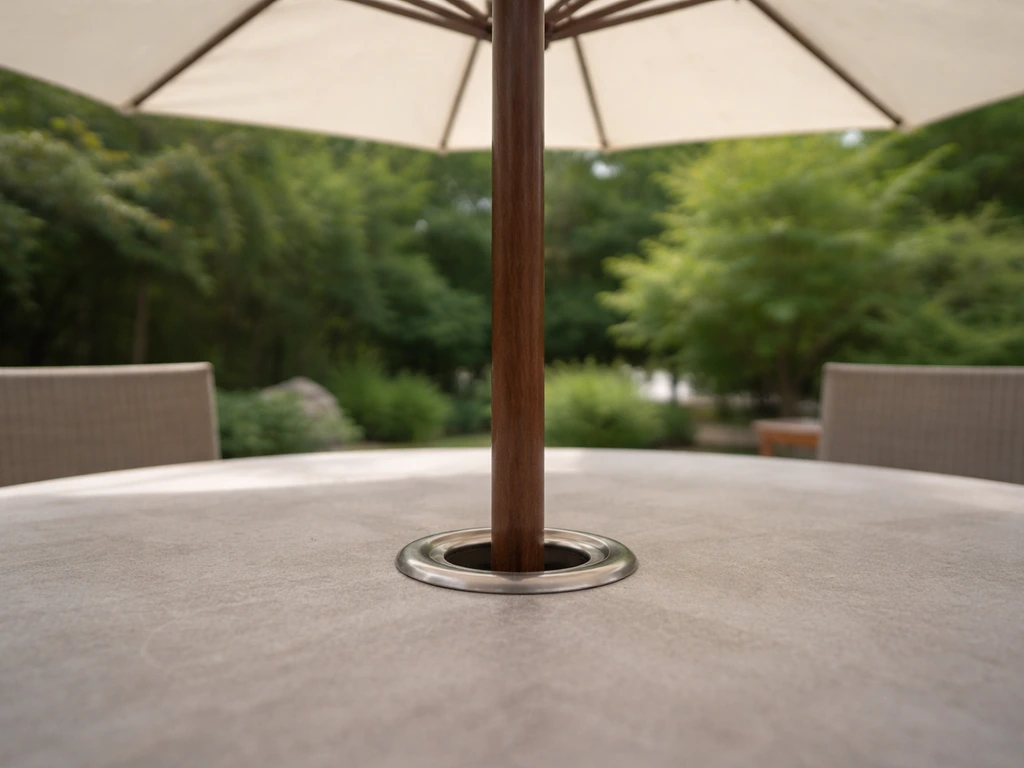
Market umbrellas are the classic style with a straight pole running through the center of the canopy. They work best when you have a dining table with a center hole, or when you're mounting the pole directly into a base that sits in the middle of the seating area. They're generally more affordable, simpler mechanically, easier to find bases for, and available in the widest range of sizes and colors. The trade-off is that the center pole is always in the middle of your space, which can get in the way of conversation, seating arrangements, or serving at a table.
Cantilever (offset) umbrellas
Cantilever umbrellas mount the pole off to the side, with the canopy hanging over the seating area on an extended arm. This gives you completely unobstructed shade over a sofa set, daybed, chaise lounges, or any arrangement where a center pole would be a nuisance. They're ideal for irregularly shaped seating areas, sectionals, or poolside setups. The honest trade-offs: they cost more, the bases need to be significantly heavier to counterbalance the offset load, and the mechanical systems (swivel, rotation, tilt) are more complex and more likely to need maintenance over time. For a standard dining set with a table hole, a market umbrella is usually the smarter, more economical choice. For a lounge area or a spot where you want full freedom of arrangement, a cantilever earns its premium.
| Feature | Market (Center-Pole) | Cantilever (Offset) |
|---|---|---|
| Best for | Dining tables with center hole, simple layouts | Lounge sets, sectionals, pool areas, no-hole tables |
| Shade flexibility | Fixed to center position | Rotates and tilts over any spot |
| Price range | Lower to mid | Mid to high |
| Base weight needed | 50–100 lbs typical | 100–200+ lbs for stability |
| Mechanical complexity | Simple crank/tilt | More complex (rotation, multi-axis tilt) |
| Pole obstruction | Always in center | Off to the side, no center obstruction |
Size and canopy specs to match your table and space
The single most common sizing mistake is buying an umbrella that's the same diameter as the table. That gives you shade on the tabletop but leaves everyone sitting around it in the sun. The practical rule is to size the canopy so it extends at least 2 feet beyond the table edge on all sides. That means a 48-inch (4 ft) round table needs roughly an 8-foot canopy minimum, and a 60-inch (5 ft) table really wants a 9- to 10-foot canopy. For rectangular tables 6 feet or longer, consider a rectangular canopy or step up to an 11-foot round to get reasonable coverage on the sides.
For lounge seating or open areas without a table reference, estimate the shaded footprint you actually want and work backward. A 9-foot canopy covers roughly 55–65 square feet of shade, an 11-foot covers around 80–90 square feet, and a 13-foot commercial-grade canopy can reach 120+ square feet. Those numbers shift depending on sun angle and time of day, so if you're trying to shade a west-facing patio in the late afternoon, size up.
Materials and UV/fade protection that actually hold up
Canopy fabric
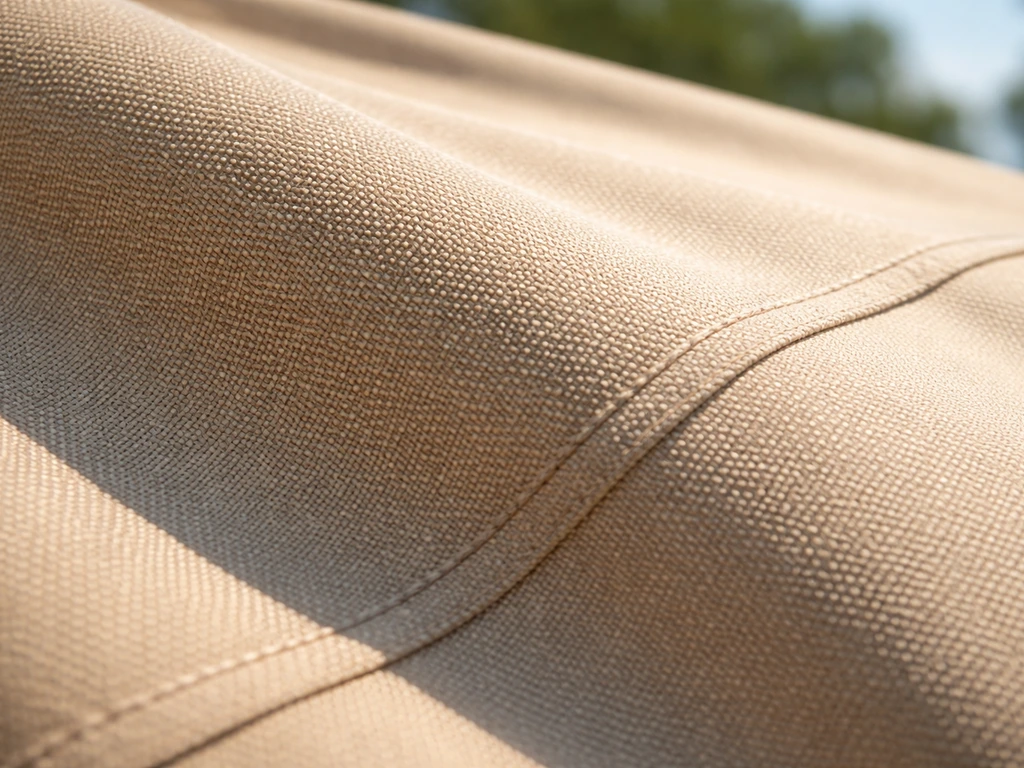
Fabric is where you should spend the most attention, because it's the part that degrades fastest and matters most for UV protection. Solution-dyed acrylic (Sunbrella is the category benchmark) is the top-tier choice for outdoor canopies. In solution-dyed fabric, the color runs through the entire fiber rather than being applied as a surface coating, which means it resists fading dramatically better than polyester alternatives. Look for a UPF rating of 50+ on any fabric you're seriously considering. That blocks 98% of UV radiation reaching whatever is under the canopy, which matters both for skin protection and for furniture sitting in the shade. Polyester canopies are cheaper but fade noticeably faster, often within one or two seasons in direct sun. If fade resistance is a priority for you, that topic is worth digging into separately since fabric choice and color both play a role in how long a canopy keeps its look. If fade resistance is a priority for you, that topic is worth digging into separately since fabric choice and color both play a role in how long a canopy keeps its look. Also review what color patio umbrella fades the least before you commit. If you want a patio umbrella that will not fade, focus on solution-dyed, UV-rated fabric and colorfast materials that keep their look in direct sun. To get the best fade-resistant patio umbrellas, focus on solution-dyed acrylic fabric and a high UPF rating, since both strongly affect how long the color stays vibrant.
Frame and pole materials
For the frame, you're choosing between aluminum, wood (typically teak or eucalyptus), steel, and fiberglass ribs. Aluminum poles are the most practical for most buyers: they're lightweight, corrosion-resistant, and strong enough for everyday use. Steel is heavier and stronger but needs powder coating and regular inspection if you're in a humid or coastal environment, because rust will eventually find any scratch or chip. Wood frames (especially teak) look beautiful and are naturally weather-resistant, but they need annual oiling and aren't the lowest-maintenance option. Fiberglass ribs specifically (not the whole frame, just the ribs) are a real upgrade worth paying for: they're lighter than steel ribs, flex under wind load without snapping, and don't corrode. If an umbrella lists fiberglass ribs, that's a genuine durability plus.
Wind resistance and stability features to look for
Wind is the most common way a patio umbrella gets damaged or becomes a safety hazard. A canopy that catches a gust wrong can bend ribs, snap a pole, or tip an undersized base and send the whole thing into your fence or neighbor's yard. The features that reduce that risk are worth understanding before you buy.
- Vented canopy: A double-vent design (two layers with a gap between them) lets wind escape upward through the canopy instead of lifting it. This is probably the single most effective wind-resistance feature. Single vents help; double vents are better.
- Fiberglass ribs: As mentioned above, they flex rather than snap under sudden wind load. On aluminum-rib models, look for cross-bracing between ribs for added rigidity.
- Wind rating: Better manufacturers publish a wind speed rating. Anything rated to handle 35+ mph gusts is reasonable for a residential patio. Commercial-grade models often test to 55 mph or higher. If you live somewhere regularly windy, don't guess — look for a rated spec.
- Tilt mechanisms: Crank tilt, collar tilt, or push-button tilt let you angle the canopy toward the sun. This is useful for shade angle but also lets you reduce wind exposure by angling the canopy away from the wind direction. Auto-tilt (where tilting happens as part of cranking open) is the most convenient.
- Locking positions: Make sure any tilt mechanism locks firmly. A canopy that flops in a breeze will wear out its joints quickly.
- Close it in high winds: No umbrella feature replaces the habit of closing and securing your umbrella when you're not using it or when a storm is coming. Even the best wind-rated umbrella isn't designed to survive an unattended thunderstorm.
Base and stand requirements for safer use
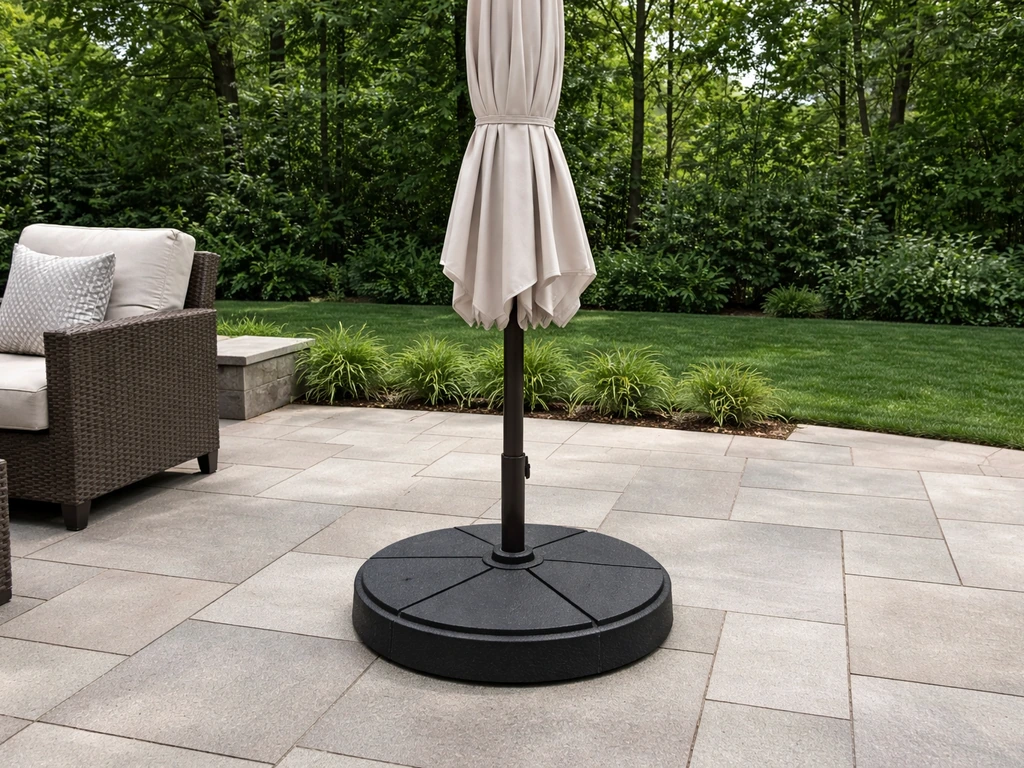
An undersized base is the most avoidable problem in patio umbrella setup. The base is doing real structural work: it's counteracting the lever-arm force of the canopy catching wind, and with a cantilever umbrella, it's also counteracting the offset weight of the whole arm. The basic rule: for a center-pole market umbrella up to 9 feet, you need at least 50 pounds of base weight. A 10- to 11-foot umbrella needs 75–100 pounds. For cantilever umbrellas of any size, start at 100 pounds and go up from there, 150 to 200 pounds is common for 10- to 13-foot offset models.
Pole diameter matters too. Most residential market umbrellas use a 1.5-inch or 1.75-inch diameter pole. Verify your base's pole hole matches before you order, because they're not universal. Cantilever bases are specific to the brand or model family, so mixing and matching rarely works.
If you're mounting a center-pole umbrella through a table hole, the table itself adds some stability, but you still need a weighted base underneath. Don't rely on a table alone to hold an umbrella steady. For deck or patio mounting, in-ground sleeves and deck-mount flanges are worth the extra install effort if you have a permanent spot, they're far more stable than a freestanding base on a windy day.
Your practical buying checklist
Here's the order I'd follow, which keeps you from falling in love with a specific umbrella before you've confirmed it actually works for your space:
- Measure first: Get the dimensions of your table or seating area, the overhead clearance, and the width of any obstacles. Write these down before you look at products.
- Pick your style: Dining table with a center hole? Market umbrella. Lounge set, sectional, or no-hole table? Cantilever. Let your layout decide.
- Size the canopy: Add at least 2 feet to every side of your table or seating footprint. Confirm the canopy's open diameter in the specs, not just the labeled size.
- Choose the fabric: Look for solution-dyed acrylic and a UPF 50+ rating. If fade resistance is a priority, factor in that darker colors and certain fabric constructions hold color better over time.
- Check wind resistance specs: Look for a vented canopy (double-vent is better), fiberglass ribs, and a published wind speed rating if you're in an exposed location.
- Match your base: Confirm the base weight meets the umbrella size recommendation, verify the pole diameter matches, and decide whether you need a freestanding base, deck mount, or in-ground sleeve.
- Set your budget honestly: A quality market umbrella with a solution-dyed canopy and aluminum frame runs $150–$400. Add a solid base for another $50–$150. Quality cantilevers start around $300–$500 and go up steeply; budget $200+ for the base alone. If you're seeing cantilevers under $200 total, the base weight and fabric quality are almost certainly compromised.
One last thing worth knowing: color affects more than just aesthetics. Lighter-colored canopies reflect more heat and can keep the space underneath cooler, while darker colors absorb more UV before it reaches you. If you're still deciding on color after nailing down size and material, that's a whole separate decision with its own trade-offs around heat, shade quality, and how long the color stays vibrant season after season. For many people, the coolest-looking patio umbrella color is a light, bright tone that reflects heat rather than absorbing it, so you stay comfortable under the shade what color patio umbrella is coolest.
FAQ
How do I account for canopy swing if I plan to tilt or rotate the umbrella?
If you have a wall, fence, or pergola close by, measure how far the canopy edge swings when you tilt or rotate, then add clearance beyond the 2-foot shade extension. For many umbrellas, the canopy will “sweep” past the closed footprint, so confirm clearance at both the closed and the working angles before buying.
What should I check if the product listing says a certain size but I’m not sure the shade coverage is correct?
Many “9 ft” or “11 ft” umbrellas are advertised by diameter, but the ribs define the real open width. If the listing only gives a diameter label, look for rib length (or an open width spec) and verify the canopy truly covers your seating footprint.
Can I use any patio umbrella with my existing table umbrella hole, or do I need matching measurements?
Yes, but the easiest way is to measure the table’s umbrella-hole diameter and compare it to the umbrella’s pole diameter and the base’s pole-hole size. A mismatch can prevent full seating depth, which reduces stability and can damage the pole or base.
What’s the safest way to use a patio umbrella in windy weather?
If your patio gets regular wind, look for a wind rating that matches your conditions and use the safe positioning rules, close the umbrella during storms or gusty periods, and consider adding a cover. Even with a good rating, an oversized canopy relative to the base weight is where safety problems usually start.
Should I cover my umbrella year-round, or does the cover change how I should store or secure it?
A cover helps for dirt and rain, but it does not replace lowering, securing, and closing the umbrella. For long periods unused, fully close it and, if possible, tie it down to prevent fabric and ribs from flexing in gusts.
How do umbrella shape and canopy type affect shade coverage for rectangular seating?
If you want maximum shade quality, choose a canopy shape that matches your layout. Round canopies are easiest for circular dining areas, while rectangular canopies can improve coverage for long benches and side seating where a circular edge would leave gaps.
How can I verify the UV protection claims beyond “UV resistant” wording?
UPF ratings are only meaningful for the fabric you’re buying. Ask for the actual fabric UPF or product test info, not a generic “UV protected” claim, and keep in mind that lighter fabrics can feel cooler but still need true UV performance.
If I buy a heavier base, will it always improve stability, or are there fit limitations?
A heavier base usually increases stability, but it must also match the umbrella system. If the base doesn’t fit the pole diameter (market) or the specific cantilever base hardware, it can wobble or fail to counterbalance the canopy load.
Where should I place the cantilever base so the umbrella reaches the shade area safely?
For offset or cantilever umbrellas, plan for the arm load when placing the base and patio edge clearance. You want enough room so the canopy can reach the intended shade without the base being too close to steps, planters, or soft surfaces that can shift in wind.
What does “fiberglass ribs” practically change for durability and repairs?
When comparing frames, fiberglass ribs are especially relevant if your area sees frequent gusts because the ribs flex instead of snapping. Still, verify the rib material is actually fiberglass, not just “reinforced,” and check whether the frame has a compatible spare parts policy for long-term maintenance.