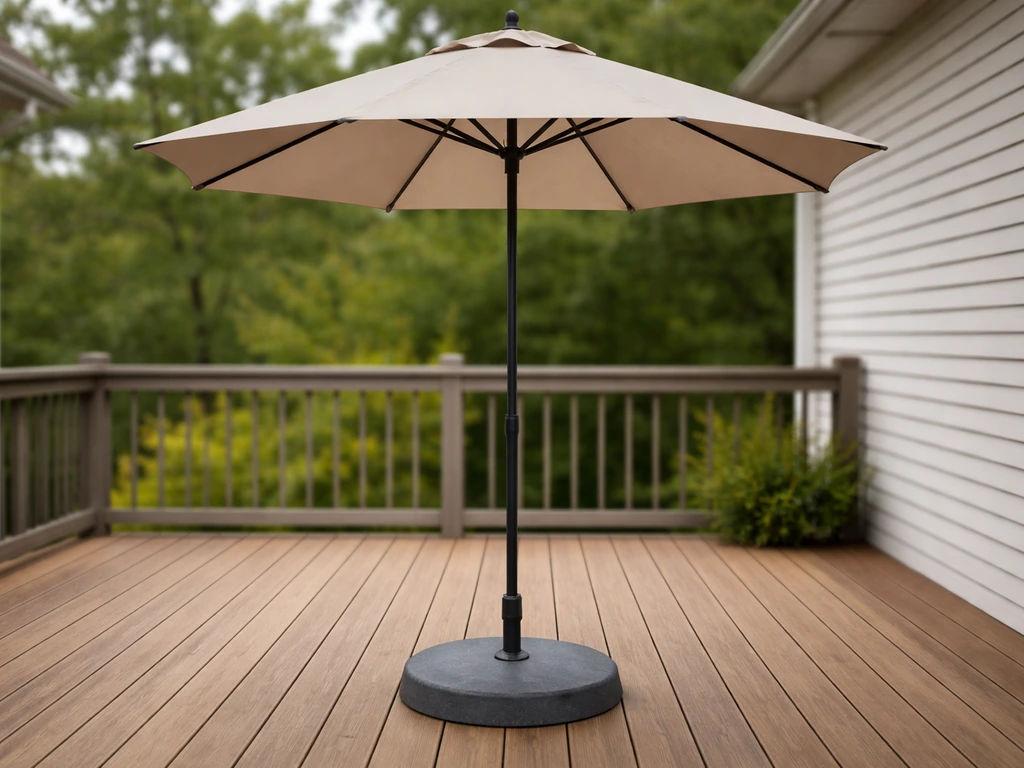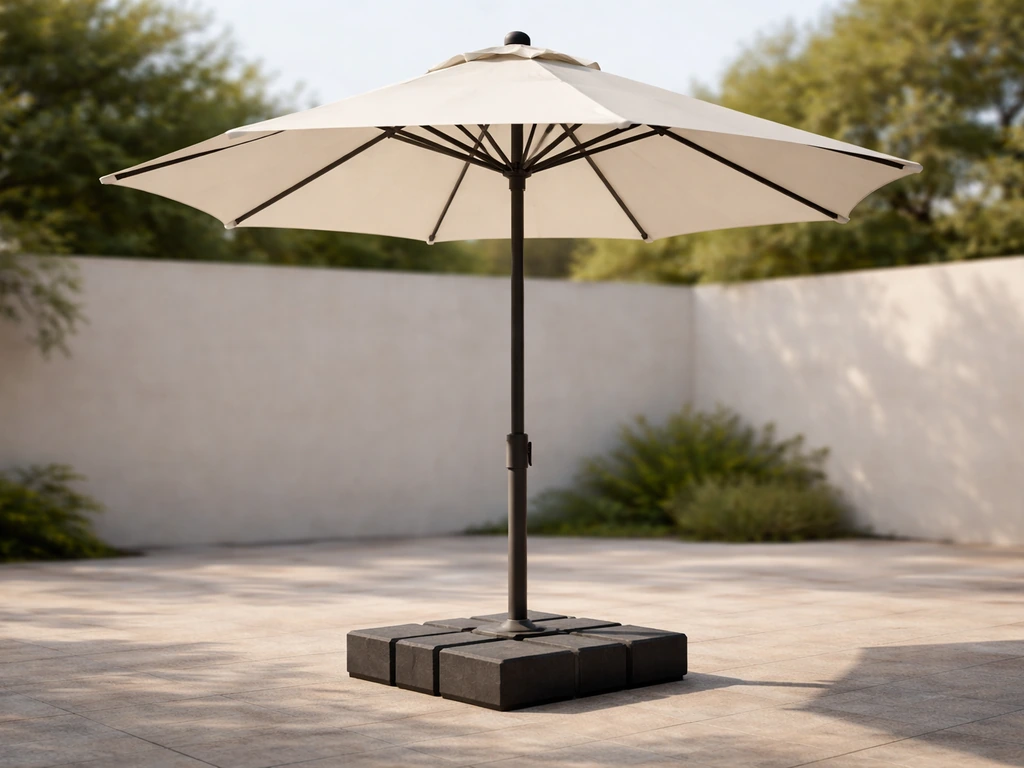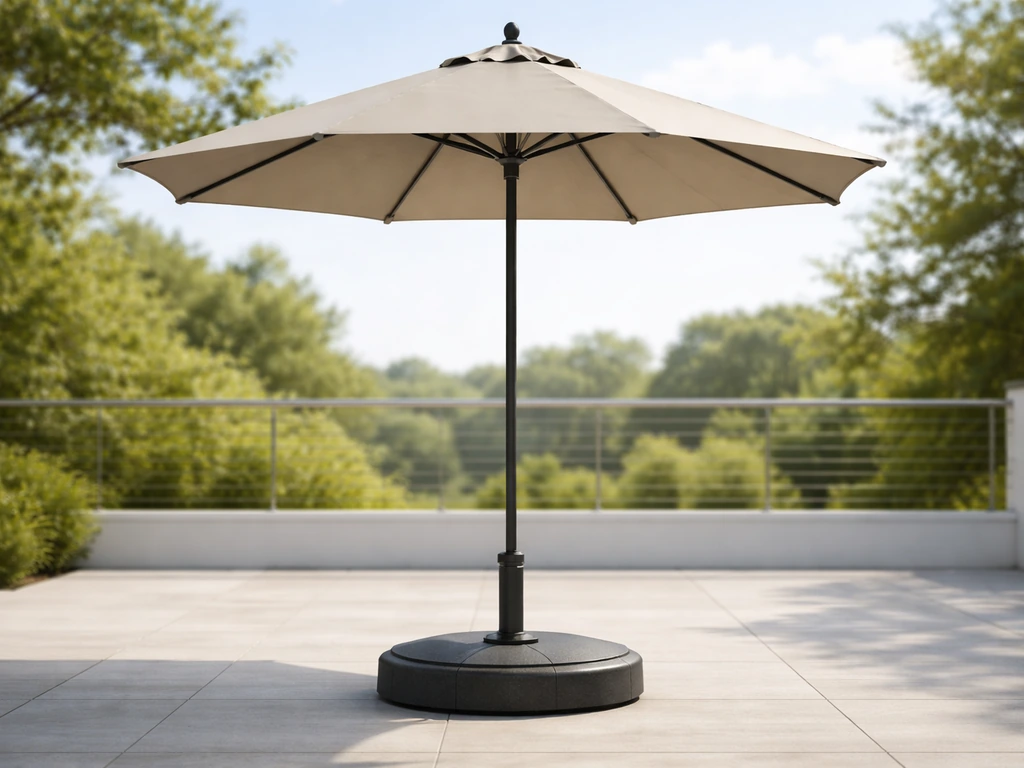
The best freestanding patio umbrella for most homeowners is a 9-foot aluminum market umbrella paired with a 50-pound or heavier base, covered in solution-dyed acrylic fabric like Sunbrella. That combination handles everyday wind, delivers UPF 50+ sun protection, and fits comfortably over a standard 4-to-6-person patio table without breaking the bank. If you need pole-free shade or coverage over a wider seating zone, a cantilever (offset) umbrella is worth the extra investment, but it demands a heavier, more carefully chosen base and more respect in breezy conditions.
Best Free Standing Patio Umbrella Guide: Size, Wind, Base

Kent Lang
17 Jun 2026

Umbrella vs. Stand: What "Freestanding" Actually Means When You're Shopping
This trips up a lot of buyers. When a listing says "freestanding patio umbrella," it almost always means the umbrella is not wall-mounted or table-mounted through a built-in hole. It stands independently using a separate base. The catch is that most market-style umbrellas are sold without that base. You'll see a note like "base sold separately" and a base weight recommendation in the product specs. That recommendation is not a suggestion, it's a safety minimum. A too-light base in even moderate wind becomes a flying object.
So when you're shopping, you're really buying two things: the umbrella canopy and frame, and the stand or base to hold it. Budget and plan for both upfront. If you're searching for the best freestanding patio umbrella stand specifically, the stand selection is just as important as the umbrella itself, and the two need to be matched by pole diameter and base weight. More on that in the wind stability section below.
How to Choose the Best Freestanding Patio Umbrella for Your Space
Start with your patio's actual dimensions and how you use the space, not the umbrella's marketing description. The two things that matter most are: how much shade coverage you need, and how exposed your space is to wind. Everything else, style, color, tilt mechanism, flows from those two answers.
Think about where the sun hits your seating area during the hours you're actually outside. Is it a single dining table? A lounge cluster? A pool deck with multiple zones? A 9-foot umbrella handles one table well. If you're covering a larger seating area or want shade that moves with the sun without repositioning the whole base, you'll be looking at 11-foot market umbrellas or cantilever/offset models.
Also be honest about your wind exposure. A patio in an open backyard or near a pool sees more wind than a courtyard with privacy walls. Your wind reality directly controls which umbrella style and base weight you need, and it's the factor most people underestimate until an umbrella tips over.
Sizes, Shapes, and Coverage: Getting the Shade You Actually Need
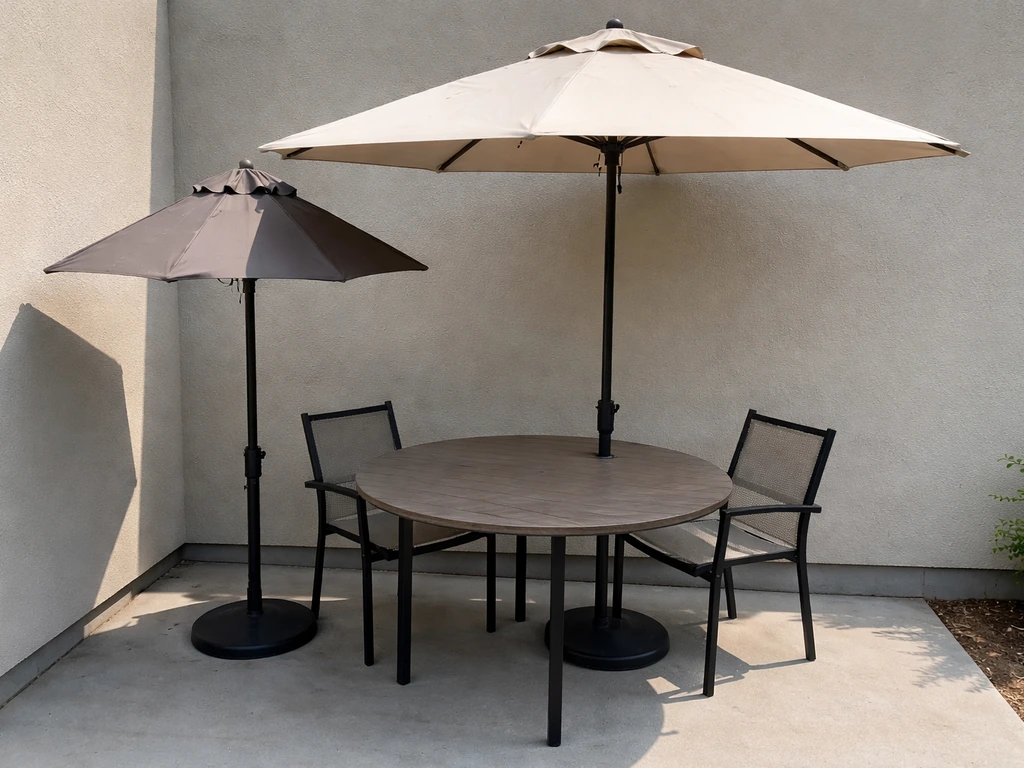
The most-repeated sizing mistake I see is buying an umbrella based on table diameter alone. A 48-inch round table does not need a 48-inch umbrella. It needs a canopy that extends well beyond the seating edge so people sitting around it actually sit in the shade. The practical rule: your umbrella should be 4 to 5 feet wider than your table diameter, giving roughly 2 to 2.5 feet of overhang on each side. At lunchtime with a high sun angle, even a few inches of missing overhang means guests on one side are squinting into direct light.
| Table/Seating Size | Recommended Umbrella Diameter | Typical Canopy Shape |
|---|---|---|
| Small bistro table (2 seats, ~30") | 7–7.5 ft | Round or hexagon |
| Standard round table (4 seats, 42–48") | 9 ft | Round or octagon |
| Rectangular table (6 seats, 60–72") | 9 ft offset OR 11 ft market | Rectangle or large octagon |
| Large dining or lounge zone (8+ seats) | 11–13 ft market or large cantilever | Octagon or square |
Round canopies are the most common and easiest to center over a round or square table. Octagon shapes are effectively round with slightly more surface area at the edges. Square and rectangular canopies make more sense when your seating layout is strongly rectangular, but they're less common in freestanding market styles and more often found in cantilever designs. For a single dining table, round or octagon is almost always the right call.
One sizing note for market-style umbrellas specifically: the center pole runs through the middle of the canopy and ideally through a hole in the center of your table. If your table doesn't have an umbrella hole, you'll need a freestanding base positioned to the side of the table, which affects coverage geometry. In that case a cantilever umbrella, which has no center pole, often makes more practical sense.
Materials, UV Protection, and Weather Resistance
Canopy Fabric: Where Durability Starts
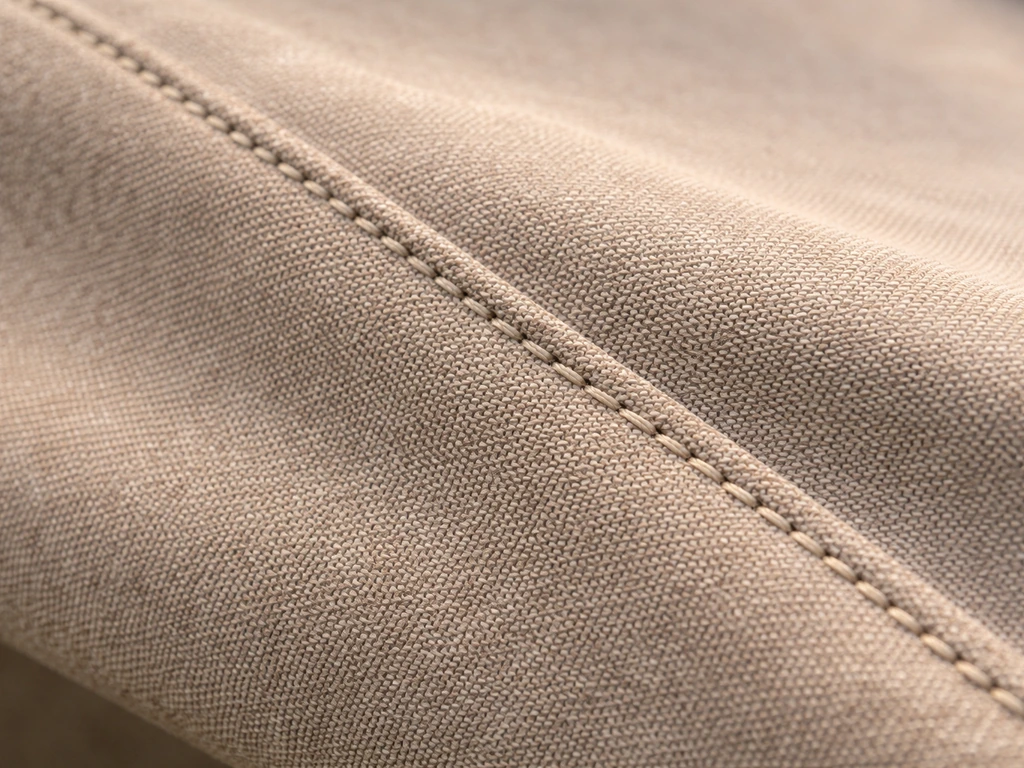
The fabric choice separates umbrellas that look great after five seasons from ones that fade and fray after two. Solution-dyed acrylic, most famously Sunbrella, is the gold standard. With solution-dyed fabric, the color is embedded throughout the entire fiber during manufacturing rather than applied as a surface coating. That means UV rays and rain attack fibers that are already the same color all the way through, so fading is dramatically slower. Sunbrella and equivalent solution-dyed acrylics carry UPF 50+ ratings, blocking over 98% of UV radiation, which is why they're used in serious marine and commercial applications, not just residential patios.
Polyester fabrics with UV coatings or olefin blends are cheaper and perform adequately in the short term, but the coating degrades with sun exposure over time, and you'll notice fading within a couple of seasons in a sunny climate. For a budget pick, coated polyester is fine. For something you want to last 7 to 10 years, the premium for solution-dyed acrylic is absolutely worth it.
Frame Materials: Aluminum vs. Steel vs. Wood
Aluminum is the most practical choice for most homeowners. To find the best sturdy patio umbrella, focus on a rigid frame and a heavy base matched to your wind exposure. It's lightweight enough to reposition without a team of people, it doesn't rust, and quality market umbrella poles in the 35mm to 40mm diameter range are rigid enough for everyday use. Treasure Garden's UM840, for example, uses a 40mm aluminum pole with 2mm wall thickness, which is a good benchmark for a sturdy mid-range market umbrella. The tradeoff is that aluminum can flex in sustained or gusty wind more than steel.
Steel frames are heavier and more rigid, which sounds better until you realize that moving a steel-framed umbrella and heavy base across your patio is genuinely hard. Steel also needs a quality powder coat to resist corrosion; cheap powder coating will chip and rust within a few years in humid or coastal environments. Fiberglass ribs (the arms that support the canopy) are worth looking for regardless of what the main pole is made of, because fiberglass flexes under wind load rather than snapping the way aluminum ribs can.
Teak and hardwood poles look beautiful and are naturally weather resistant, but they're heavy, expensive, and need periodic oiling to stay in good shape. They're a good fit if aesthetics are a top priority and you're willing to maintain them. For most people, powder-coated aluminum with fiberglass ribs hits the best balance of weight, durability, and price.
Wind Stability and Base Requirements for Freestanding Umbrellas
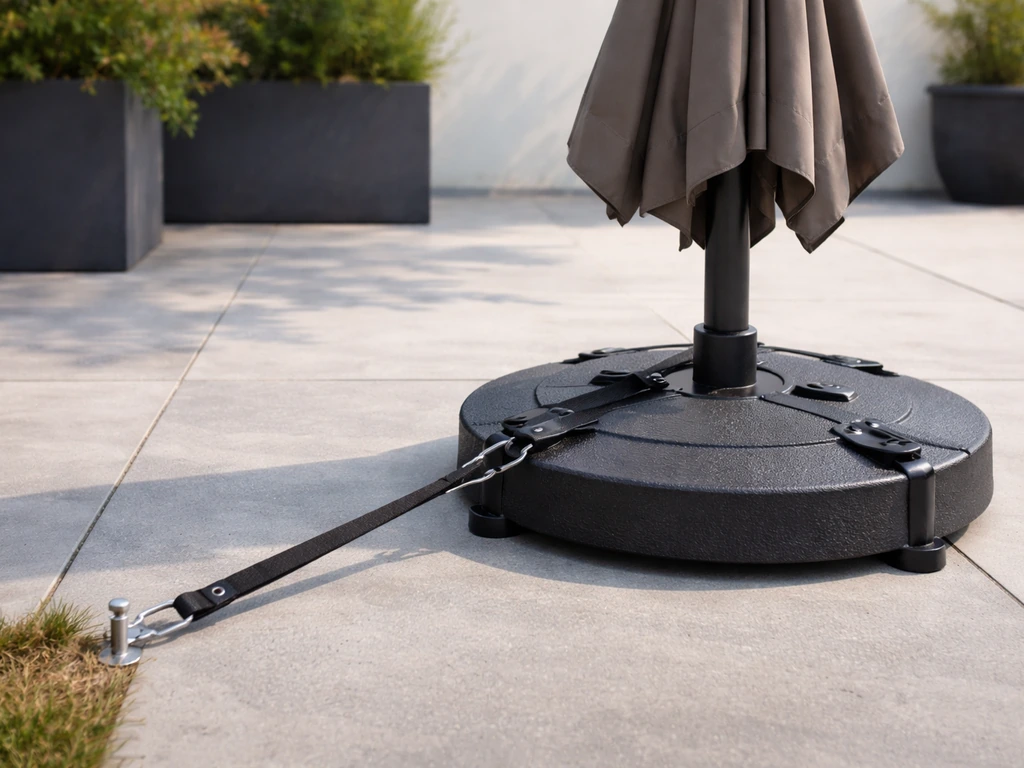
This is the section most people skip and then regret. A freestanding umbrella has nothing anchoring it to the ground except the weight of its base, so the base weight is your primary safety system. The widely used rule of thumb is about 10 pounds of base weight per foot of canopy diameter. For a 9-foot umbrella, that means a minimum of 50 pounds. For an 11-foot umbrella, you're looking at 100 pounds or more, ideally from a purpose-built weighted base or a base you can fill with sand or water on-site.
A 50-pound minimum is exactly what major umbrella brands like Galtech and Treasure Garden specify for their 9-foot market umbrellas, and it's a real minimum, not a comfortable working weight. If your patio is even moderately exposed to wind, adding extra weight or anchoring is smart. Some fillable bases (sand or water fill) let you dial up the weight; sand-filled bases are heavier than water-filled ones for the same volume, which is worth knowing when you're comparing options.
Cantilever and offset umbrellas need even more careful base selection because the offset arm changes how wind load is distributed. The center of mass is off to one side, which creates a higher overturning moment, meaning the wind leverage trying to tip the whole thing is greater than with a center-pole market umbrella. This is a genuine engineering difference, not marketing. Many homeowners discover this after a moderate wind event tips their large cantilever umbrella. If you go the cantilever route, over-spec the base weight and look for models with a cross-base design you can add weight plates to.
Some manufacturers, like Shademaker, publish a Base Weight Matrix that matches specific umbrella models to minimum base weights. If you're investing in a premium umbrella, it's worth checking whether the manufacturer provides this kind of matched guidance rather than a generic minimum. Matching the pole diameter to the base receiver is equally important: a 1.5-inch pole will wobble in a 2-inch receiver, and that wobble under wind load stresses both the pole and base over time.
Manufacturer manuals are more specific about wind thresholds than most buyers expect. Some explicitly state not to operate a patio umbrella in wind conditions greater than 5 mph (8 kph), and nearly all instruct you to close and secure the umbrella when you're not using it or when wind picks up. That means if you're someone who tends to leave the umbrella open and walk away, you need either a very heavy base or a product specifically engineered for wind resistance with vented canopy panels. Most standard freestanding umbrellas are not designed to be left open unattended.
Style Types and Configurations: Market vs. Cantilever
"Freestanding" covers two fundamentally different umbrella designs: center-pole market umbrellas and offset or cantilever umbrellas. They solve different problems, and choosing the wrong one for your setup creates frustration.
Market Umbrellas (Center Pole)
Market umbrellas have a straight center pole that runs from the base up through or beside your table. They're more wind-stable than cantilever designs because the pole is centered under the canopy and the load path is more direct. They're also simpler mechanically, which means fewer things to break. The limitation is that the center pole sits in your seating area, which is fine for a table with an umbrella hole but can be awkward for lounge seating or sectionals where there's no natural place to put a pole.
Cantilever and Offset Umbrellas
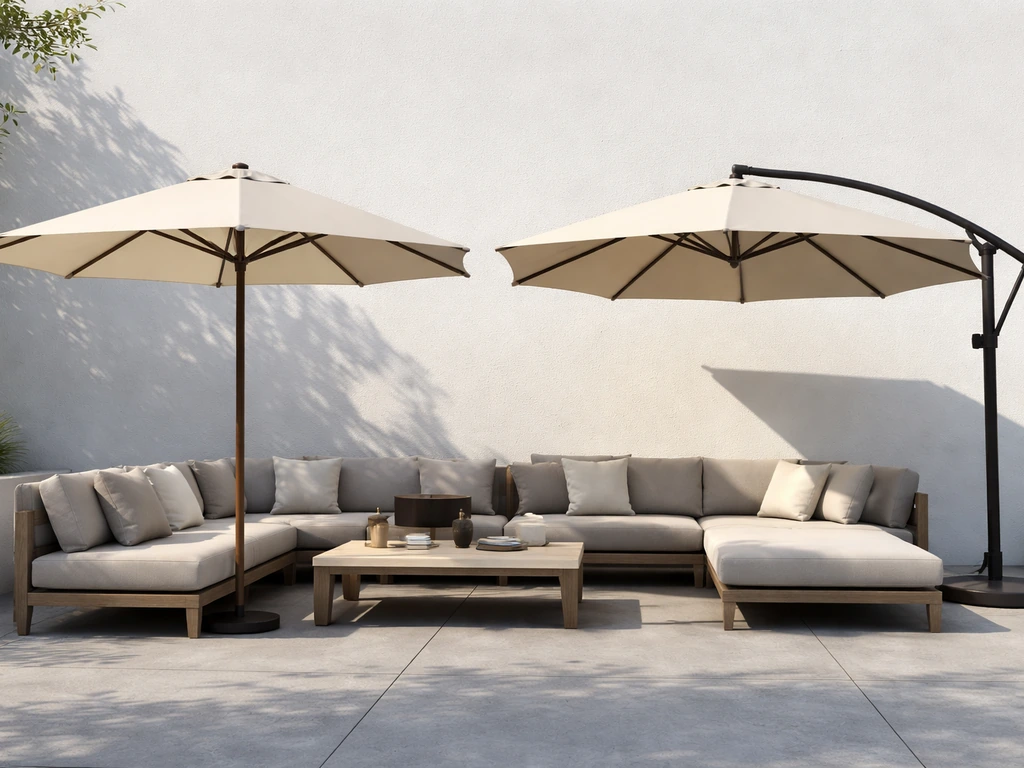
Cantilever (offset) umbrellas position the pole to the side, extending an arm over the seating area so the entire space below is pole-free. This is ideal for lounge furniture, pool decks, or any spot where you want flexible positioning without a center obstruction. The tradeoff is real: cantilever designs are more wind-sensitive due to the offset load, they typically require heavier and more expensive bases, and the pivot mechanisms add complexity that can wear over time. They also generally cost more for equivalent canopy size and quality.
| Feature | Market (Center Pole) | Cantilever (Offset) |
|---|---|---|
| Wind stability | Better, centered load | Lower, offset creates more leverage |
| Base weight needed (9–10 ft) | 50+ lbs | 75–150+ lbs depending on model |
| Pole obstruction | Center pole present | No pole in shade zone |
| Best for | Dining tables with umbrella hole | Lounges, pools, flexible seating |
| Mechanical complexity | Simple: crank and tilt | Higher: pivot, rotation, tilt locks |
| Price for equivalent quality | Lower | Higher |
| Ideal seating layout | Round or square tables | Sectionals, loungers, open spaces |
For most people with a standard dining table, a market umbrella is the right call. For those with poolside loungers or a large open seating area without a central table, a cantilever makes the experience significantly better, just budget for the right base and accept the extra wind caution required.
Top Picks by Category
Rather than ranking by arbitrary scores, here are the categories that actually reflect how buyers make decisions, with the specs and trade-offs you need to know. Note that most of these umbrellas are sold without a base, so factor in base cost (typically $50 to $200 depending on weight and material) when comparing total price.
Best Value: Galtech 9-Foot Manual Tilt Market Umbrella (Model 636)
Galtech makes reliable, no-frills market umbrellas that punch above their price point. The 9-foot octagon manual tilt model uses an aluminum pole and is available with several canopy fabric options. If you’re specifically shopping for the best heavy-duty patio umbrella, use that same 9-foot, vented-and-sturdy approach and make sure you pair it with a truly heavyweight base 9-foot octagon manual tilt model. The manufacturer recommends a 50-pound or heavier base (sold separately), which is a transparent and reasonable spec. The manual tilt is simple to operate and less likely to fail than auto-tilt mechanisms. If you want a solid workhorse market umbrella without paying for features you won't use daily, this is the category to start in.
- Pros: honest pricing, proven reliability, easy tilt operation, available in multiple fabric options
- Cons: base not included (budget $60–$100 for a good 50 lb base), limited premium fabric options compared to Treasure Garden
- Base recommendation: 50 lbs minimum; 60–75 lbs if your space is wind-exposed
Best Premium: Treasure Garden 9-Foot Flex Market Umbrella (UM840)
Treasure Garden is the benchmark for mid-to-premium market umbrellas in the residential space. The UM840 uses a 40mm aluminum pole with 2mm wall thickness, fiberglass ribs (which flex rather than snap under wind load), and is available with Sunbrella canopy fabric. It also includes a wind vent at the peak for heat and pressure venting, which meaningfully improves canopy behavior in moderate breezes. Minimum base weight is 50 pounds, with the base sold separately. The build quality is noticeably better than entry-level options, and the fiberglass ribs are a genuine long-term durability advantage.
- Pros: fiberglass ribs for wind flex, 40mm pole with good wall thickness, wind vent canopy, Sunbrella fabric availability, strong brand support and parts availability
- Cons: meaningfully more expensive than value options, base still sold separately
- Base recommendation: 50 lbs minimum from Treasure Garden's compatible base lineup for matched pole diameter fit
Best for Large Coverage: 11-Foot Market Umbrella or Large Cantilever
If you're shading a 6-to-8-person table or a broad lounge area, you need an 11-foot canopy at minimum. For market-style, look for 11-foot versions of the same Galtech or Treasure Garden families, but know that base requirements scale up significantly: expect 100 pounds or more for stable performance. For the best weight for a patio umbrella stand, match the base weight to your umbrella size and local wind exposure instead of relying on a generic minimum expect 100 pounds or more for stable performance. For pole-free coverage over a larger zone, a large cantilever in the 10-to-13-foot range makes sense, but this is where base requirements get serious and expensive. A proper cross-base with ballast weight plates is almost mandatory. Budget accordingly, and if you're in a wind-prone area, consider whether a fixed sail shade or pergola structure might serve you better than a very large freestanding umbrella.
- Pros: genuine coverage for large seating zones, cantilever option eliminates center pole obstacle
- Cons: base weight requirements are significant (100+ lbs), cost increases substantially, wind sensitivity is higher for large cantilevers
- Base recommendation: manufacturer-matched base with minimum weight from brand's own spec chart; do not guess for large canopies
Best for Windy Areas: Market Umbrella with Vented Canopy and Heavy Base
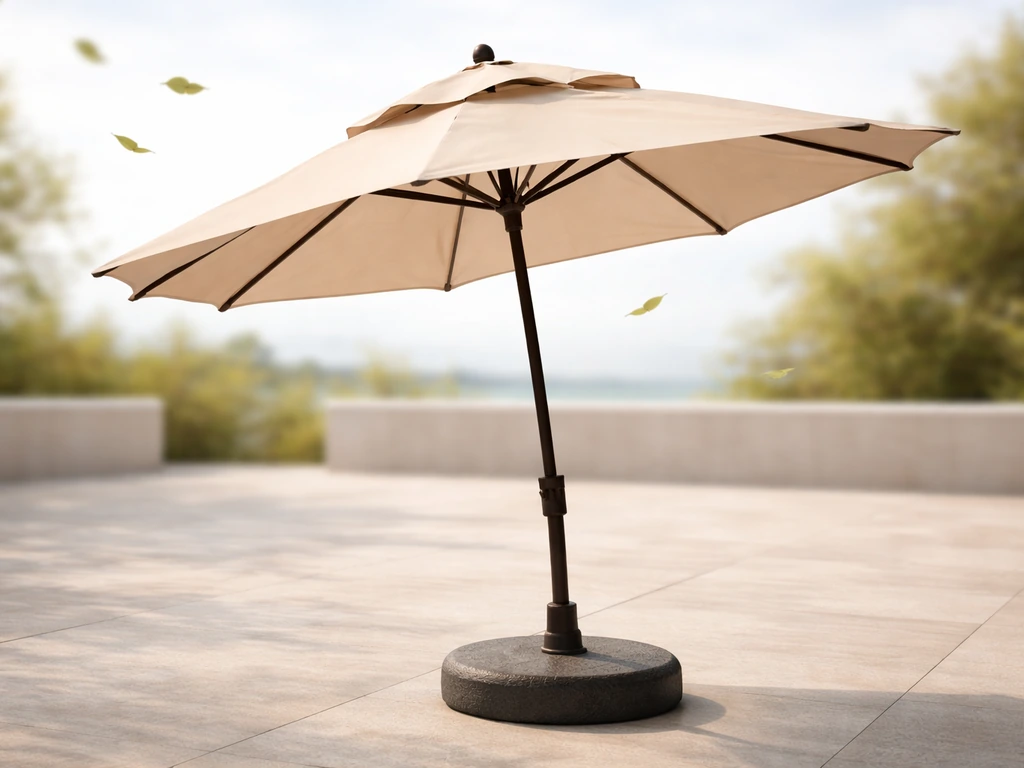
If wind is your primary concern, a center-pole market umbrella with a double-vented canopy, fiberglass ribs, and an over-spec'd base is the most practical solution. Look specifically for vented canopy designs where the top section opens to release pressure, and pair the umbrella with a base that's heavier than the manufacturer's stated minimum, not exactly at it. Canopies rated for higher wind in manufacturer specs usually list tested wind speeds; anything rated above 30 mph for brief gusts is worth prioritizing. Cantilever umbrellas in very windy spaces are a frustrating combination: the physics simply work against you.
- Pros: vented canopies dramatically reduce canopy lift in gusts, market pole design is inherently more stable than cantilever
- Cons: you still need to close the umbrella in sustained wind above casual breeze levels; no freestanding umbrella is truly wind-proof
- Base recommendation: 75–100 lbs even for a 9-foot canopy if wind is a consistent factor in your location
Care, Maintenance, and Safe Operation
Opening and Closing Safely
Always open and close the umbrella from a stable position with the wind calm or at your back. Manufacturer manuals are blunt about wind operation: some explicitly cap safe operation at 5 mph (8 kph). That's a light breeze, barely enough to feel. In practice, most people operate umbrellas in slightly higher winds without incident, but the underlying point stands: if you're fighting the wind to open or close the umbrella, stop. Close it, wait for conditions to settle, and try again. Operating an open umbrella in gusty conditions with inadequate base weight is the single most common cause of patio umbrella accidents.
Cleaning the Canopy
For solution-dyed acrylic canopies, spot cleaning with mild soap and lukewarm water, followed by a rinse and air dry, is all you need for routine maintenance. Don't use harsh detergents or pressure washers on the fabric; they degrade the weave and any UV-protective finish. Let the canopy dry fully before closing it to prevent mildew from developing in the folded fabric. For polyester canopies, the same gentle approach applies, though these fabrics can be more prone to mildew if stored damp.
Seasonal Storage
Close and secure the umbrella whenever you leave the patio, not just during storms. UV degradation, bird damage, and wind strain all accumulate faster on an umbrella left open unattended. In climates with a true off-season, store the canopy indoors or in a breathable storage bag. Remove the canopy from the frame if possible for easier storage and to reduce stress on the ribs. The base can usually stay outside if it's a resin or steel unit with proper coating, but drain water-fillable bases before freezing temperatures arrive or the expansion will crack them.
Replacement Parts and Repairs
One underrated reason to buy from established brands like Treasure Garden, Galtech, or similar is parts availability. Rib replacement instructions and actual replacement ribs are available for many models, meaning a bent or broken rib doesn't require buying a whole new umbrella. Before buying any freestanding umbrella, quickly check whether replacement canopies and ribs are available for that specific model. Cheaper import brands often have no parts ecosystem, so a single storm damage event means replacement rather than repair.
Tilt mechanisms and crank handles are the most commonly replaced parts after ribs. If you buy a model with a push-button auto-tilt, make sure the replacement mechanism is available and reasonably priced before you commit. Manual tilt systems are simpler, last longer, and are easier to repair when they do eventually wear out.
A Quick Word on the Base Long-Term
Bases take more abuse than people expect: UV, water, freeze-thaw cycles, and the physical stress of the pole moving in wind. Inspect the base receiver (the sleeve the pole sits in) annually for cracks or loosening. A cracked base that looks fine from the outside can fail suddenly in wind. Resin bases are affordable and easy to fill, but they become brittle with years of UV exposure. Cast iron or steel bases with a good powder coat last significantly longer. If you're investing in a quality umbrella, pair it with a base that can actually last as long as the umbrella itself.
FAQ
If I buy the best free standing patio umbrella canopy, can I just use any umbrella base that fits the pole?
No. The pole diameter must match the base receiver snugly, and weight must match your canopy size and wind exposure. Even with a correct fit, an undersized base can wobble, which stresses the pole and ribs over time. Always verify both the pole size (in mm or inches) and the minimum recommended base weight for that exact umbrella model.
What’s the difference between a “market umbrella” base and a “cantilever umbrella” base?
Cantilever bases are designed for an offset load path, so they need more ballast and often use a cross-base or plate system to stabilize the torque created by the arm. A market umbrella base can physically hold a pole, but it won’t provide the same resistance to tipping for an offset design.
How do I estimate base weight if my wind is higher than average?
Use the umbrella’s canopy diameter rule as a baseline, then over-spec the base. If your patio is open, near a pool, or exposed on multiple sides, add extra weight beyond the stated minimum, or choose a fixed weighted base intended for higher wind. Also consider using sand when you can, since it weighs more per volume than water.
Is a fillable base (sand or water) as safe as a solid heavy base?
It can be, if it is filled to its intended capacity and the umbrella is used within the product’s wind guidance. Water bases are lighter when empty and can shift more, while sand bases are heavier but harder to move. Check that the base has a secure pole sleeve and no play, then refill or top up before each season.
My patio table doesn’t have an umbrella hole. Can I still use a center-pole freestanding umbrella?
Yes, but you will typically mount the base off-center, which changes where the canopy lands and can reduce shade coverage on one side. If lounge seating or sectional layouts are involved, an offset cantilever usually gives you more predictable pole-free shade without compromising the seating coverage geometry.
Do vents and vented canopies actually matter, or is it just marketing?
They matter most when you get moderate airflow. Venting reduces wind pressure on the canopy, which lowers the force trying to lift or twist the umbrella. If your model has a vented top and fiberglass ribs, you’re generally better set for breezier conditions than with a fully solid canopy and more rigid-only framing.
How should I position a freestanding umbrella relative to the table or seating so people stay shaded?
Don’t focus on table diameter alone. Place the umbrella so the canopy overhang reaches past the seating edge by several feet total, meaning about 2 to 2.5 feet of overhang per side for typical sizing. If one side is uncovered at lunchtime, repositioning the base (or choosing a larger canopy) usually fixes it more reliably than relying on tilt alone.
What wind speed should I treat as a hard stop for using the umbrella?
Treat the manufacturer’s stated limit as the hard stop, not the typical “works fine” experience. If a manual specifies a low threshold (for example around 5 mph), assume it is based on safety margins for that exact base weight, fabric, and frame design. If you feel you must fight the wind to open or close it, close it and wait.
Can I leave a freestanding patio umbrella open outside overnight or when I’m away briefly?
Most standard market umbrellas are not designed for unattended open use. Even moderate gusts can start the wobble that leads to tipping, especially with a base at the minimum weight. If you must leave it, choose a model and base system rated for it, otherwise close and secure it when you’re not actively using it.
Will fiberglass ribs make a noticeable difference compared with aluminum ribs?
Often, yes. Fiberglass flexes under wind load instead of cracking or snapping the way some aluminum rib configurations can. The benefit is most apparent after gusts or repeated windy days, and it can reduce replacement frequency because bent parts are sometimes easier to replace than the entire frame.
How do I clean the fabric without damaging the UV protection?
Use mild soap and lukewarm water, then rinse and air dry completely. Avoid pressure washing and harsh detergents, which can degrade the fabric weave or any treatment. After cleaning, make sure the canopy is fully dry before closing to prevent mildew, especially if you store it folded.
What maintenance should I do before the first windy season?
Inspect the base receiver (the pole sleeve area) for cracks, looseness, or wobble, then check that all tilt components and crank mechanisms operate smoothly. If your umbrella has a vented top, ensure the canopy panels open and align correctly. Also check rib ends and fasteners because small looseness gets worse once the umbrella is under load.
Do replacement parts really exist for higher-end freestanding umbrellas?
Often, yes for reputable models, but it is model-specific. Before buying, verify that replacement ribs, canopies, and common tilt components are available for that exact SKU. If parts aren’t available or are unusually expensive, the “best” umbrella can become costly after a single storm damage event.
My umbrella tilt feels stiff or uneven. Should I force it?
No. Uneven tilt often indicates misalignment, a worn crank, or debris in the mechanism. For manual tilt, ensure the umbrella is closed and stable before inspecting. For auto-tilt, check whether the tilt mechanism replacements are available before continuing to force operation, since damaged parts can compound.
How do I store the umbrella for winter so the base doesn’t crack?
Drain water-fillable bases before freezing temperatures, because ice expansion can crack the container. If the canopy can be removed, store it indoors or in a breathable cover, and avoid leaving damp fabric folded. Resin bases can become brittle over years of UV, so clean and inspect them at the start of each season.