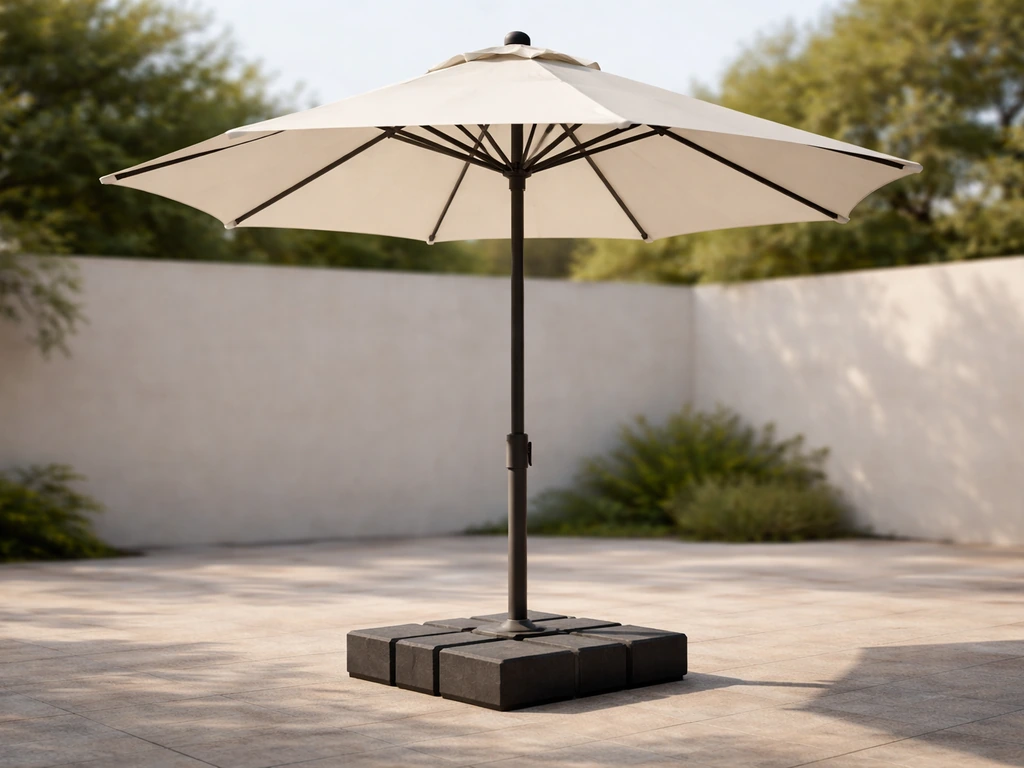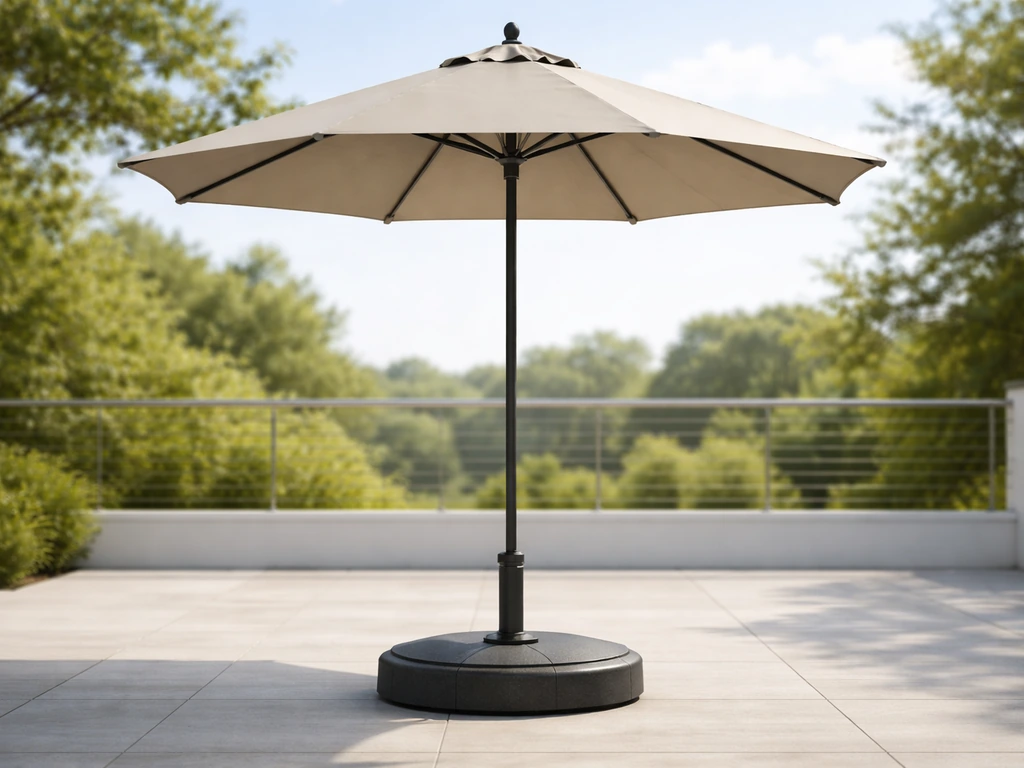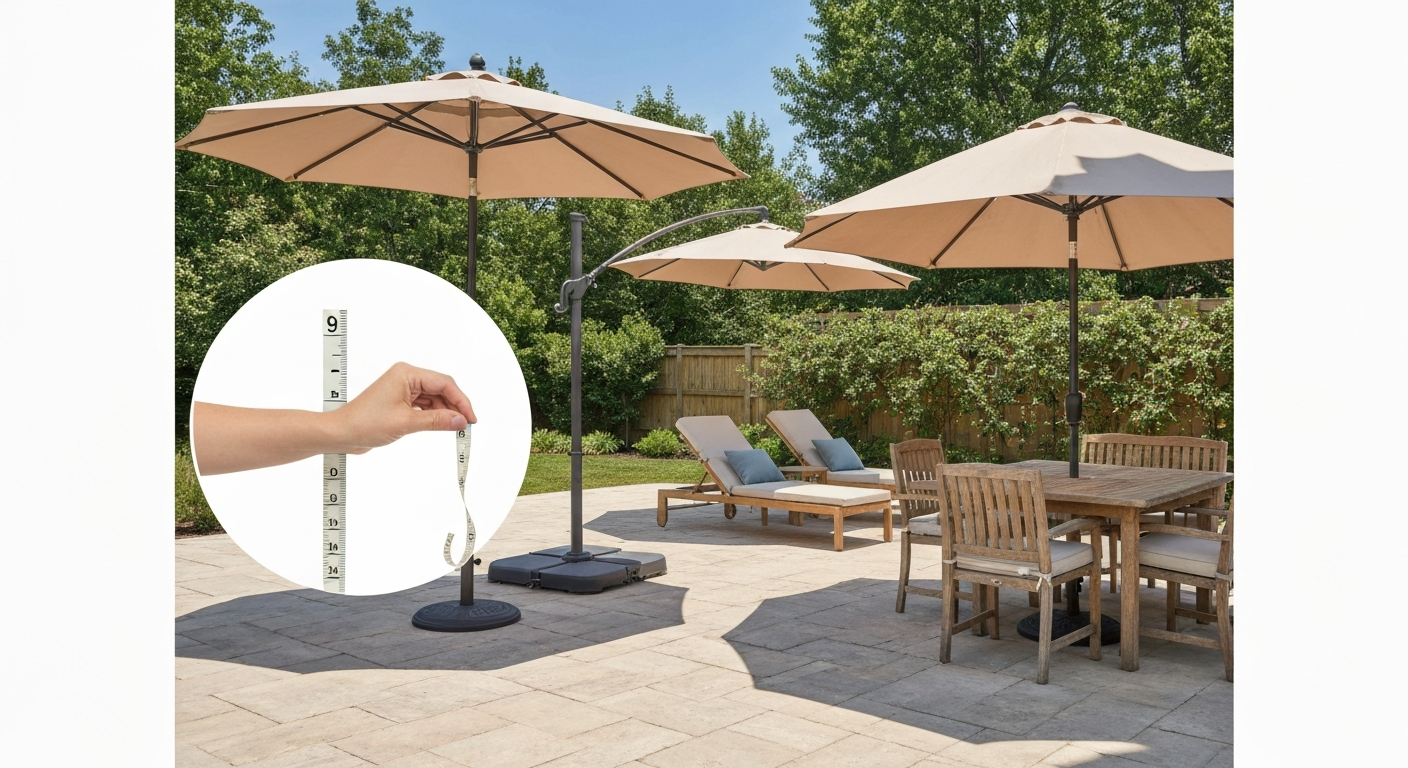
For a standard freestanding market umbrella, aim for a base weight of at least 40–50 lbs for a 7.5–10 ft canopy, and 20–30 lbs for a smaller 6–7 ft canopy. For a cantilever or offset umbrella, the number jumps dramatically: a 10 ft offset typically needs 175–225 lbs of total base weight, and some manufacturer specs call for 200 lbs or more. If you want a quick rule of thumb before we go deeper, plan for roughly 10 lbs of base weight per foot of canopy diameter for a market umbrella, and then multiply that by at least 1.5x for a cantilever. More weight is almost always better.
How Heavy Should a Patio Umbrella Base Be?

Kent Lang
27 May 2026
Why base weight matters for patio umbrella stability
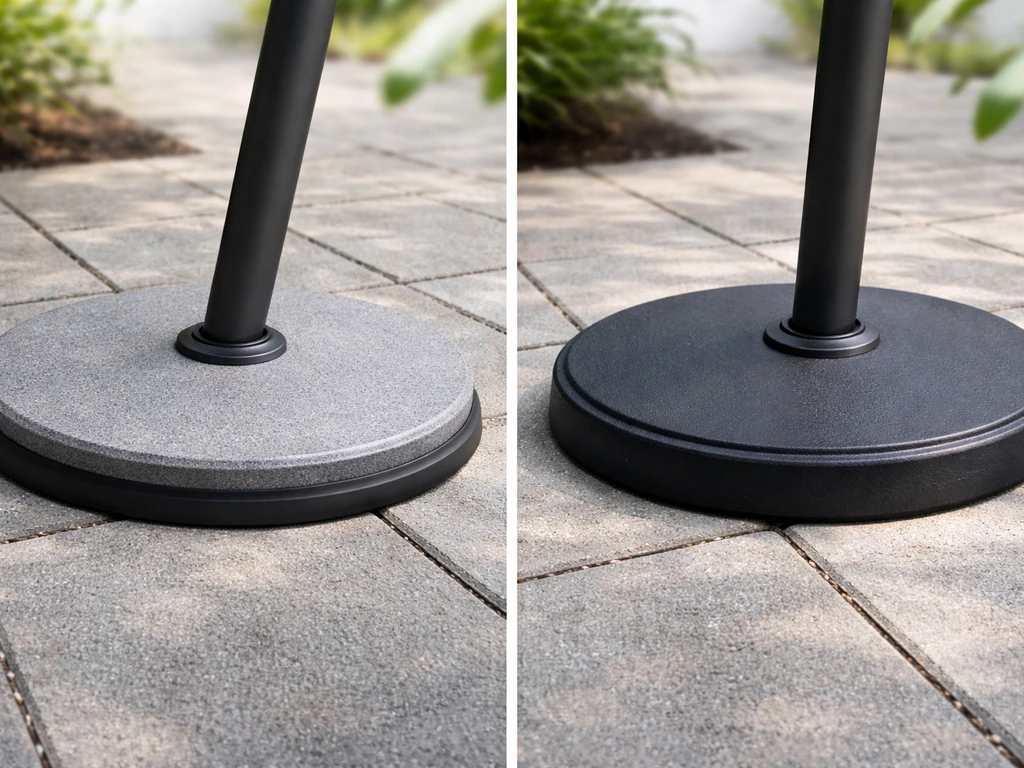
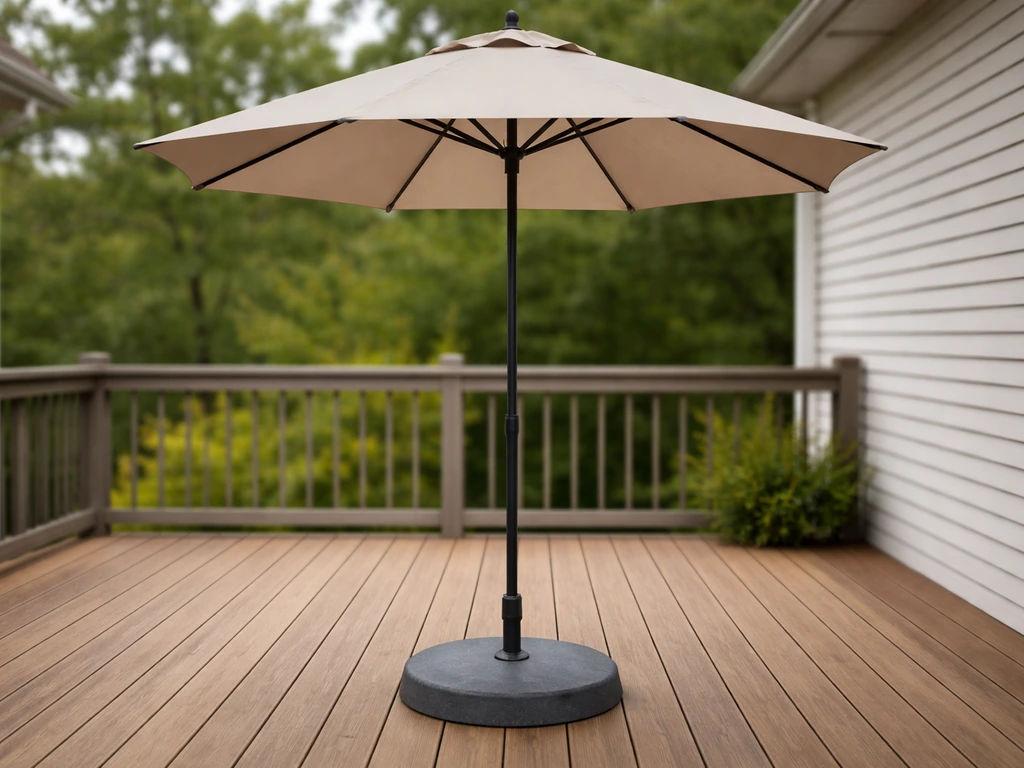
Patio umbrellas are designed primarily for sun protection, not wind resistance. That distinction matters because it shifts the entire burden of stability onto the base. When wind catches the canopy, it creates a lateral force that acts like a lever, using the pole as the arm. A light base doesn't just fail to hold the umbrella in place, it can tip over and send a heavy pole flying into furniture, windows, or people. A properly weighted base is your main safety mechanism.
The physics get worse as canopy diameter increases. A larger canopy captures more wind, and a taller pole makes the leverage angle more severe. This is why manufacturer specs for larger umbrellas often seem surprisingly heavy. One Home Depot umbrella manual, for example, lists a recommended base weight of 120 kg (about 265 lbs), which surprises most buyers who assumed any 50 lb base would do the job. It won't.
Match base weight to umbrella size and type
Umbrella type changes the weight requirement more than any other single factor. A market umbrella has its pole centered under the canopy, so the weight is distributed relatively evenly around a vertical axis. A cantilever or offset umbrella has its pole off to the side, which means the canopy is hanging out at an angle or distance from the base. That offset geometry creates a much more aggressive torque moment, and it demands a dramatically heavier base to counteract it.
| Umbrella Type | Canopy Size | Recommended Base Weight |
|---|---|---|
| Market (freestanding) | 6–7 ft | 20–30 lbs |
| Market (freestanding) | 7.5–9 ft | 40–50 lbs |
| Market (freestanding) | 9–10 ft | 50–75 lbs |
| Cantilever / Offset | 9–10 ft | 175–225 lbs |
| Cantilever / Offset | 10–13 ft | 200–400+ lbs |
The numbers for cantilever umbrellas can look alarming, but they reflect real engineering requirements. Treasure Garden's AKZ13 base, for instance, weighs 75 lbs as a frame and is designed to accept four sand-fill containers that together can add around 400 lbs of sand. The fully assembled unit with umbrella can exceed 500 lbs total, and the manual recommends a two-person setup team for that reason. That's not overkill. That's the correct engineering for a large offset canopy in any practical outdoor setting.
The 10 lbs per foot rule for market umbrellas
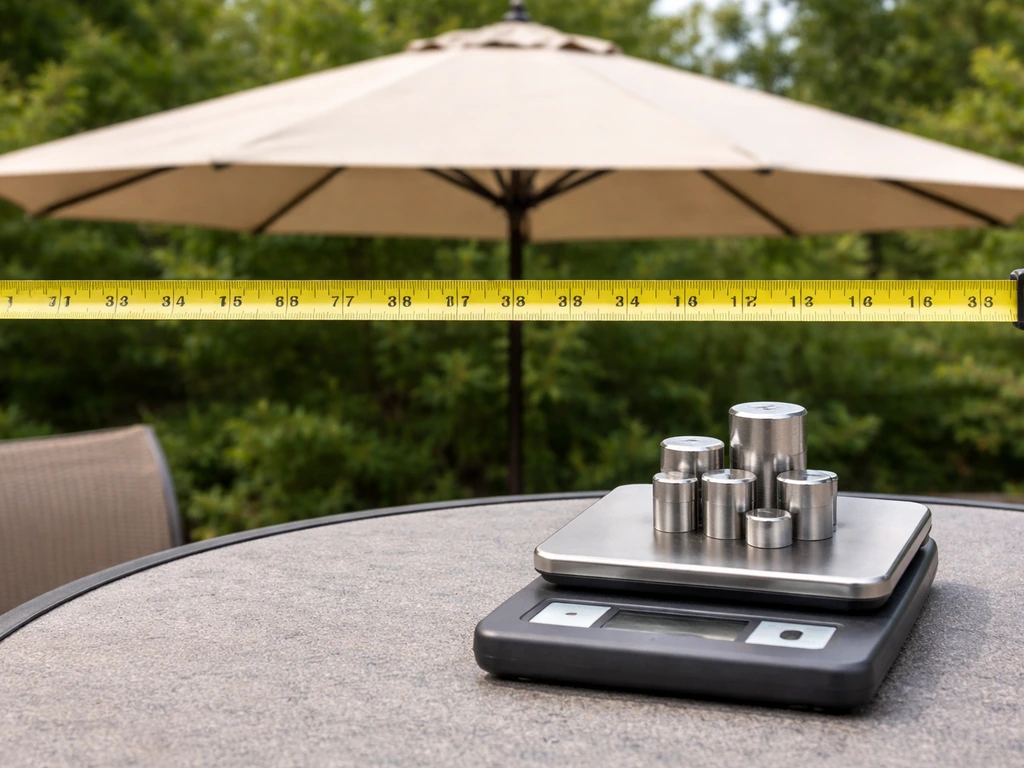
For market-style umbrellas, the most practical shortcut is 10 lbs of base weight per foot of canopy diameter. A good way to estimate the best weight for a patio umbrella stand is to use the canopy size as your starting point 10 lbs of base weight per foot. A 9 ft umbrella therefore needs roughly 90 lbs as a baseline. In moderate wind conditions, some sources push that to 115 lbs. If your market umbrella is sitting in a base that weighs 50 lbs, you're under-weighted for anything above a light breeze. Many of the lighter bases sold alongside umbrellas at big-box stores fall into this under-weighted category, which is something worth checking before you assume the combo is correctly paired. If you are searching for the best free standing patio umbrella, focus on a model designed for wind stability and pair it with an appropriately heavy base.
How wind exposure and umbrella height change the requirement
Location matters a lot. If your patio is sheltered by a fence, walls, or dense plantings, even a lighter base can perform reasonably well. But if you're on a deck that's elevated, faces an open yard, sits near a body of water, or is on a corner lot with no wind break, you need to treat every weight recommendation as a minimum, not a target. Manufacturers typically advise closing umbrellas entirely when winds exceed 10–15 mph, which sounds conservative until you've seen a base tip over in a backyard gust.
Umbrella height amplifies the wind problem. A taller pole creates a longer lever arm, which means even the same wind speed creates more rotational force at the base. If you've added a tilt mechanism or a pulley-lift system that raises the canopy higher than a basic push-up umbrella, your effective wind load goes up. Similarly, a vented canopy reduces wind resistance somewhat, but it doesn't eliminate it. The base weight requirement stays essentially the same because you still need stability at rest and in gusts.
Rules of thumb and recommended weight ranges
Here's how to size your base without overthinking it. Start with canopy diameter, identify your umbrella type, then add a wind exposure adjustment if needed.
- 6–7 ft market umbrella: 20–30 lbs minimum; 35–40 lbs if exposed to regular wind
- 7.5–9 ft market umbrella: 40–50 lbs minimum; aim for 75–90 lbs in windy spots
- 9–10 ft market umbrella: 50–75 lbs minimum; 90–115 lbs in moderate-to-windy conditions
- 9–10 ft cantilever/offset umbrella: 175–225 lbs total base weight
- 10–13 ft cantilever/offset umbrella: 200–400+ lbs depending on manufacturer specification
- Any umbrella on an elevated or open deck: add at least 20–30% to the baseline recommendation
The phrase 'more weight is always better' appears directly in at least one manufacturer's spec document, and it's honest advice. There is no real downside to having a heavier base other than the inconvenience of moving it. A base that's 20 lbs heavier than the minimum won't hurt anything. A base that's 20 lbs lighter than the minimum is a liability.
Choosing the right base setup: fillable vs solid, and how to anchor properly
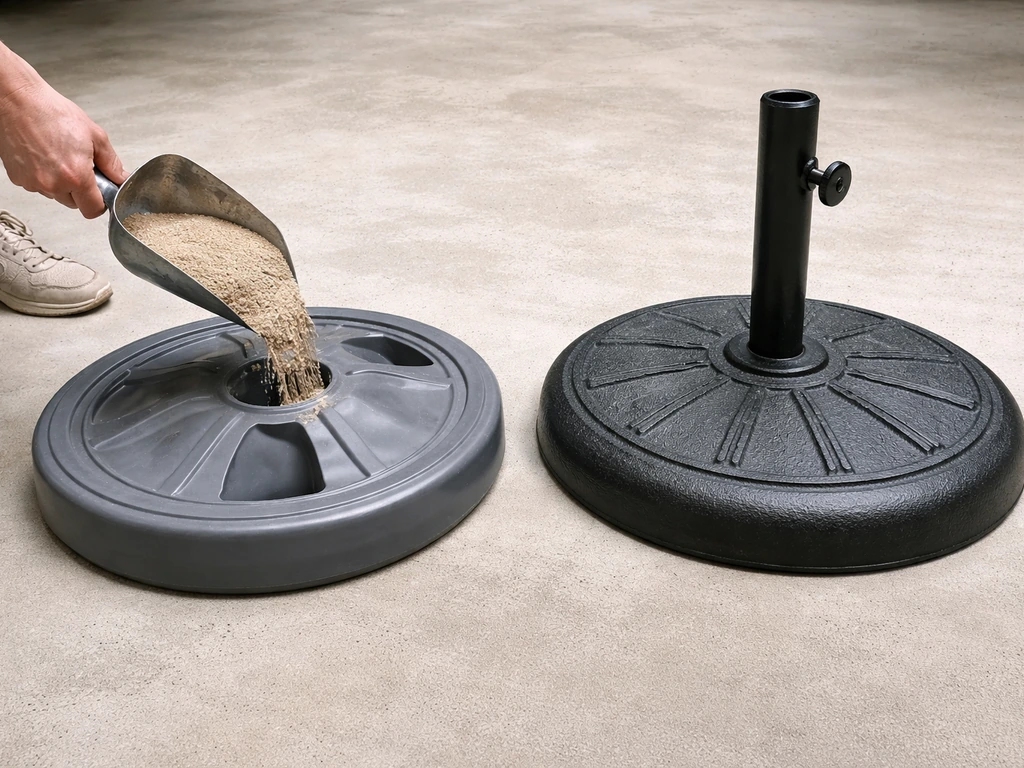
Bases generally come in two forms: solid (cast iron, steel, or heavy resin, with a fixed weight) and fillable (plastic or resin shells that you fill with sand or water). Each has trade-offs.
| Base Type | Typical Weight When Full | Portability | Best For |
|---|---|---|---|
| Solid cast iron / steel | 50–100 lbs fixed | Low (heavy to move) | Permanent setups, market umbrellas |
| Fillable (sand) | 50–100+ lbs when full | Medium (drain to move) | Market umbrellas, moderate wind |
| Fillable (water) | 25–50 lbs when full | High (easy to drain) | Light use, sheltered areas only |
| Cantilever cross-base with sand bags/plates | 75–400+ lbs when filled | Low | Offset/cantilever umbrellas |
Sand is a better fill material than water. It weighs more per volume, it doesn't evaporate or freeze, and it doesn't create the sloshing instability that partially filled water bases sometimes exhibit. A 50 lb fillable base filled with water often holds closer to 35–40 lbs of actual weight because of headspace and partial fills. If you're using a fillable base, fill it completely with sand and verify the filled weight matches your target.
For cantilever umbrellas specifically, the base frame almost never provides enough weight on its own. You'll always need to supplement it with weight plates, sand bags, or sand-fill containers. The base frame is essentially a structural skeleton, and the fill creates the actual stability. Don't mistake the frame weight listed in the product description for the total working weight. Treasure Garden's BASE-13, to use a concrete example, ships at 75 lbs but is engineered to work with hundreds of additional pounds of sand fill.
If you want a more permanent solution, anchoring the base to a concrete pad with a ground anchor sleeve is the most secure option available. Some in-ground mounting sleeves allow you to insert and remove the pole, giving you the security of a permanent anchor with the flexibility to store the umbrella in winter. This approach is worth considering if you're in a consistently windy area or if you've already tipped a base and want a definitive fix.
How to verify requirements on labels and specs (and avoid common mistakes)
Before you buy any base, check two things: the umbrella manufacturer's spec sheet for a listed minimum base weight, and the base product page for a listed weight capacity or compatibility note. A Royal Swimming Pools patio umbrella guide provides minimum base-size or base-weight requirements by umbrella style and size, so you can verify the manufacturer spec sheet properly blank" rel="noopener noreferrer">umbrella manufacturer's spec sheet. Many umbrella brands, including Treasure Garden and several sold at major retailers, publish a minimum base weight requirement directly in the product listing or in a downloadable spec PDF. If you don't see it, look for the instruction manual, which often includes a base weight table by umbrella size.
The most common mistakes people make when choosing a base are worth knowing upfront so you don't repeat them.
- Buying the base that came bundled with the umbrella without checking if it's actually rated for that canopy size. Bundles are often convenience packages, not optimally matched pairs.
- Using a water-filled base and not filling it fully, ending up with 30–35 lbs of actual weight when the target was 50 lbs.
- Assuming a solid-looking base is heavy enough because it looks substantial. Check the listed weight, not just the visual impression.
- Using a market umbrella base for a cantilever umbrella. These are entirely different products with incompatible weight requirements.
- Not closing the umbrella in wind above 10–15 mph and expecting the base to compensate. No base eliminates the need to close the umbrella in significant wind.
- Ignoring the pole diameter compatibility when buying a base separately. A base rated for a 1.5-inch pole won't properly seat a 1.75-inch or 2-inch pole, which creates a wobble that reduces effective stability even at correct weight.
If you're genuinely unsure what your umbrella needs and you can't locate the spec sheet, the safest fallback is to go heavier than you think you need and use sand as your fill material. For a market umbrella up to 9 ft, a 75–90 lb sand-filled base is a conservative but reliable choice. For any cantilever umbrella, don't purchase a base until you've confirmed the minimum weight requirement from the manufacturer, because under-weighting a cantilever is genuinely dangerous. If you're in the market for a new setup entirely, looking at purpose-built heavy-duty patio umbrella bases or weighted base options designed specifically for offset umbrellas will save you the guesswork of trying to retrofit a market umbrella stand into a role it wasn't built for. For a quick comparison, focus on the best patio umbrella with weighted base options that match your umbrella type and canopy size. If you're shopping for the best sturdy patio umbrella, start with a base weight spec you can trust for your canopy size and wind exposure. If you're shopping for a best heavy-duty patio umbrella, prioritize a base that matches an offset or cantilever design rather than relying on a lightweight stand purpose-built heavy-duty patio umbrella bases. If you're shopping for the best patio umbrella stands, look for ones engineered for your umbrella type and the wind conditions where you'll use it.
FAQ
Does umbrella height or tilt change how heavy the base should be?
If your umbrella has a clamp or bracket that lets you adjust height or tilt, use the highest position you plan to run it. Height increases the wind lever effect, so the base weight you chose for a low setting can be under-spec when the canopy is lifted higher. If the manufacturer lists a single minimum, treat it as the requirement for the most exposed configuration.
My umbrella is “mostly centered,” but it overhangs a bit, do I still use market umbrella base weights?
Yes. If the pole sits off-center (offset, cantilever, or a design where the canopy overhangs beyond the pole line), plan on the higher cantilever weight guidance. A base that meets market-style numbers can still be unsafe because the torque at the base is higher even at the same canopy diameter.
What weight number should I trust on a base listing, the frame weight or the total filled weight?
Buy based on the assembled working weight the base can achieve, not the listed shipping or frame weight. For fillable bases, confirm how much sand or water it can hold and whether the manufacturer states a minimum filled weight for your umbrella size. For cantilevers, assume the base frame alone is not enough unless the spec explicitly says otherwise.
Is sand or water better for meeting the base weight requirement, and do partial fills matter?
For sand fill, aim for fully packed sand up to the base fill line, not a partial fill “to save effort.” For water, you must avoid partial fills because headspace can increase sloshing and reduce effective stability. If your base uses water, fill it completely and still consider it less reliable than sand for gust resistance.
If I anchor the base to the ground, do I still need to hit the full weight minimum?
Anchoring depends on your patio surface. If you have a concrete pad or you can install a ground anchor sleeve, anchoring is usually the most stable option and helps prevent tipping. On softer surfaces like pavers, you may need special anchoring methods, and in those cases the base still has to meet the weight minimum because anchors may not fully resist lateral torque.
Can I just buy the heaviest base available to be safe, are there any downsides?
Using a heavier base generally improves stability, but make sure it is compatible with your umbrella pole diameter and mounting system. Also check whether the umbrella stand allows adequate clearance for the wind bracket or tilt mechanism. A mismatch can cause wobble even if the weight is correct.
If the wind picks up, is it better to close the umbrella or hope the base weight holds it?
Yes, but it changes the risk profile. A closed umbrella may still experience brief gusts, but stability is reduced when the canopy is fully deployed because it presents more sail area. If winds are near your safety threshold (commonly 10 to 15 mph), the best practice is to close it completely and do not rely on the base to compensate for prolonged exposure.
What should I do if I can’t find the umbrella’s base weight spec sheet?
If you cannot find the manufacturer minimum base weight for your exact umbrella model, treat the base as under the spec until proven otherwise. Your best fallback is to go heavier with sand fill, but also verify canopy diameter and umbrella type, since using the wrong rule-of-thumb (market versus cantilever) is a common cause of tipping.
How can I sanity-check that my filled base is actually stable after setup?
After filling or adding plates, do a simple stability check before leaving it unattended: push gently at canopy height (not just the pole) to see if it wobbles excessively. If it rocks more than a small amount, increase fill weight. Recheck after the first wind season because sand can settle slightly.