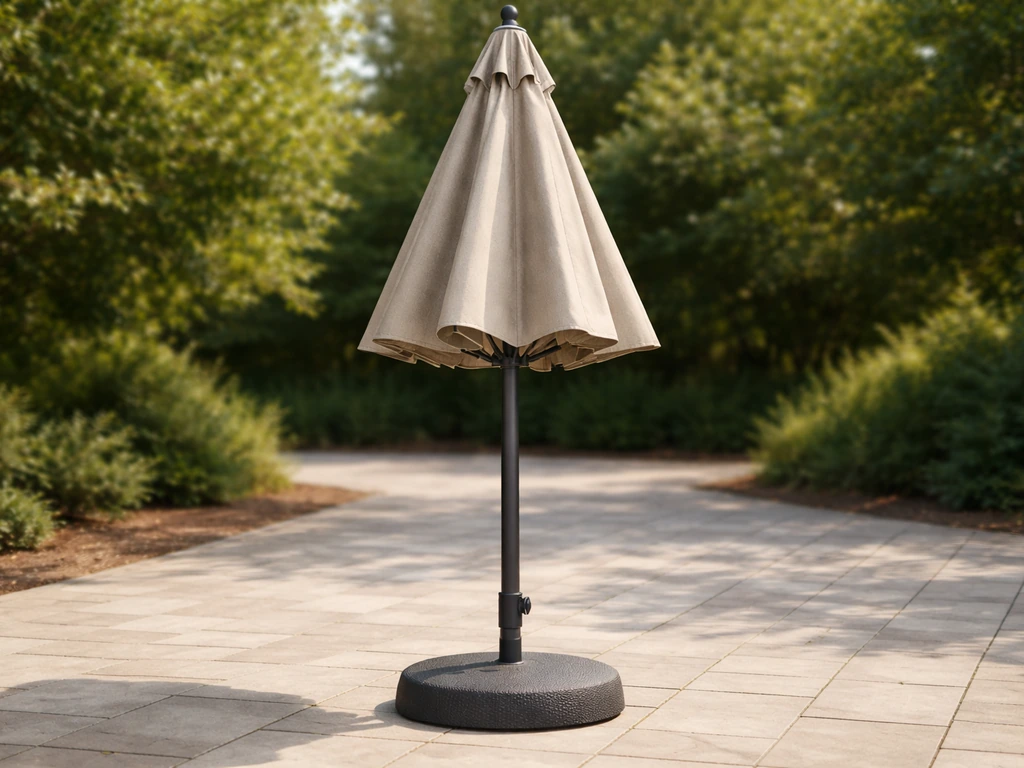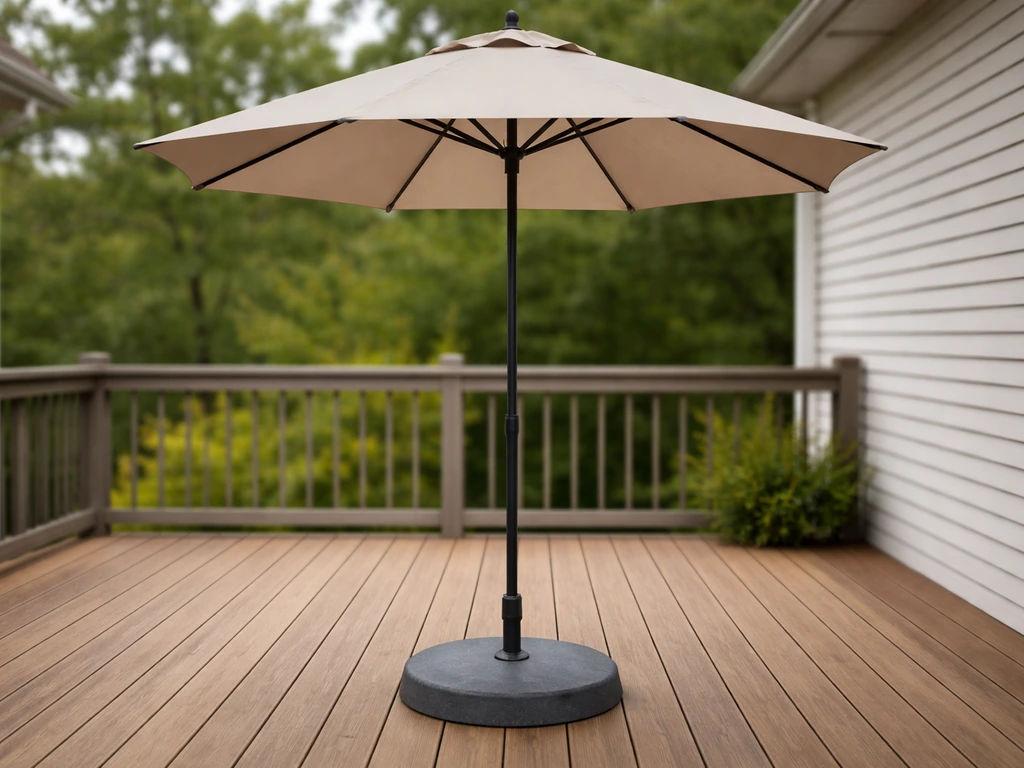
The best patio umbrella with a weighted base is one sized correctly for your canopy diameter, anchored with enough ballast for your actual wind exposure, and matched to your furniture layout and space. If you want the best patio umbrella stands for real stability, focus on the base weight and anchoring method that match your canopy size and wind exposure. For most 9-foot market umbrellas on a sheltered patio, a 50 to 75 lb fillable base does the job.
Best Patio Umbrella With Weighted Base: Buying Guide

Kent Lang
29 Jun 2026
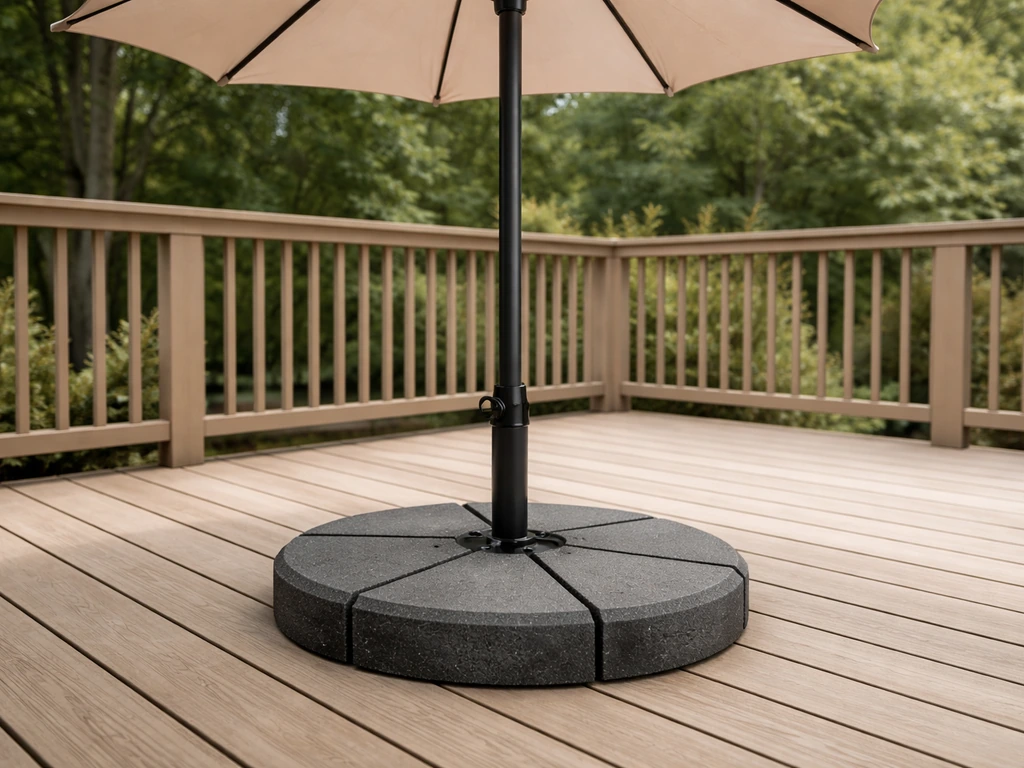
Step up to an 11-foot or offset/cantilever umbrella in a breezy yard and you're looking at 100 to 120 lbs of ballast minimum, with hard mounting to the deck if you want real peace of mind. The style, size, base weight, and anchoring method all have to work together, and getting any one of them wrong is where most buyers run into trouble.
What 'weighted base' really means and when you actually need one
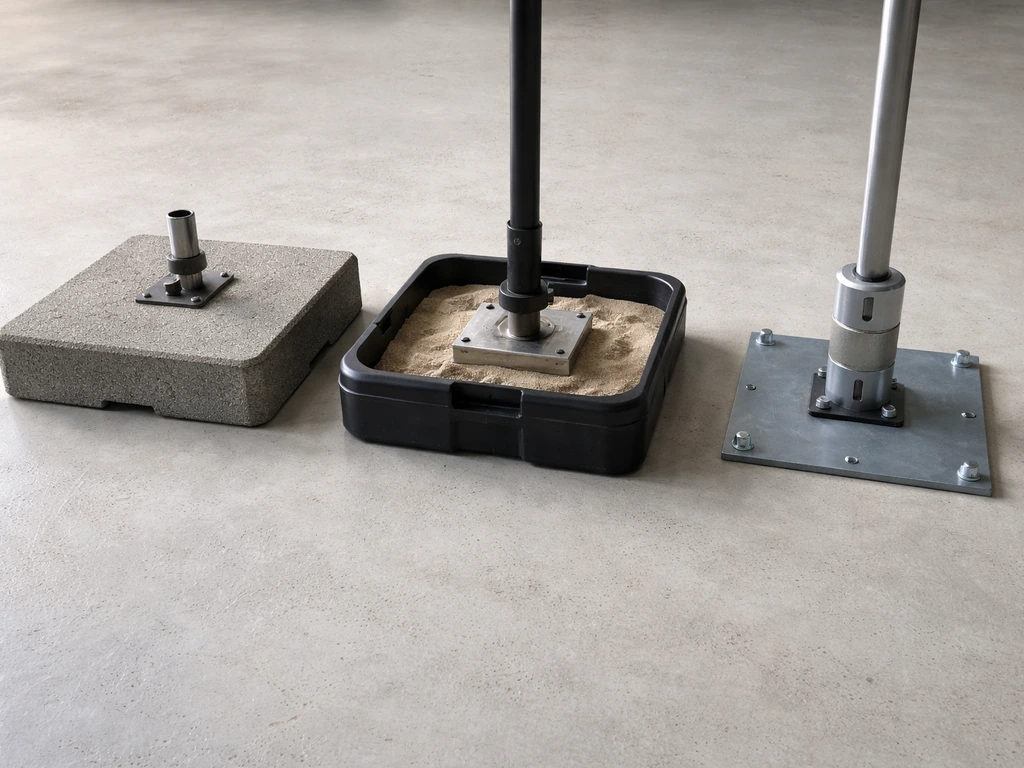
The term 'weighted base' gets used loosely, so let's sort it out. There are three distinct setups: a pre-cast ballast base (solid concrete or resin, fixed weight out of the box), a fillable base (hollow shell you fill with sand or water), and a base plate weight system (flat iron or steel plates that stack onto a cantilever cross-bar base). Each has its place.
Pre-cast bases are simple and reliable but heavy to move. Fillable bases are more practical because you fill them after positioning, and sand gives you more weight per volume than water. A sand-filled base will run heavier than the same size filled with water, which matters when you're trying to hit a specific ballast target for a larger canopy.
When do you actually need a serious weighted base? Any time the umbrella is freestanding (not through a table), on an open or elevated patio, or using an offset or cantilever design. A standard market umbrella sitting in a table hole gets a lot of passive stability from the table itself. For a true heavy-duty patio umbrella, prioritize a substantial base and, in exposed areas, hard-mounting when possible best heavy-duty patio umbrella.
Pull that same umbrella out of the table and put it in a freestanding base, and you need real ballast. Cantilever and offset umbrellas are in their own category: the canopy is displaced to the side of the pole, which creates a long lever arm that multiplies wind force dramatically at the base. Inadequate anchoring on a cantilever is one of the most common and genuinely dangerous failure modes in patio furniture.
Best patio umbrella selection checklist for real-world wind
Wind performance is a system problem, not a single-product spec. Even an umbrella marketed as 'wind resistant' can tip or invert if the base is undersized or the pole connection is sloppy. Here's what actually needs to check out before you buy. A great sturdy patio umbrella should pair the right base weight with the right assembly so wind loads stay under control.
- Vented canopy: Double-vented or single-vent designs reduce lift pressure meaningfully, though not enough to compensate for a too-light base on their own.
- Flexible or reinforced ribs: Ribs are the first failure point in gusts. Fiberglass ribs flex and recover better than aluminum or steel ribs under sudden dynamic loads.
- Pole construction: A thick-walled aluminum or powder-coated steel pole (1.5 in diameter minimum, 2 in preferred for larger canopies) resists lateral bending far better than thin poles.
- Base weight matched to canopy size: Use the 10 lb per foot rule as a starting floor: 9 ft umbrella = 90 lb base, 11 ft = 110 to 120 lb. In a breezier yard, add 25 to 30% on top of that.
- Hard mounting option: For exposed patios, look for bases or base plate systems that can be bolted directly to decking or concrete. Stacked weight alone has limits.
- Pole diameter compatibility: Confirm the base accepts your umbrella's pole diameter, typically 1.5 in or 2 in. These are not interchangeable.
- Close-and-store habits: No umbrella, regardless of wind rating, should be left open and unattended in sustained high winds or gusts. This is not a design limitation; it's just physics.
One thing many buyers miss: wind ratings on umbrellas (where they exist at all) describe sustained wind thresholds under proper assembly conditions. They do not account for sudden gusts, which create dynamic loads that are far more damaging than steady pressure. Frankford's engineered models, for instance, publish specific sustained wind thresholds for lines like the Monterey and Aurora, but those ratings assume correct base weight and proper setup. Even with a well-designed umbrella, real-world reports show cantilever umbrellas can still move violently in strong gusts when only relying on weighted plates.
Choosing the right umbrella style for your space
Style choice drives everything else: base requirements, placement flexibility, and how much your furniture layout needs to change. If you're wondering how heavy should a patio umbrella base be, you can use canopy diameter to estimate a baseline and then adjust for wind exposure base requirements. The three main types behave very differently.
Market (center-pole) umbrellas
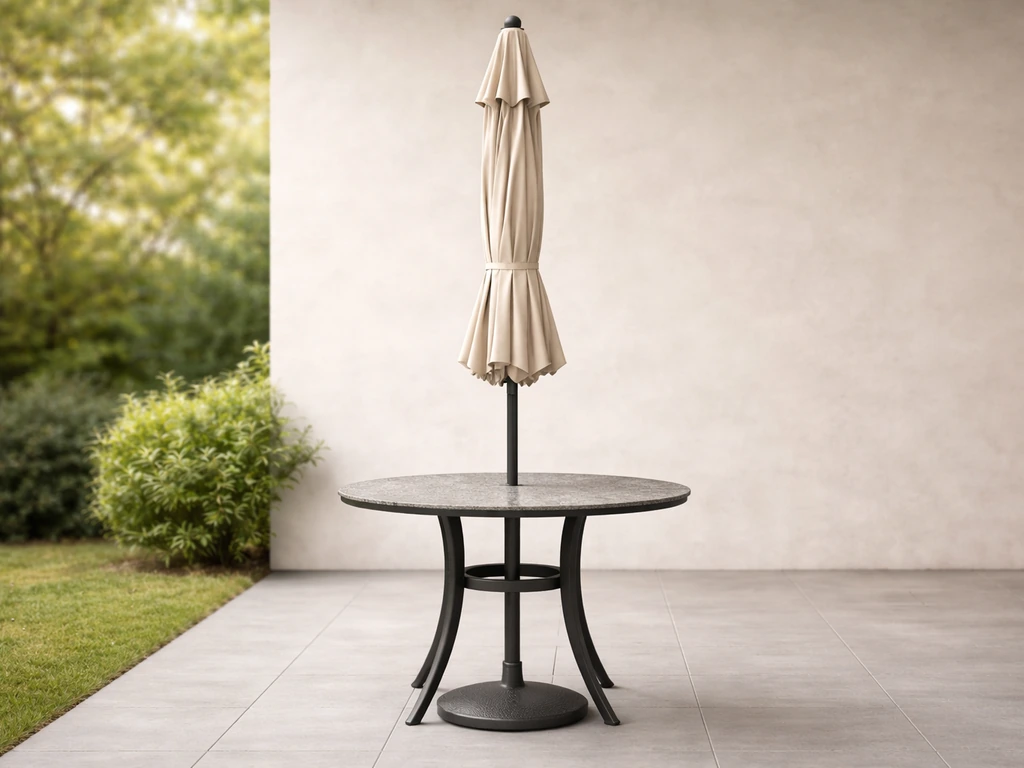
The classic design with a pole through the center of the table. It's the most stable option relative to base weight because the load is directly over the pole. An auto-tilt or crank-and-tilt mechanism (like Treasure Garden's auto-tilt, which tilts as you continue cranking after the canopy opens) lets you chase the sun without repositioning the whole umbrella. These work best for a standard dining table with a center hole, or in a freestanding base between two lounge chairs. Base weight requirements are the most forgiving of the three styles.
Offset and cantilever umbrellas
The pole is off to the side and the canopy extends over your seating area. This is ideal for sectionals, outdoor sofas, or any setup where you don't want a pole in the middle of the space. The trade-off is base weight. Choosing the right patio umbrella stand is crucial because the base weight and anchoring determine how stable your umbrella stays in wind.
The offset geometry creates a significant lever arm that multiplies wind torque at the base. A 10-foot cantilever umbrella needs a heavier, wider base than a 10-foot center-pole umbrella covering the same area, and many manufacturers strongly recommend bolting the base to the surface for anything beyond sheltered use. For very exposed patios or elevations above 7,000 feet, surface mounting isn't optional, it's necessary.
Side-post market umbrellas
A middle ground: the pole is offset but not cantilevered as far. These are common for smaller patios or balconies where a cantilever base footprint would be impractical. They share most of the base weight considerations of cantilever designs, just at a somewhat smaller scale.
| Style | Best use case | Base weight demand | Stability in wind |
|---|---|---|---|
| Market (center-pole) | Dining tables, open lounges | Moderate (50–90 lb) | Best relative to weight |
| Offset / cantilever | Sectionals, pool areas, furniture without center hole | High (100–150+ lb, or bolt-down) | Good with proper setup, vulnerable if undersized |
| Side-post market | Smaller patios, balconies | Moderate-high (75–100 lb) | Acceptable with adequate ballast |
Size, height, and coverage: matching umbrella to your table and seating area
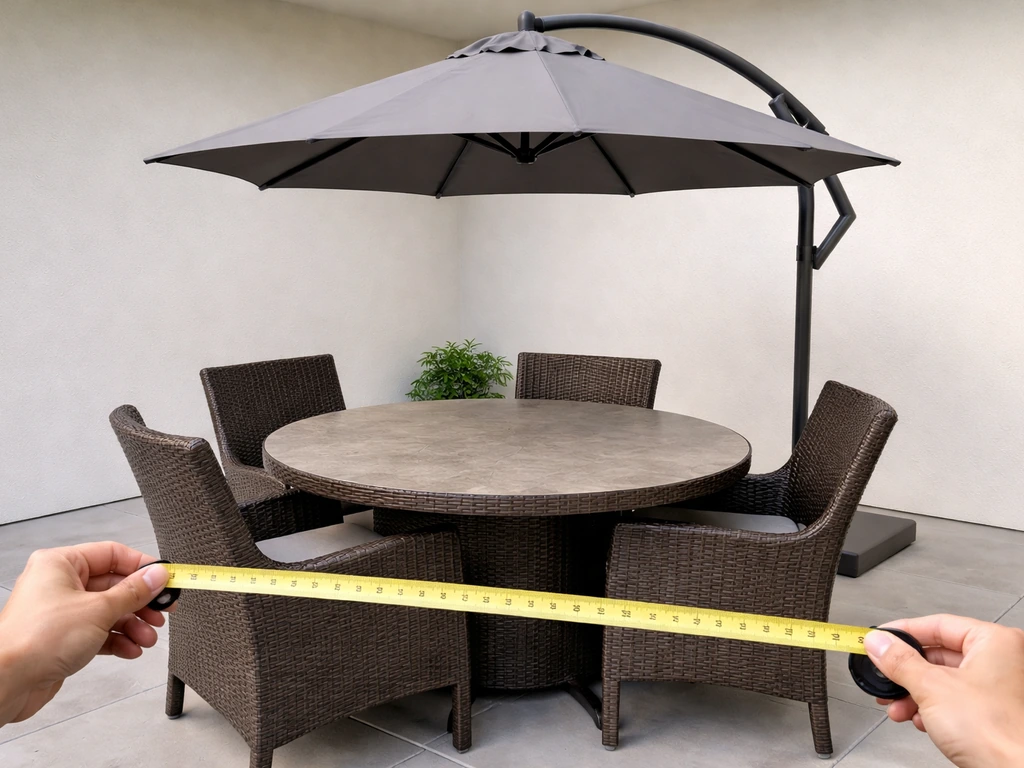
The reliable sizing rule: add 4 to 5 feet to your table diameter to get the right umbrella canopy size. The reason is that chairs typically extend 18 to 24 inches beyond the table edge, and you want those seats actually in shade, not the legs. A 48-inch (4 ft) round table needs at least a 9-foot umbrella. A 60-inch table benefits from a 10- to 11-foot canopy. For rectangular tables, match the umbrella shape (rectangular) or size up enough that a round canopy covers the full seating zone.
Height matters more than most people expect, especially with tilt mechanisms and pergola clearance. Check the 'clearance' spec, not just total height. Clearance is the distance from ground to canopy edge when the umbrella is open. A seated person needs about 72 inches (6 feet) of clearance to avoid ducking. Some manufacturers publish this explicitly: Frankford, for example, specifies a 72-inch clearance figure for certain configurations. If you're placing an umbrella under a pergola or awning, check that the tilt mechanism has room to operate without hitting the structure overhead.
For table-mounted setups, confirm the table hole diameter matches the umbrella pole. Most patio umbrella poles are 1.5 inches or 2 inches in diameter, and the base or table hole has to match. Mismatched pole-to-hole fit is a common oversight that forces a retrofit or return.
Base setup: estimating weight, using sand or plates, and anchoring it properly
The practical baseline: roughly 10 lb of base weight per foot of canopy diameter. That means a 9-foot umbrella in a fillable freestanding base should be targeting around 90 lb of filled weight, and an 11-foot umbrella is looking at 110 to 120 lb. If your patio is open, elevated, or in a reliably breezy area, bump those numbers up by 25 to 30%. Do not use the lighter number and assume you'll be fine.
Fillable bases: Sand beats water for ballast density. Water is easier to deal with if you need to move the base, but it's lighter and can also freeze in cold climates and crack the base shell. Sand stays put and packs tighter. For most buyers, sand-filled bases are the better long-term choice for a stationary setup.
Weight plate systems: These are used primarily with cantilever bases, and most consist of stacked cast iron or steel plates around the base cross-bar. They work, but they have a ceiling. Real-world reports confirm that even heavy plate stacks can still let a cantilever umbrella rock or move noticeably in strong gusts. If you're in a consistently windy environment, stacking more plates is not a substitute for hard mounting.
Hard mounting: Coolaroo's cantilever installation manual, Tropitone's assembly instructions, and others all describe the same approach: align the base plate holes with threaded anchors or use deck screws to secure the base directly to the patio surface. This is the most reliable method for exposed installations. For concrete patios, concrete anchors work well. For composite or wood decking, lag bolts through the base plate into the framing below give you a solid, non-negotiable connection. Pole diameter also matters here: most anchoring hardware is sized for 1.5-inch or 2-inch poles, so confirm compatibility before ordering separate anchoring hardware.
Material and build quality: what actually holds up over time
Frame material
Aluminum is the right call for most homeowners. It doesn't rust, it's light enough to reposition, and quality aluminum poles (especially thick-walled extrusions) are genuinely rigid under load. Powder-coated steel is stronger and often less expensive, but it's heavier and will eventually rust if the coating gets chipped. For a patio umbrella that lives outside year-round or near water, aluminum wins on longevity. Fiberglass ribs are worth paying for: they flex without snapping under gusts and recover their shape better than aluminum ribs, which can deform permanently after a strong inversion event.
Canopy fabric
The fabric choice separates umbrellas that look good for two seasons from ones that last a decade. Solution-dyed acrylic (Sunbrella is the best-known brand, but Treasure Garden and Frankford both use marine-grade solution-dyed acrylic in their better lines) is the standard to aim for. The color goes all the way through the fiber rather than being applied as a surface coating, so UV doesn't bleach it out the same way.
Treasure Garden backs their solution-dyed acrylic fabric with a 5-year warranty. Frankford uses 9 oz marine-grade solution-dyed acrylic and has explicit QA testing for fabric inputs. By contrast, printed or dip-dyed polyester canopies will fade noticeably within one to two seasons in direct sun. If you're spending real money on an umbrella, don't let the fabric be the thing that fails first.
UV protection and water resistance
Good solution-dyed acrylic blocks significant UV and is inherently water-resistant (it sheds rain rather than absorbing it, which also means it dries faster and resists mildew better). Polyester canopies often have an applied UV coating that wears off. If UV protection and fade resistance matter to you, the fabric type is more important than any UPF rating printed on the label.
Rust and finish durability
For aluminum poles and frames, look for thick powder coating over the aluminum, especially at joints and connection points. For steel poles, make sure the coating is complete and that any welded areas are covered. Exposed metal at welds or where hardware contacts the pole is where rust starts. For bases, HDPE plastic and resin bases don't rust at all and are the norm for fillable designs. Cast iron weight plates will surface-rust but that's mostly cosmetic unless they're structural components.
Top picks by scenario and how to compare options fast
Rather than a ranked list that goes stale, here's how to match scenario to setup so you can evaluate any umbrella you're looking at with the same framework.
Small balcony or sheltered urban patio
A 7.5- to 9-foot market umbrella with a 50 to 75 lb fillable sand base is plenty here. Tilt mechanism is nice to have for afternoon sun angles. Aluminum frame, solution-dyed acrylic fabric if budget allows. Pole diameter is typically 1.5 inches at this size. You don't need a cantilever, and the base footprint of a cantilever setup would likely crowd the space anyway.
Full outdoor dining patio, moderate wind
A 10- to 11-foot market umbrella with auto-tilt is the workhorse choice. Target 90 to 100 lb for the base. A vented canopy and fiberglass ribs are worth the upgrade here. Treasure Garden's AKZ Plus and Frankford's Monterey line both perform well in this category and are regularly recommended for moderate wind conditions, including by specialty retailers in wind-exposed regions like Colorado. Pole diameter at this size is typically 2 inches; make sure the base and any table hole match.
Open patio or deck with high wind exposure
You need a vented canopy, fiberglass or reinforced ribs, a 2-inch pole, and a minimum of 100 lb base weight, preferably with hard mounting to the surface. If you're at elevation (above 7,000 feet) or near the coast, blank" rel="noopener noreferrer">75 to 100 lb on a 9-foot umbrella is the floor, not the ceiling. Bolt the base down if the surface allows it. If you want the best free standing patio umbrella for your space, make sure your base weight and setup match your wind exposure level. Look for umbrellas with published wind ratings from the manufacturer rather than generic 'wind resistant' marketing language.
Sectional or furniture without a center hole (cantilever setup)
A 10- to 13-foot cantilever or offset umbrella with a heavy cross-bar base is the right tool. A quality heavy duty patio umbrella base matters most when you have a cantilever or offset design that sees frequent wind. Budget 120 to 150 lb of ballast as a starting point, and strongly consider surface mounting. Look for bases that include bolt-down hardware or have compatible mounting plates. Close the umbrella any time you're not actively using it in wind. If you find a cantilever umbrella is moving noticeably in gusts even with a heavy base, the solution is hard mounting, not more weight plates.
Budget tiers at a glance
| Budget range | What you get | Where to compromise if needed | Where not to skimp |
|---|---|---|---|
| Under $150 | Basic polyester canopy, thin aluminum or steel pole, entry-level fillable base | Fabric quality, tilt mechanism | Base weight: still fill it fully |
| $150–$350 | Better frame, crank-tilt, possible vented canopy, decent resin/HDPE base | Can skip premium fabric brand names | Rib material: prioritize fiberglass if available |
| $350–$700 | Solution-dyed acrylic fabric, fiberglass ribs, sturdy 2-inch pole, quality base | Minor: color selection may be limited | Do not downgrade the base weight for the size |
| $700+ | Engineered wind ratings, marine-grade fabric, full accessory ecosystem, bolt-down base options | Nothing critical at this tier | Assembly: follow instructions exactly; a premium umbrella improperly set up fails just like a cheap one |
The fastest way to compare two umbrellas head-to-head: check canopy fabric type (solution-dyed acrylic vs polyester), rib material (fiberglass vs aluminum/steel), pole diameter (1.5 in vs 2 in), whether venting is included, and what the manufacturer specifies for minimum base weight. If a listing doesn't give you those five data points clearly, dig for the spec sheet or pick the one that does. Transparent specs are usually a sign of a product worth buying.
One last practical note: whatever you buy, commit to closing it when you're not outside. Warranties from every major manufacturer, Frankford included, explicitly exclude damage from being left open unattended or operated in extreme conditions. The umbrella isn't the problem when it fails in a storm that nobody was home for. Close it, and it will last.
FAQ
Can I use sand in a fillable weighted base even if the umbrella is seasonal or I store it in winter?
Yes, but emptying and drying helps. Sand packs well and stays dense, but if water gets mixed in during storage it can freeze and expand. For climates with freezing temperatures, drain any water reservoirs, let the base fully dry before covering, and avoid storing a base with trapped moisture.
What should I do if my deck or patio surface is too soft to drill into for hard mounting?
If you cannot anchor through the surface into framing or concrete, choose a configuration that relies less on anchoring (center-pole in a table hole) and increase ballast accordingly. For cantilever or offset models, lack of true hard mounting is a major risk, so prioritize larger base footprint and only operate in lighter wind conditions.
How can I tell whether a “weighted base” is actually heavy enough for my conditions?
Compare the listing for both filled weight range and canopy size, then adjust for exposure. If the umbrella is freestanding, on an elevated or open patio, or you commonly get gusty wind, treat the lower end of base weight targets as not enough. Also confirm the manufacturer’s minimum base weight, since some products assume a specific base and fail to perform with lighter generic fills.
Are there safety differences between sand-filled bases and water-filled bases beyond weight?
Yes. Water adds weight but it can be heavier per volume only when it is actually full and unmixed, and it creates freezing and cracking risk in cold climates. Water also sloshes more, which can slightly worsen how the base responds to gusts. Sand generally stays put and resists that movement.
Is it better to add more plates to a cantilever umbrella or to hard-mount the base?
Hard-mounting is the more reliable fix for cantilever rocking in gusts. Extra plates can help with steady resistance, but cantilever geometry multiplies torque at the base, so plate stacking often hits a practical ceiling. If the umbrella moves noticeably even with a heavy plate stack, switch to a compatible bolt-down installation rather than increasing weight further.
What happens if the pole diameter does not match the table hole or base hole size?
It can cause a loose fit, binding, or misalignment that affects tilting and wind stability. Before buying, verify the exact pole diameter requirement (commonly 1.5 in or 2 in for many market umbrellas) and check the included base or table hardware compatibility. A mismatch may require a replacement base, a different insert, or a resizing adapter that not all manufacturers support.
Should I leave my umbrella open in wind if I’m just stepping away for a short time?
No, even brief exposure can create dynamic loads that exceed the base and pole connection capacity, especially for cantilever designs. Most warranties exclude damage from being left open unattended or during extreme conditions. A good rule is to fully close it whenever you are not actively using it outdoors.
Does the clearance measurement matter if I have an awning or pergola overhead?
Yes, because clearance is measured from the ground to the canopy edge when open and tilted, and tilt mechanisms require additional swing space. If clearance is tight, the umbrella can scrape the structure or stall the crank/auto-tilt, leading to awkward operation or mechanical strain. Confirm the spec for your specific open-and-tilt position, not just the maximum total height.
How should I choose between a vented canopy and a non-vented one for wind resistance?
A vented canopy typically reduces pressure buildup and helps the umbrella ride out gusts more smoothly, but it does not replace correct base weight and anchoring. If you are buying for a breezy, open patio, venting is a worthwhile upgrade, then validate it against the manufacturer’s minimum base weight and your exposure level.
What’s the best way to position a freestanding umbrella relative to seating and walkways to avoid stability issues?
Avoid setting it in a corner or near obstructions where gusts funnel around the canopy and create uneven loading. Keep the pole area clear so the base can sit flat, and ensure the canopy does not overhang unevenly. For offset styles, check that the canopy’s offset does not push the center of load toward a restricted edge.