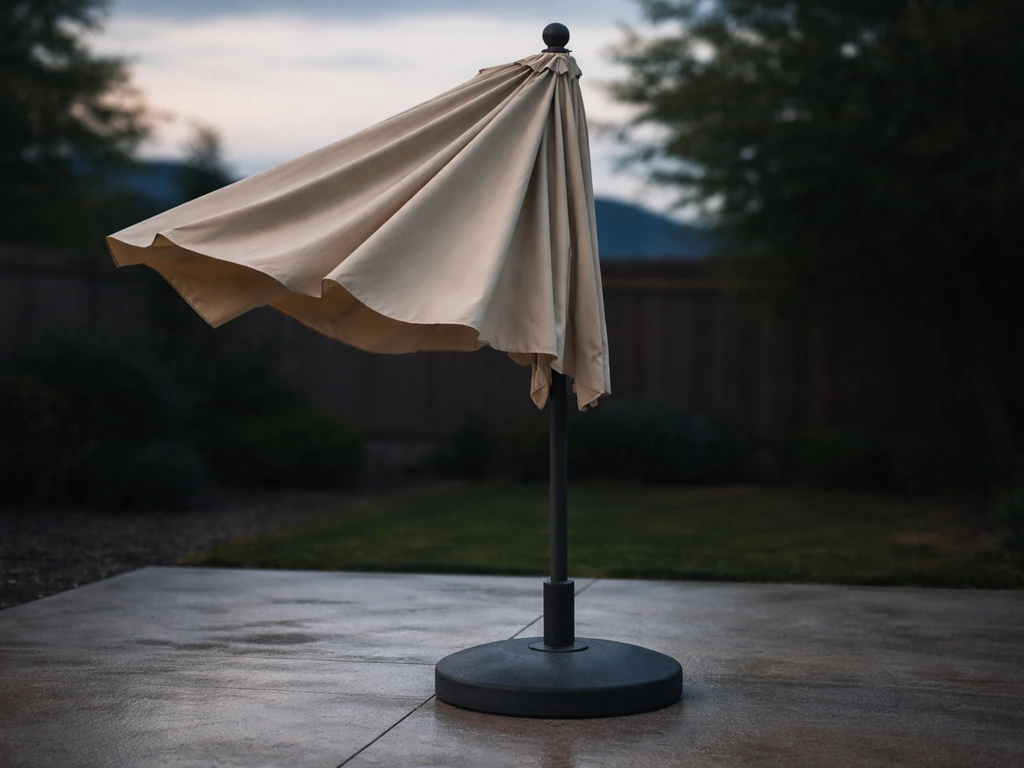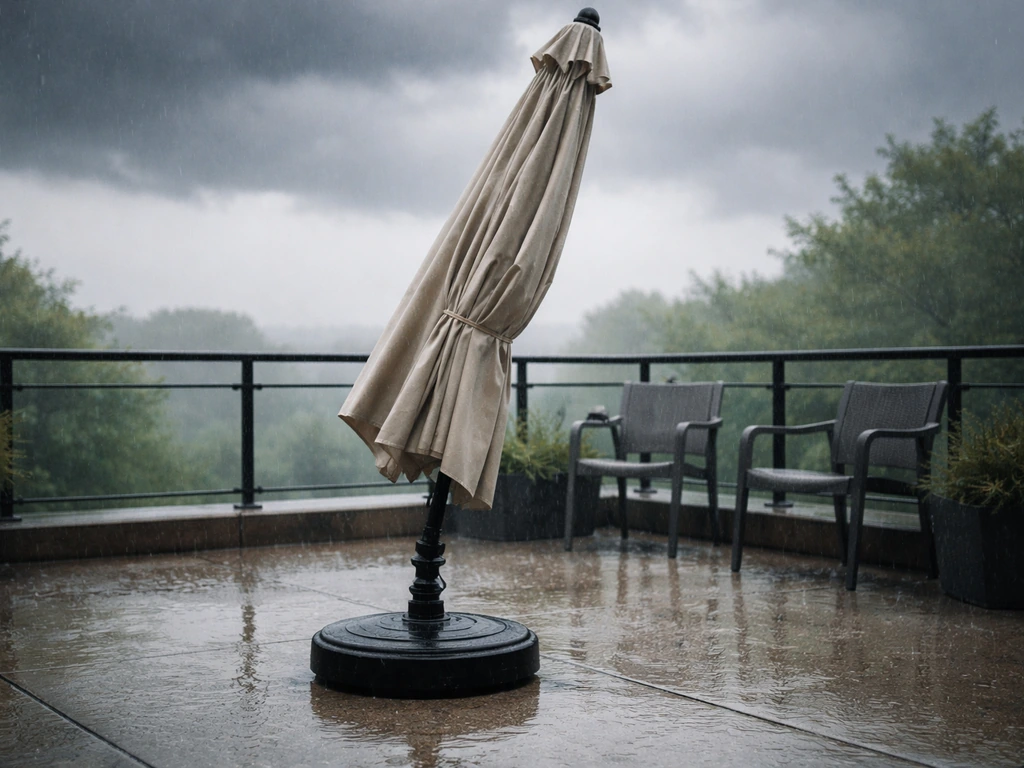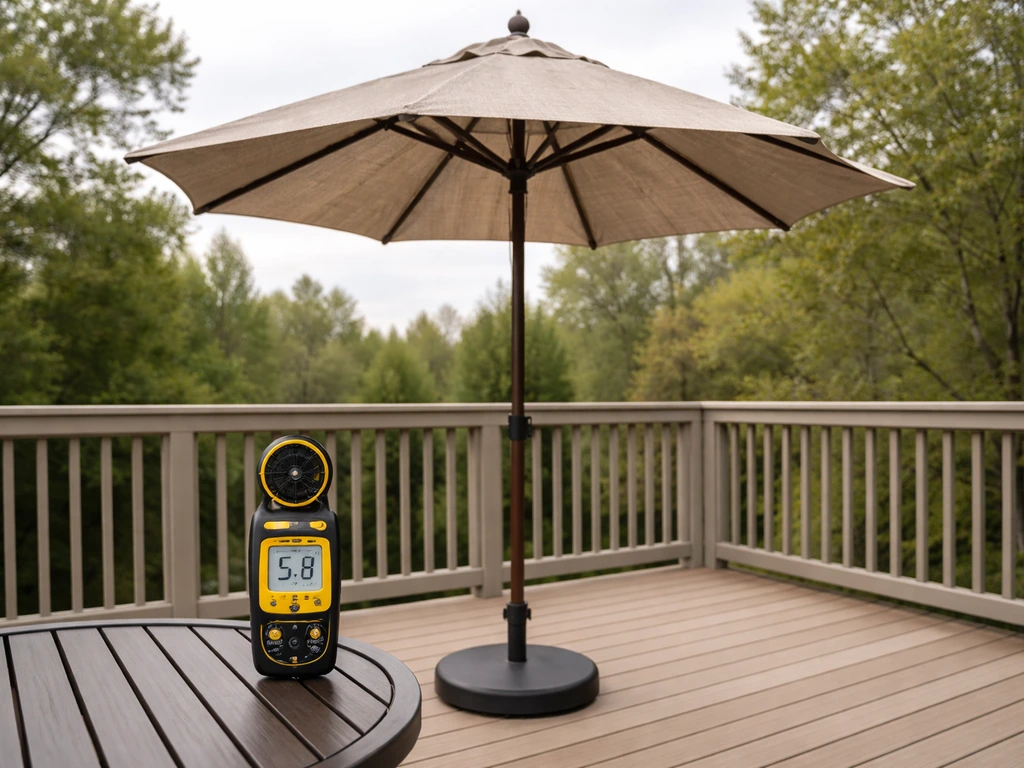
For most balconies, a cantilever or offset umbrella with a clamp-mount base is the most practical choice, it keeps the pole off the floor, preserves space, and lets you angle shade exactly where you need it. If your balcony is small (under 6 x 8 ft), a 7.5 ft market umbrella on a weighted freestanding base or a rail-mounted clamp is often enough. If wind is your main concern, look for a vented double-canopy, a steel or aluminum frame rated above 35 mph sustained, and at least 50 lbs of ballast for a 9 ft canopy. The right pick depends on your balcony size, railing type, building rules, and local weather, this guide walks through all of it.
Best Patio Umbrella for Balcony: Size, Wind & Mount Guide

Kent Lang
12 Jul 2026
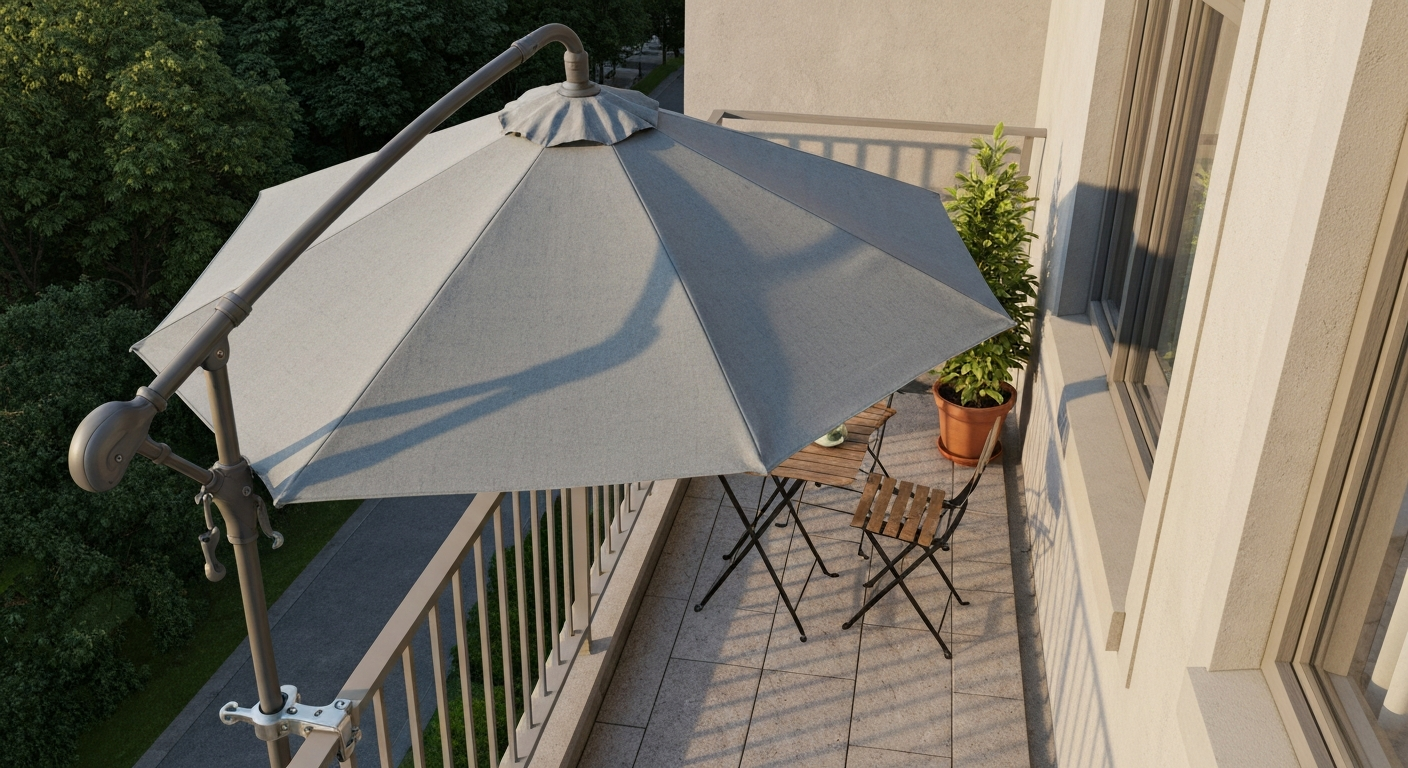
Who this guide is for and what it covers
Whether you rent a high-rise apartment or own a townhouse with a narrow balcony, picking the wrong umbrella is an expensive mistake. A 9 ft umbrella that looks great in a backyard catalog can completely overwhelm a 6 x 10 ft balcony, leave no room to walk past, or worse, act as a wind sail and topple over the railing. This guide is written specifically for balcony situations, not patios, not poolside, where space constraints, mounting limitations, building rules, and elevated wind exposure all matter more than they do at ground level. You'll find top picks by use case, a step-by-step sizing guide, a breakdown of umbrella styles and mounting systems, and hard numbers on ballast, load limits, and wind ratings. If you're in Canada, there's a dedicated section on cold-weather materials and coastal considerations.
Quick decision flow: match your umbrella to your balcony and weather
Use this flowchart logic to narrow your options fast before diving into the details. Answer each question in order and stop when you reach a clear path.
- Is your balcony under 50 sq ft or narrower than 6 ft? Go with a 7.5 ft market umbrella on a clamp-mount or compact freestanding base, not a cantilever.
- Do you have a railing you can clamp to? A balcony clamp or rail-mount bracket is your cleanest solution — it keeps floor space free and doesn't require a heavy base.
- Is your area regularly hit by winds above 25 mph? Prioritize a vented canopy, a powder-coated aluminum or fiberglass-rib frame, and a base or anchor rated for those conditions.
- Do you need rain protection in addition to shade? Look for canopies rated at 1,000 mm hydrostatic head or higher with taped or sealed seams.
- Are you renting or in a condo with rules against drilling? Stick to freestanding bases or railing clamps — avoid any through-bolt or deck-anchor options.
- Is your balcony 8 x 12 ft or larger with structural columns or a solid rail? A cantilever with a heavy-base or clamp-through anchor opens up the full seating area without a center pole in the way.
Top picks by use case
I'm not going to rank one umbrella above all others and call it done, balcony needs vary too much for that. Instead, here are the use cases I see most often, the specific features to look for, and an example model for each. Think of these as starting points for comparison, not absolute endorsements, since product availability changes and your local conditions matter.
Small balcony (under 60 sq ft)
Look for: 6.5 to 7.5 ft canopy diameter, manual tilt, compact base (under 18 in diameter), or a rail-clamp mount. The Abba Patio 6.5 ft half-umbrella is worth a look here, it sits flush against a wall or railing, so it doesn't eat into the floor plan the way a full-round canopy does. Another option is the Outsunny 7.5 ft market umbrella paired with a rail-clamp bracket, which completely frees up floor space. If you're tight on square footage, a half-umbrella or parasol-style design genuinely makes a difference.
High-wind balcony
Look for: double-vent canopy, fiberglass or reinforced aluminum ribs, a frame rated at 35 mph sustained or higher, and a base weight matched to the canopy size (more on the math below). The PURPLE LEAF 10 ft cantilever with a vented double-layer canopy is a popular choice that holds up in the 25 to 35 mph range. For higher gusts, the Galtech Sun Master series uses heavy-wall aluminum poles and 8-rib construction that performs better than most consumer-grade alternatives. One important note: manufacturer wind ratings often refer to gusts (short bursts measured in seconds), while weather forecasts typically report 1-minute sustained winds using NOAA conventions or 10-minute averages under WMO standards. Hurricane FAQ, NOAA/AOML (defines 1‑minute sustained wind and gust definitions) explains that NOAA/NHC report maximum sustained surface wind as the highest one‑minute average at 10 m elevation and describes gusts as short‑duration bursts measured over seconds blank" rel="noopener noreferrer">Hurricane FAQ — NOAA/AOML (defines 1‑minute sustained wind and gust definitions). A product rated for '35 mph gusts' is not the same as one that handles sustained 35 mph winds, always check which measurement a manufacturer is using.
Rainproof balcony umbrella
Look for: canopy fabric rated at 1,000 mm hydrostatic head or higher, sealed or taped seams, and a steep enough pitch (at least 30 degrees from horizontal) to shed water rather than pool it. The Coolaroo 9 ft shade umbrella uses a high-density polyethylene (HDPE) knitted fabric that sheds water well and resists mold. For more complete rain coverage, the Palram Canopia patio covers cross into the pergola territory, but umbrella-format options from Treasure Garden with their Solution-Dyed Acrylic fabrics come close to genuine waterproofing. For shopping comparisons and top-rated models focused on wet-weather performance, see our roundup of the best patio umbrella for rain. Hydrostatic head is the right number to look for, fabrics tested above 1,300 mm under standardized lab methods are considered waterproof for practical outdoor use.
Space-saving option
Look for: wall-mount or rail-clamp umbrella, a crank-tilt mechanism so you can fold it flat when not in use, and a canopy that retracts quickly. The Ikea LINDOJA parasol (60 in) is a surprisingly capable option for tiny balconies, it clamps to a railing with an included bracket and costs under $100. For a step up, the Bambrella Side Wind umbrella uses a side-pole design that keeps the center clear, folds efficiently, and tolerates moderate wind.
Budget pick (under $100)
Look for: a steel or aluminum pole (not plastic), solution-dyed polyester or acrylic canopy fabric rather than printed-on color, and a minimum of 8 ribs. The Sunnyglade 9 ft patio umbrella consistently appears in this range and offers a push-button tilt mechanism and 8 steel ribs, acceptable for light daily use. Manage expectations: budget umbrellas work fine in mild conditions, but a cheap canopy fabric will fade faster and ribs will bend in winds above 20 mph. If your balcony is exposed or gusty, spend more.
Premium pick (over $300)
Look for: solution-dyed acrylic fabric (Sunbrella is the standard benchmark), heavy-wall marine-grade aluminum or stainless hardware, double-vent construction, and a manufacturer warranty of at least 3 years on the canopy fabric. The Treasure Garden 9 ft auto-tilt market umbrella in Sunbrella fabric is a strong all-around performer and is widely available at specialty retailers. For a cantilever, the Shademaker Masttio and the TUUCI Bay Master offer genuine commercial-grade construction. At this price, you're paying for fabric that doesn't fade in 18 months, hardware that doesn't seize up after two winters, and structural ribs that flex rather than snap.
How to measure your balcony for the right umbrella size
Getting size wrong is the most common balcony umbrella mistake. The canopy should overhang your seating area without extending over the railing by more than 12 inches, past that, you're catching wind and stressing the pole. Here's how to measure correctly.
- Measure your usable floor space: length x width in feet. Note any fixed obstacles like HVAC units, door swings, or bike storage.
- Identify your seating footprint: the umbrella canopy should extend roughly 2 ft beyond the edge of your table or seating group on each side for full shade.
- Subtract 1 to 1.5 ft from any edge that faces open railing — this is how much overhang is safe in normal wind conditions.
- For a center-pole umbrella: the canopy diameter should not exceed your usable floor space measurement minus 1 ft on each side. A 7 x 9 ft balcony comfortably fits a 7.5 ft canopy, not a 9 ft.
- For a cantilever or offset umbrella: measure from the mounting point of the base to the farthest edge of the seating area — this is the minimum reach (arm length) you need from the offset pole.
- Check the closed height of the umbrella when folded — it needs to clear your railing height plus 6 inches minimum when you carry it out or store it upright.
- If using a freestanding base: add 18 to 24 inches to the footprint of the base and confirm it fits without blocking walkways or door access.
Size fit checklist
- Canopy diameter is no more than 80% of the shortest balcony dimension for a center-pole design
- Cantilever arm reach is measured from the post base, not the wall — confirm it spans your seating area
- Umbrella clears the railing when fully open (minimum 6 ft 6 in height from floor to lowest canopy edge for comfortable passage)
- Base footprint fits within the floor plan without blocking door swing or egress path
- When closed, the umbrella stores upright or flat without hanging over the railing
Balcony layout and fit guide
Not all balconies are created equal. Here's how to think about umbrella placement for the most common balcony configurations.
| Balcony Type | Best Umbrella Style | Mounting Option | Key Consideration |
|---|---|---|---|
| Narrow (under 5 ft wide) | Half-umbrella or parasol (6–7 ft) | Rail clamp or wall bracket | Keep canopy parallel to railing; avoid extending over edge |
| Long rectangle (5 x 12 ft+) | 7.5–9 ft market umbrella or small cantilever | Freestanding base centered or clamp at one end | Position base at the wide end; leave clear walking path |
| Corner or L-shape | Cantilever / offset, 10–11 ft reach | Heavy freestanding base or clamp to structural column | Offset arm can cover the corner seating area without a pole in the way |
| Wraparound balcony | Two smaller umbrellas or one large cantilever | One clamp-mount + one freestanding | Split coverage is more manageable and less wind-vulnerable than one giant canopy |
| Rail-only (no floor anchor possible) | Rail-clamp market umbrella, 7.5–9 ft | Railing clamp (rated for your rail diameter) | Verify rail is structural and rated — decorative rails are not suitable for umbrella loads |
| Shared or communal balcony | Compact 6.5–7.5 ft market umbrella | Freestanding low-profile base | Avoid cantilevering into shared space; keep footprint within your zone |
Umbrella styles explained: which one works on a balcony
Market / center-pole umbrella
This is the classic design: a straight pole through the center of the canopy, either inserted into a table hole or sitting in a freestanding base. They're the most widely available, easiest to find replacement canopies for, and generally the most affordable. On a balcony, the trade-off is that the pole sits in the middle of your floor space, which is annoying on smaller decks. They tilt (manually or via auto-tilt mechanism) to follow the sun, which helps. Canopy sizes run from 6 ft to 11 ft; on a balcony, 7.5 ft to 9 ft is the practical range. A center-pole umbrella works well when you have a table with a center hole, a freestanding base, or a solid rail to clamp to.
Cantilever / offset umbrella
A cantilever umbrella has its pole set to the side, with the canopy suspended on an arm that extends over the seating area. This is the best design for balconies where you want shade without a pole in the middle of the space, but it comes with real trade-offs. The offset arm creates significant lever forces on the base, you need substantially more ballast than a center-pole design. A 10 ft cantilever can require 100 to 200 lbs of ballast for meaningful stability, which creates a serious weight concern on upper-floor balconies. The rotating mechanism also adds mechanical complexity; cheaper cantilevers develop wobble or looseness in the pivot joint after one or two seasons. Go for a cantilever when your balcony is large enough (8 x 10 ft minimum), your floor structure can handle the concentrated base weight, and you're willing to spend $250 or more for a design with a quality pivot joint.
Hanging / overhead umbrella
Hanging umbrellas mount from above, from a ceiling hook, pergola beam, or overhead bracket, and are ideal for balconies with overhead coverage like a floor above or a pergola-style ceiling. They keep the floor entirely clear. The downside is that you need a structural attachment point above you rated to handle the umbrella's weight plus wind load, which on a concrete balcony ceiling can require an anchor bolt. For renters, this is often a no-go. If your balcony has a solid overhead structure and you're comfortable with a permanent anchor, brands like Tuuci and Fatboy make quality hanging designs. Otherwise, the rail-clamp or freestanding base is the safer choice.
| Style | Best Balcony Fit | Wind Resistance | Space Required | Price Range |
|---|---|---|---|---|
| Market / center-pole | Any size balcony, especially with table hole | Good with vented canopy and adequate base | Moderate — pole in floor plan | $40–$400+ |
| Cantilever / offset | Medium to large balconies (8x10 ft+) | Variable — depends heavily on base weight | High base footprint, but clear floor under canopy | $150–$1,000+ |
| Hanging / overhead | Balconies with structural overhead beam or ceiling | Good if anchor is solid | Minimal floor footprint | $200–$800+ |
| Half / wall-mount | Narrow balconies under 5 ft wide | Limited — smaller canopy area | Very low — mounts to wall or rail | $50–$200 |
Mounting and anchoring options for balconies
How you anchor the umbrella matters as much as which umbrella you pick. Consumer Reports' 11 Best Patio Umbrellas of 2026, Lab‑Tested and Reviewed, Consumer Reports includes lab tests of umbrella stability, adjustability, and wind performance and explicitly flags proper bases and anchoring as critical to real‑world performance 11 Best Patio Umbrellas of 2026, Lab‑Tested and Reviewed — Consumer Reports. On a balcony, you have four realistic options, each with practical constraints.
Freestanding base
A freestanding weighted base is the most flexible option and the one most renters default to. Fillable bases (like the Treasure Garden BASE-10R or BASE-13RA) use sand or water as ballast and can be moved, stored, or taken with you when you move. The major limitations are weight, a properly ballasted base for a 9 ft umbrella weighs 50 to 75 lbs minimum, and footprint size. On a tight balcony, a wide base competes with your chairs and table. One practical workaround: insert the umbrella pole directly through a table with a center hole, then add a smaller accessory base under the table. It distributes the weight over a larger footprint and keeps the base hidden.
Balcony railing clamp
Rail-clamp brackets attach the umbrella pole to your balcony railing using tightening screws or U-bolt mechanisms. They're excellent for renters and small balconies because they use zero floor space and require no drilling. The caveats are significant though: your railing must be structural, not decorative, and rated to handle lateral umbrella loads. A 7.5 ft umbrella in a 20 mph wind exerts surprising force on a railing. Clamp brackets generally accommodate round rails from 0.75 in to 2 in diameter and rectangular rails up to about 2 x 4 in. Confirm your rail dimensions before buying. Also, never mount a clamp-based umbrella on a glass railing panel, the load transfer is wrong for that material.
In-rail or sleeve mount
Some balcony railings have built-in sleeve or socket mounts, common in newer condo construction, that accept standard 1.5 in to 1.875 in umbrella poles directly. If your railing has this feature, use it: it provides the most secure and cleanest installation without additional hardware. Check that the sleeve depth is at least 6 in for adequate pole support, and never force a pole that doesn't fit, a loose sleeve is worse than no sleeve because it allows the umbrella to lever against the rail.
Bolt-through / through-deck anchor
A through-deck anchor involves drilling into the balcony floor or railing post and installing a permanent sleeve or base plate with bolts. This is the most secure option, it's what commercial umbrella manufacturers like Tuuci specify for permanent installations, using stainless anchor stems set into concrete. On a balcony, this approach requires: permission from your building owner or condo association, confirmation that the balcony deck material (concrete, composite, tile) can accept anchor hardware without compromising waterproofing membranes, and ideally a structural engineer review for upper-floor applications. If you own your unit and plan to stay long-term, this is worth exploring for a premium cantilever in a windy location. If you rent, skip it entirely.
Base weight, ballast, and balcony load limits
This is the section most buyers skip, and it's where things go wrong. Balcony floors have rated live load limits, typically 40 to 60 lbs per square foot for residential construction in North America, but the concentrated weight of a heavy umbrella base on a small footprint can easily exceed safe limits if you're not careful. Here's how to think through it correctly.
How much ballast do you actually need?
The rough industry rule of thumb is about 10 lbs of ballast per foot of canopy diameter for a center-pole market umbrella in mild conditions. So a 9 ft umbrella needs roughly 90 lbs of base weight as a minimum starting point. Cantilever and offset umbrellas require multiples of that because the extended arm creates a much larger overturning moment, a 10 ft cantilever in moderate wind can demand 150 to 200+ lbs of ballast or a permanent anchor. One Tatayosi 10 ft model lists a manufacturer-recommended counterweight of 132 lbs on its product page, which is a realistic figure. The physics behind this: wind pressure scales with the square of wind speed using the relationship q = 0.613 × V² (where q is in Pascals and V is in meters per second), so doubling the wind speed quadruples the force on the canopy, which is why wind resistance degrades so sharply as conditions worsen.
Checking your balcony's weight capacity
Before placing a 150 lb ballast base on a balcony, take these steps. First, look up or request the structural drawings for your building, your building manager or HOA may have them on file. Second, calculate the concentrated load: a 24 in diameter base concentrates 150 lbs over roughly 3 sq ft, which equals about 50 lbs per sq ft. On a balcony rated for 40 lbs per sq ft uniformly, a concentrated 50 lbs per sq ft load on a small base exceeds the design assumption even if it's below total capacity. Third, if in doubt, spread the load using a base plate or move to a mounted option that distributes force into the railing structure instead. Fourth, always err on the side of caution on upper floors, overturning forces in wind are dynamic, not static, and can momentarily exceed the rated base weight.
Actionable steps before installing
- Request your building's balcony live load rating from your building manager, HOA, or condo board before purchasing any heavy ballast base.
- Calculate the concentrated load of your intended base (total base weight divided by base footprint in sq ft) and confirm it's within the rated load.
- If you need to drill or anchor permanently, check local building code requirements — in Canada, the National Building Code (NBC 2020) and its structural commentary govern balcony attachments, and municipalities may require permits for permanent canopy anchors.
- For high-wind locations, consult Environment and Climate Change Canada's Climate Normals data or your local NWS data to understand realistic gust speeds in your area before sizing your base.
- Document your installation with photos and keep records of any anchoring hardware used — this matters for insurance purposes if an umbrella causes damage.
One important note: always check local building rules, condo bylaws, and property limitations before drilling into any balcony structure. Some buildings prohibit it outright; others require pre-approval. Getting this wrong can void your lease, trigger repair liability, or create a safety hazard for floors below.
Wind resistance: what the ratings actually mean
Wind resistance claims are probably the most misunderstood spec in the patio umbrella market. For a deeper look at manufacturer claims versus real-world performance, see our patio umbrella wind rating guide. A product listed as 'wind resistant up to 35 mph' sounds reassuring until you realize that number might refer to a 3-second gust, not a sustained wind, and that a sustained 25 mph wind is far more damaging to an unsecured umbrella than a single 35 mph gust. For a quick primer on expected limits, see our article on how much wind can a patio umbrella withstand. NOAA reports wind speeds as 1-minute sustained averages, while the WMO standard uses 10-minute averages. Manufacturers rarely specify which convention they're using, so the honest answer is that you should treat any wind rating as a rough guide, not a guarantee.
The Beaufort scale gives a useful frame of reference. Beaufort Force 5 is approximately 19 to 24 mph, that's a fresh breeze that you can feel pushing hard against an open umbrella. Most residential-grade umbrellas with adequate ballast can handle Force 5. Force 6 (25 to 31 mph) is where cheaper canopies start inverting and ribs start bending. Force 7 (32 to 38 mph) is near-gale, close or bring in any umbrella that isn't bolted down, regardless of rating. The best practice for any balcony umbrella is to close it whenever you leave the balcony unattended and whenever winds are forecast above 20 mph.
What makes an umbrella genuinely more wind-resistant: a double-vent canopy that lets air escape from the top instead of inverting, fiberglass ribs that flex rather than snap, a pole with a larger diameter (1. For a deeper explanation of materials, venting, and structural features, see our guide on what makes a patio umbrella wind-resistant. For a full overview of features and materials, see what makes a good patio umbrella. 875 in or above is better than 1.5 in), and a tighter canopy pitch that reduces the effective sail area at low tilt angles. These structural features matter far more than the advertised mph number.
Rain and UV protection: what fabrics and ratings to look for
UV protection and UPF ratings
UPF (Ultraviolet Protection Factor) for umbrella canopies is measured using AATCC Test Method 183, with specimen preparation following ASTM D6544 and labeling governed by ASTM D6603. A UPF 50+ rating means the fabric blocks 98% or more of UV radiation. For a balcony umbrella, look for UPF 50+ on the canopy fabric spec, most solution-dyed acrylic and high-density polyethylene (HDPE) knit fabrics achieve this. Cheaper dyed polyester may fade and lose UV blocking performance within a season or two because the dye degrades before the fabric does. Solution-dyed fabrics resist this because the color is baked into the fiber, not applied on top.
Water resistance and waterproofing
Hydrostatic head (expressed in mm water column) is the standard test for water resistance. A fabric rated at 1,000 mm is water-resistant; above 1,300 mm is considered waterproof for practical outdoor use. Most umbrella canopies are water-resistant rather than fully waterproof, they shed light rain but will leak under sustained heavy rain, especially if the canopy pitch is shallow. For better rain performance: choose a steeper canopy pitch (30 degrees or more from horizontal), look for a fabric rated at 1,000 mm or above, and check that the seams are sewn with waterproof thread or sealed rather than just stitched. HDPE knit fabrics like those used by Coolaroo are intentionally open-weave and not waterproof, they excel at UV blocking and breathability, but they're not rain covers.
Canopy fabrics and frame materials compared
| Material | Durability | UV Resistance | Water Resistance | Best For | Price Tier |
|---|---|---|---|---|---|
| Solution-dyed acrylic (e.g., Sunbrella) | Excellent — 5–10 year fade resistance | UPF 50+ | Water-resistant, not waterproof | Premium residential, coastal use | High |
| Solution-dyed polyester | Good — 3–5 years with care | UPF 50+ if rated | Moderate | Mid-range residential | Mid |
| Printed/dyed polyester | Fair — fades in 1–2 seasons | Variable, degrades with fading | Low–moderate | Budget or seasonal use | Low |
| HDPE knit (e.g., Coolaroo) | Good — UV-stabilized | UPF 50+ | Breathable, not waterproof | Hot, sunny climates; ventilated shade | Low–Mid |
| Aluminum frame (powder-coated) | Very good — resists rust with coating | N/A | N/A | Most residential uses | Low–High |
| Fiberglass ribs | Excellent — flexible, won't rust | N/A | N/A | Wind-prone locations | Mid–High |
| Steel frame (powder-coated) | Good — heavier, prone to rust at chips | N/A | N/A | Budget options, low-wind areas | Low |
| Stainless steel hardware (316) | Excellent — resists chloride pitting | N/A | N/A | Coastal / salt-air environments | High |
On frames: aluminum is the right default for most balcony umbrellas because it's light enough to handle without help, doesn't rust through, and is widely available. Fiberglass ribs are worth the upgrade if you're in a windy area, they flex under load instead of crimping. Steel frames are heavier and cheaper, which works fine at ground level but is annoying on a balcony where you're carrying the umbrella through a sliding door. For coastal installations (salt air, ocean proximity), the hardware matters as much as the pole: 316 stainless steel contains molybdenum that significantly resists chloride-induced pitting compared to the more common 304 grade. If you're near salt water, check the fastener and hub hardware spec, not just the pole material.
Canada-specific considerations
If you're shopping for a balcony umbrella in Canada, a few additional factors are worth factoring in beyond what American buyers typically consider. For a curated selection of top-rated models suited to Canadian climates, see our guide to the best patio umbrellas Canada. For focused product recommendations and models tested for gusty Canadian conditions, see our guide to the best patio umbrella for wind in Canada. Environment and Climate Change Canada's Climate Normals data (1991–2020) shows extreme gust speeds at major urban stations that often exceed 60 km/h (37 mph), coastal cities like Vancouver and Halifax see far higher gusts, and Prairie locations like Lethbridge and Regina are notorious for sustained high winds. Design your ballast and anchoring to local extremes, not average conditions.
Cold weather adds material stress that doesn't show up in summer testing. Polyester fabrics become brittle below -20°C, and plastic pivot joints and tilt mechanisms can crack in hard frosts. Solution-dyed acrylic handles cold better than most fabrics. Frame joints and locking mechanisms should be metal, not plastic, in Canadian climates. Store the umbrella indoors (or in a hard-shell cover) between November and April in most Canadian provinces, leaving it outside through freeze-thaw cycles will shorten the life of even a quality umbrella significantly.
Under the National Building Code of Canada (NBC 2020), balcony attachments and canopy structures fall under structural loading provisions, and municipalities may require permits for permanent anchoring. This is particularly relevant for condo buildings in Ontario, BC, and Quebec, where condo corporations often regulate exterior modifications to balconies. If you're planning a through-bolt installation or a permanent base plate, contact your building management and local building department before proceeding.
For coastal Canadian locations, the Maritimes, coastal BC, Newfoundland, prioritize 316 stainless steel fasteners and hardware (not 304), aluminum or fiberglass-rib frames over steel, and Sunbrella or equivalent solution-dyed acrylic fabrics that resist salt-air degradation and mold. The Nickel Institute's corrosion guidance confirms that 316-grade stainless is the appropriate spec for exposed coastal fasteners due to its molybdenum content providing superior chloride resistance.
Maintenance and storage tips
A well-maintained umbrella lasts two to three times as long as a neglected one. The steps that make the biggest difference are also the simplest: close it whenever you're not using it (wind damage happens when you're inside watching it through the window), clean the canopy at the start and end of the season, and store it properly over winter.
- Clean fabric canopies with mild soap and cold water — avoid bleach on dyed fabrics and use a soft brush, not a pressure washer
- For Sunbrella and acrylic fabrics, a diluted bleach solution (1/4 cup per gallon of water) is safe for mold and mildew, followed by a thorough rinse
- Rinse metal pole and hardware with fresh water at the end of each season, especially in coastal or salt-air environments — apply a thin coat of corrosion-inhibiting wax or spray to exposed metal joints
- Store the umbrella in a ventilated canvas or UV-resistant storage bag, not plastic — trapped moisture causes mold and fabric degradation
- For Canadian winters: store the umbrella indoors or in an unheated but dry garage; never leave it open or in a cover outside through freeze-thaw cycles
- Inspect the ribs, hub, and locking mechanism at the start of each season — replace bent ribs and seized tilt mechanisms before they cause a failure mid-use
- Tighten any bolt-down or clamp anchors at the start of each season — vibration and thermal cycling loosen fasteners over winter
Practical buying checklist
Before you buy, run through these questions. Each one eliminates at least one bad choice.
- What are the exact dimensions of my balcony floor space, and where is my seating positioned?
- What is my railing type (round, square, glass, concrete), and can it structurally support a clamp-mount umbrella?
- Am I renting or in a condo with exterior modification restrictions?
- What are the typical peak wind gusts in my area (check NOAA, Environment Canada, or local weather data)?
- Do I need rain protection, or is UV shade my primary goal?
- Can my balcony floor structurally handle the concentrated weight of a fully ballasted base?
- What canopy material is specified — is it solution-dyed, and does it carry a UPF 50+ rating?
- What is the frame material and rib type — fiberglass ribs for wind, aluminum or stainless hardware for coastal locations?
- What is the pole diameter and is it compatible with my base or mounting bracket?
- What does the manufacturer warrant, and for how long?
Final recommendations by budget
If you're spending under $100, get a 7.5 ft market umbrella with a steel or aluminum pole and 8 ribs, pair it with a clamp-mount or compact base, and accept that it's a 2 to 3 season product in mild conditions. Don't buy a large cantilever at this price point, the pivot mechanism won't hold up. Between $150 and $300, you can get a genuinely good 9 ft market umbrella in solution-dyed polyester or entry-level acrylic with a fiberglass-rib option, this range is where the value sits for most balcony users. Above $300, invest in Sunbrella fabric, a fiberglass-rib or heavy-wall aluminum frame, and a reputable brand warranty. A $400 Treasure Garden or Galtech umbrella with a quality base will outlast three $130 replacements with no effort. If you're in a high-wind or coastal location, the calculus shifts further toward quality hardware, this is one category where spending more genuinely buys you more durability and safety.
FAQ
What primary data and measurements are required to recommend the best patio umbrella for a balcony?
Balcony dimensions (length, width, clear railing-to-ceiling height), usable floor area and obstacle locations (doors, HVAC, planters), canopy diameter/footprint, pole/stem diameter and exposed length, canopy centre offset (for cantilever), mounting/rail cross‑section if using clamp/in‑rail mounting, local design wind/gust statistics (representative gust speeds and recurrence intervals), snow loads (for Canada), balcony load capacity per square metre (or point load limits), and expected user scenarios (shade area vs. circulation) — plus required base ballast weight or anchor capacity for recommended models.
Which industry standards and test methods should be cited to support claims about UV protection, waterproofing and wind resistance?
UV/UPF: AATCC TM183 for UPF measurement and ASTM D6544/D6603 for specimen prep and labeling. Waterproofing: hydrostatic‑head testing (mm H2O) with laboratory test reports. Wind: reference WMO/NOAA averaging conventions (10‑minute vs 1‑minute sustained and gust definitions) and Beaufort conversion tables (NOAA/NWS). Structural wind calculations: use q = 0.613·V² (Pa from V in m/s) or local code wind‑pressure procedures. Corrosion: marine‑grade stainless guidance (e.g., Nickel Institute on 316). Building code: National Building Code of Canada (NBCC) for balcony attachments and wind loads.
What expert sources and lab/publication types increase article accuracy and authority?
Tier‑1 sources: standards bodies (ASTM, AATCC), government agencies (NOAA, WMO, Environment and Climate Change Canada), building codes (NBCC/NRC), independent test authorities (Consumer Reports), engineering textbooks/technical university notes (wind pressure equations). Manufacturer installation manuals (TUUCI, Treasure Garden) for real installation procedures and anchor specs are useful commercial sources. Corrosion authorities (Nickel Institute) and academic/industry hydrostatic head references (ScienceDirect). Prefer primary documents or lab reports over marketing copy.
What product information is needed from manufacturers or retailers to make model recommendations?
Canopy diameter, shape and number of ribs; canopy fabric type, weight and UPF/waterproof test values; pole diameter and material; rib/frame material and construction details; venting design; listed wind rating (include whether gust or sustained), recommended base weight or anchoring method, mounting options (freestanding, clamp, in‑rail, bolt‑through), required ballast volume/weight and compatible base models, assembly and maintenance instructions, warranty terms, and recommended or required anchor hardware for permanent installations.
How should wind ratings and manufacturer wind claims be interpreted and presented to readers?
Always state whether the claim refers to gusts or sustained wind and the averaging period. Convert to common terms (e.g., 1‑minute sustained, 10‑minute sustained, and Beaufort equivalencies). Use conservative guidance: treat gust ratings as short‑duration peaks and design anchorage/ballast for higher loads. Where possible cite independent test results (Consumer Reports or lab tests). Provide calculations or rules of thumb (e.g., q = 0.613·V² to estimate wind pressure) and practical ballast rules (approx. 10 lb per foot of canopy for basic center‑pole umbrellas; cantilever often requires several hundred pounds or through‑bolt anchoring).
What Canada‑specific weather and material considerations must be included?
Use Environment and Climate Change Canada climate normals and station extreme gust records to represent local gust expectations. Address snow/ice accumulation and freeze‑thaw effects on fabrics, zippers and bases; recommend removing or covering umbrellas during snow/ice and storing in winter. For coastal/salt‑air areas, recommend marine‑grade stainless fasteners (316/316L), corrosion‑resistant coatings, and more frequent maintenance. Reference NBCC guidance for attachments and local municipality codes for balcony alterations and load limits.