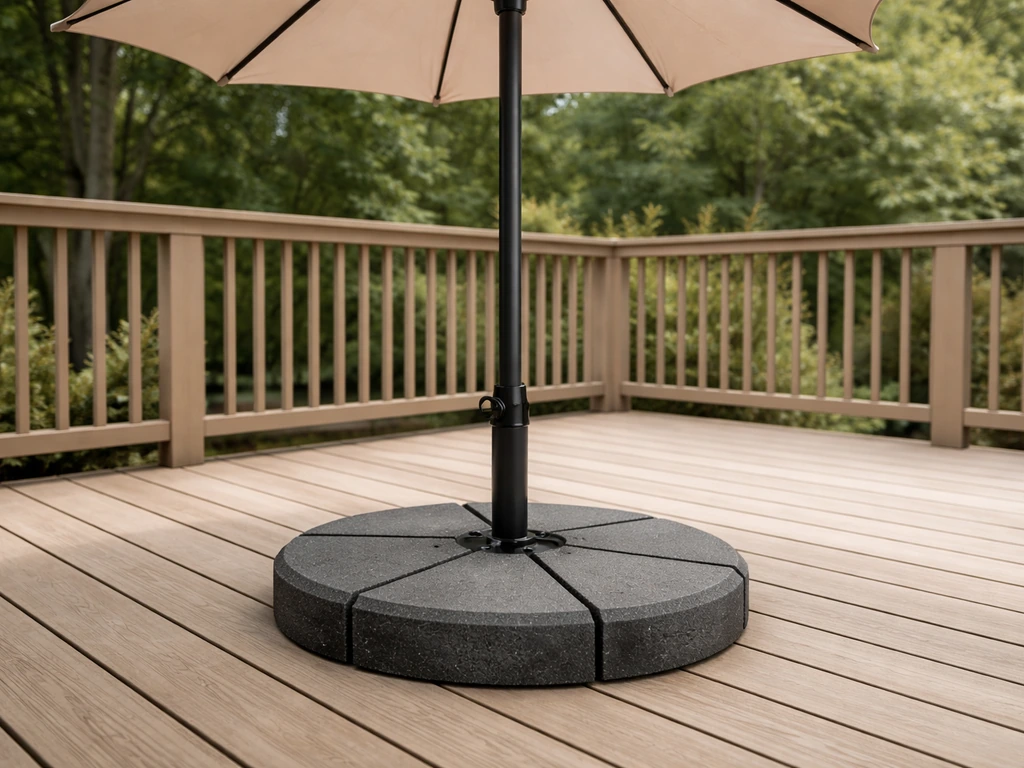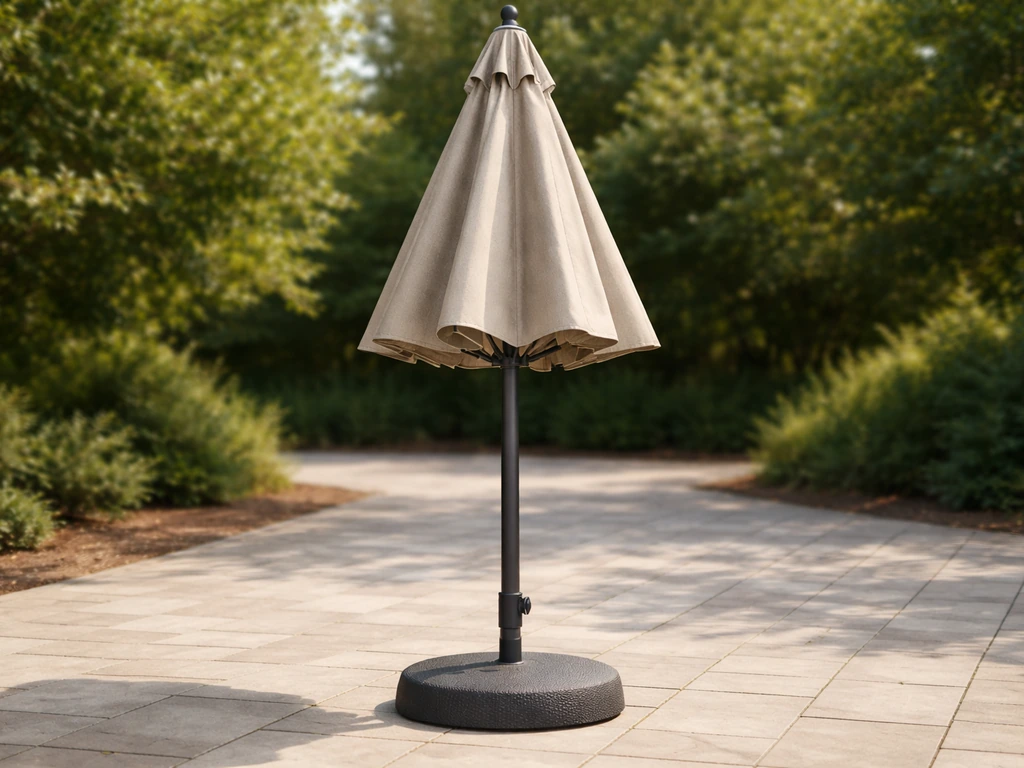
For most 9-foot center-pole market umbrellas, you need a base weighing at least 50 to 90 pounds. For a 9- to 11-foot cantilever or offset umbrella, plan on 150 to 220 pounds of ballast, or bolt the base to a concrete pad. Those numbers come from manufacturer specs and basic wind-load physics, not guesswork, and they shift up fast if your yard is exposed, elevated, or regularly hit by gusts above 20 mph. This guide walks you through the exact weight guidelines, explains what separates a truly heavy-duty base from a lightweight stand, and helps you match the right base type to your umbrella style and site conditions.
Best Heavy Duty Patio Umbrella Base: Weight, Types & Picks

Kent Lang
9 Aug 2026
Who this guide is for
If you have ever watched a patio umbrella cartwheel across your yard in a summer storm, this guide is for you. It is written for homeowners and renters who want a base that actually holds, not one that works fine on a calm day and fails the moment a 25 mph gust rolls through. Whether you are setting up a basic market umbrella over a bistro table, trying to anchor a 10-foot cantilever umbrella over a sectional sofa, or working with a deck where drilling is off-limits, the sections below give you numeric weight targets, base-type trade-offs, step-by-step installation notes, and a buying checklist you can use the day you shop.
What "heavy-duty" actually means for a patio umbrella base
A base earns the label "heavy-duty" when it can resist the overturning moment created by wind acting on the canopy. That moment is the product of lateral wind force multiplied by the height from the ground to the canopy centroid. A 9-foot circular canopy has a projected area of roughly 63.6 square feet. At a 30 mph gust, with a conservative drag coefficient of 1.2, the lateral force on that canopy reaches approximately 355 pounds-force. Applied at 6 to 8 feet above the base, that force generates an overturning moment of roughly 2,100 to 2,800 foot-pounds. A heavy-duty base resists that moment through mass, geometry, or mechanical anchoring, and it does so consistently, not just at the time of purchase.
Beyond raw weight, a genuinely heavy-duty base should be made from material that does not degrade with UV exposure, freeze-thaw cycles, or pooling water. It needs a pole collar sized and clamped tightly to your umbrella pole diameter (typically 1.5 to 2.375 inches for residential umbrellas), and hardware that resists rust. Thin-walled plastic fillable bases, wobbly single-ring weighted stands, and hollow decorative pedestals may list impressive weight ratings on the box, but they often fail at the seams, crack under sustained UV exposure, or flex enough at the collar to let the pole wobble even when the base is technically heavy enough.
How heavy should a patio umbrella base be
The most widely cited industry rule of thumb is blank" rel="noopener noreferrer">10 pounds of base weight per foot of canopy diameter as a starting minimum for freestanding center-pole umbrellas. So a 9-foot umbrella needs at least 90 pounds. That rule is a floor, not a ceiling, and manufacturers frequently list higher minimums in their manuals. Treasure Garden, for example, specifies a 50-pound minimum for many of their 9-foot market models in protected locations, but they note that exposed or coastal sites require more. Home Depot product listings for 7.5- to 9-foot umbrellas commonly show base recommendations of 65 to 90 pounds, rising to 90 to 110 pounds for 10- to 12-foot models. For cantilever umbrellas, the physics change because the canopy overhangs the base on an arm, creating an additional lever effect. Industry and manufacturer guidance puts the minimum at 150 to 220 pounds for 9- to 11-foot residential cantilevers, and 200 to 400 pounds (or a permanent anchor) for large or commercial-scale offset designs.
Wind exposure is the variable that pushes you toward the top of any weight range. NOAA's Beaufort-based thresholds are a practical guide: below 10 mph, almost any adequately weighted base is fine; at 10 to 20 mph (a moderate breeze), you want to be at or above the manufacturer's listed minimum; at 20 to 35 mph, bump up one tier and close the canopy if gusts persist; above 35 mph, the umbrella should be closed regardless of base weight. If you live in a coastal area, on an elevated deck, or in an open lot with no windbreak, treat your location as one exposure tier higher than your local average wind speed suggests.
Quick reference: compatibility and weight chart
| Umbrella Type | Canopy Size | Min. Base Weight (protected) | Min. Base Weight (exposed/windy) | Recommended Base Type |
|---|---|---|---|---|
| Center-pole / market | 6 ft | 35–45 lb | 50–60 lb | Cast iron, fillable, or concrete |
| Center-pole / market | 7.5 ft | 50–65 lb | 65–80 lb | Cast iron, fillable, or concrete |
| Center-pole / market | 9 ft | 65–90 lb | 90–110 lb | Cast iron plate, concrete, or heavy fillable |
| Center-pole / market | 11 ft | 90–110 lb | 110–150 lb | Concrete, bolt-down, or in-ground sleeve |
| Cantilever / offset | 9 ft | 150–175 lb | 175–220 lb | Fillable (sand+water), bolt-down, or stacked plates |
| Cantilever / offset | 10–11 ft | 175–220 lb | 220–300 lb | Bolt-down to concrete pad or heavy fillable + anchor |
| Cantilever / offset | 13 ft+ | 250–350 lb | 350–400 lb+ or permanent anchor | In-ground sleeve or bolt-down to concrete |
| Free-standing (no table) | 9 ft | 75–100 lb | 100–130 lb | Cast iron cross base or in-ground sleeve |
| Free-standing (no table) | 11 ft | 100–130 lb | 130–175 lb | Concrete base or bolt-down |
These figures align with manufacturer manuals and the 10-lb-per-foot industry baseline, adjusted upward for cantilever physics and exposure conditions. Always check the specific weight recommendation printed in your umbrella's manual first, since canopy shape, ventilation, and arm length vary by model and can shift the required ballast significantly.
Matching the base to your umbrella type
Center-pole and market umbrellas
Center-pole umbrellas are the most forgiving to base. The pole sits directly over the base's center of mass, so the torque is symmetric and relatively easy to resist with a heavy, stable platform. Almost every base style works here: cast iron cross bases, round concrete pads, fillable plastic rings, and in-ground sleeves all function well as long as the weight target for your canopy size is met. The main compatibility check is pole diameter. Most residential market umbrella poles are 1.5 inches or 1.75 inches in diameter; commercial-grade poles can reach 2 inches or 2.375 inches. A base collar that is too loose will let the pole rock even if the base itself is heavy enough, so confirm that the base's listed pole diameter matches your umbrella before buying.
Cantilever and offset umbrellas
Cantilever umbrellas extend their canopy on a horizontal or angled arm that projects out from the base mast, placing the canopy anywhere from 3 to 6 feet away from the base's vertical axis. That horizontal offset creates a torque arm that multiplies the overturning effect of wind drag dramatically compared to a center-pole setup. This is why the weight requirements jump to 150 to 220 pounds for a residential 9- to 11-foot cantilever. Dedicated cantilever bases are specifically engineered with this leverage in mind: they are typically wide, low-slung, and either fillable or designed to accept add-on weight plates. Using a generic center-pole base with a cantilever umbrella is a mismatch that can result in the whole assembly tipping even in a light-to-moderate breeze.
Free-standing umbrellas
Free-standing umbrellas (those not paired with a table that provides supplemental ballast) need more base weight than table-paired setups because the table itself normally adds 20 to 50 pounds of mass and helps distribute the wind load. Without that assist, the base carries the full stabilization job. For a 9-foot free-standing canopy in an exposed location, budget for 100 to 130 pounds of base weight. An in-ground sleeve anchored in concrete is often the cleanest solution here since it is effectively permanent and eliminates the portability problem entirely.
Base types: pros, cons, and the honest trade-offs
Cast-iron plate bases
Cast iron has a density of roughly 450 pounds per cubic foot, about three times denser than normal concrete. That means a cast-iron plate base can deliver serious ballast in a small footprint, which is why compact cross-shaped or disc-shaped cast-iron bases can weigh 50 to 100 pounds while taking up very little deck space. They are durable, UV-proof, and do not crack. The downsides are cost (cast iron is expensive to produce), rust potential if the finish chips and goes untreated, and the fact that they are permanently heavy to move. If you ever need to relocate the umbrella, you are lifting a 75-pound disc, not rolling a wheeled cart.
Concrete bases
Concrete bases trade compactness for affordability. Normal aggregate concrete comes in at around 150 pounds per cubic foot, so a concrete base needs a larger volume than cast iron to hit the same weight. You will often see large round or square concrete slab bases for market umbrellas, and precast concrete blocks used to ballast cantilever setups. The advantages are low cost, zero rust risk, and near-permanent durability. The disadvantages are bulk, weight distribution over decking (a 100-pound concrete block concentrates load in a small area and can stress deck boards), and the fact that they are not easy to move without a dolly.
Fillable bases (water and sand)
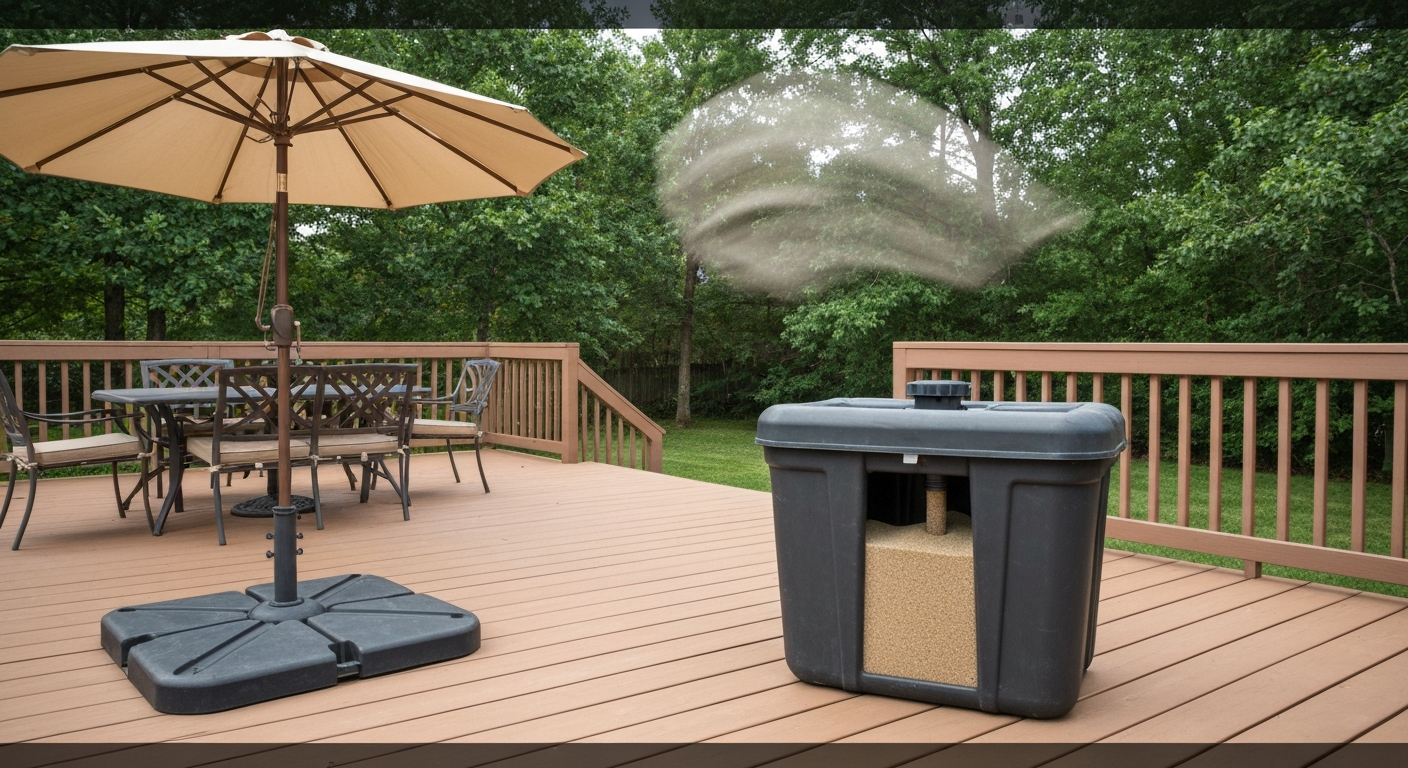
Fillable hollow bases are the most popular category for cantilever umbrellas because they ship light and can be filled on-site to reach the required 150 to 220+ pound target. The critical detail that many buyers miss: fill with sand first, then top off with water. Sand has a density of roughly 100 to 120 pounds per cubic foot (about 12 to 16 pounds per gallon), which is considerably denser than water at 8.34 pounds per gallon. Brands like PURPLE LEAF explicitly instruct this sand-first, water-second procedure in their manuals to help buyers reach the advertised final ballast weight. See the PURPLE LEAF PL209BD instruction manual (fillable base procedures & warnings) for sand‑then‑water filling guidance and warnings about seam leaks, UV and freeze‑thaw cracking, and the recommendation to use sand or sand+water ballast and to drain before freezing conditions. A 20- to 25-gallon fillable base filled with water alone will weigh roughly 167 to 209 pounds less than the same base filled with sand and water, depending on sand packing. Failure modes to watch for: plug seam leaks, UV cracking of the plastic shell after two to three seasons, and freeze-thaw cracking if you leave water inside during winter. Drain fillable bases before the first hard freeze.
Bolt-down bases
Bolt-down bases use mechanical fasteners anchored into concrete or a structural deck to resist overturning. Done correctly, they are among the most reliable options for high-wind areas because the anchor transfers the overturning load directly into the substrate rather than relying on gravity alone. The trade-offs are obvious: you are making permanent holes, which may require landlord or HOA approval, and the installation has to be done right. ACI and anchor-manufacturer guidance calls for post-installed anchors to follow minimum embedment depths (often at least four times the bolt diameter for cast-in headed bolts) and verified concrete strength. Undersized or improperly embedded bolts can fail at the concrete breakout plane, which is a silent failure mode you will not see until a gust tests it.
In-ground sleeves
An in-ground sleeve is a steel or heavy-duty PVC tube set in a concrete footing below grade. The umbrella pole drops into the sleeve, and the buried concrete resists the overturning moment through passive earth pressure and the mass of the footing. For large or permanent installations, this is the strongest option available. The sleeve is installed once, lasts indefinitely, and the umbrella can be removed entirely for storage or during storms. Downsides: it is a one-location commitment, requires digging and pouring concrete, and is completely off-limits for renters or situations where the surface cannot be disturbed.
Weighted plate stands
Weighted plate stands look like gym weight trees and let you add or remove cast-iron or concrete discs to reach your target weight. They are the most flexible option since you can tune the ballast precisely and remove plates for off-season storage. They tend to have a larger footprint than cast-iron disc bases and can look industrial in a residential setting. The wheel-and-roll design of many weighted stands is a genuine convenience for repositioning. Watch for steel pole collars that wobble at the collar-to-mast connection, especially on budget plate stands, since slop at that joint translates directly into visible wobble in the umbrella.
| Base Type | Weight Range | Best For | Key Advantage | Key Drawback |
|---|---|---|---|---|
| Cast iron plate | 50–100 lb | Center-pole, market | Compact, dense, durable | Expensive, heavy to move, rust risk if finish chips |
| Concrete | 60–150 lb | Center-pole, large free-standing | Low cost, rust-free | Bulky, stress on decking, hard to move |
| Fillable (water/sand) | Up to 200–250 lb when filled | Cantilever, large center-pole | Ships light, tunable weight | UV/freeze cracking, leaks, requires sand+water for full weight |
| Bolt-down | N/A (relies on anchor strength) | High-wind, commercial, permanent | Maximum wind resistance | Permanent holes, permissions needed, must be done correctly |
| In-ground sleeve | N/A (relies on footing mass) | Permanent yard installations | Strongest option, clean look | One location, requires digging/concrete, not renter-friendly |
| Weighted plate stand | Adjustable, typically 50–200 lb | Flexible setups, cantilever | Tunable weight, rollable | Large footprint, collar wobble on budget models |
Installation notes for each base type
Cast-iron and concrete bases
- Choose a level surface. Cast iron and concrete bases do not self-level; a sloped surface will shift the center of gravity and reduce effective ballast.
- Insert the pole collar or sleeve into the base opening and confirm the pole diameter is a snug fit. Loose collars should be shimmed with manufacturer-supplied inserts or replaced.
- Tighten the thumbscrew or collar clamp until the pole is firmly seated. Check that the canopy opens and tilts smoothly without the pole rotating in the base.
- Periodically check for rust on cast-iron surfaces and touch up with rust-inhibiting paint at the first sign of chipping.
Fillable (water and sand) bases
- Place the empty base in its final position before filling. Moving a fully loaded fillable base is awkward and stresses the seams.
- Remove the fill plug and pour dry sand through a funnel until the base is approximately 50% full by volume.
- Top off with water until the base is full or to the manufacturer's fill line. Cap the plug tightly.
- Verify the final weight against the manufacturer's stated filled weight. If there is a significant shortfall, add more sand before topping with water again.
- Insert the umbrella pole, tighten the collar clamp, and test stability by applying gentle lateral pressure to the canopy.
- Before winter, drain the water (leave the sand in place) to prevent freeze-thaw cracking of the plastic shell.
Bolt-down bases
- Verify that the concrete surface (slab, pad, or footing) meets the minimum thickness and compressive strength specified in the base manufacturer's anchoring guide, typically at least 3.5 inches thick and 2,500 psi compressive strength.
- Mark anchor bolt locations using the base plate as a template. Check for embedded utilities or rebar before drilling.
- Drill anchor holes to the manufacturer's specified diameter and embedment depth. Minimum embedment is typically at least four times the bolt diameter for expansion anchors; follow the specific anchor manufacturer's table.
- For epoxy (chemical) anchors, clean the hole with compressed air and a brush, inject epoxy to the specified fill level, and insert the threaded rod. Observe the full cure time before loading (often 24 hours at 70°F, longer in cold conditions).
- Set the base plate over the anchors, add washers and nuts, and torque to the specified value. Do not exceed the specified torque, as over-torquing can fracture the concrete around the anchor.
- Insert the umbrella pole, tighten the collar, and verify there is no lateral play.
In-ground sleeve
- Dig a hole to the sleeve manufacturer's specified depth and diameter (commonly 18 to 24 inches deep and 6 to 8 inches in diameter for residential sleeves).
- Set the sleeve plumb in the hole, bracing it temporarily with wood stakes.
- Mix and pour concrete around the sleeve, filling the hole to grade. Use a level to keep the sleeve perfectly vertical throughout the pour.
- Allow concrete to cure fully before inserting the umbrella pole, typically a minimum of 48 to 72 hours for standard concrete mixes.
- Drop the umbrella pole into the sleeve, secure the locking pin or clamp if provided, and confirm vertical plumb.
Weighted plate stands
- Assemble the stand frame on a flat surface following the manufacturer's instructions before adding plates.
- Load plates symmetrically from the bottom up to keep the center of gravity as low as possible.
- Add plates until the total weight reaches the minimum recommended for your umbrella size and exposure. Confirm total weight by checking the manufacturer's per-plate weight specification.
- Insert the umbrella pole through the mast collar and tighten the locking clamp. Verify there is no wobble at the collar joint.
- Engage the wheel locks, if present, so the stand cannot roll on a sloped deck surface.
Securing a cantilever (offset) umbrella: step by step
Cantilever umbrellas demand extra attention to anchoring because the overturning moment they generate is much larger than a center-pole setup. The horizontal arm offset means even a moderate gust creates a strong rotational force at the base. Here is how to do it properly.
- Read the manual for the specific model's minimum base weight requirement and note whether the manufacturer specifies a bolt-down or fill procedure. Never assume a generic weight guideline covers your model.
- Position the base so the arm extends over the shaded area and the base sits fully on a flat, stable surface. Avoid positioning the arm so wind will blow against the rear face of the canopy with no surrounding obstruction; that is the highest-load orientation.
- If using a fillable base, follow the sand-first procedure described above. Confirm the final filled weight meets the manufacturer's specification, typically 150 to 220 pounds for 9- to 11-foot residential cantilevers.
- If the manufacturer recommends supplemental anchoring, position the base adjacent to a concrete pad or structural post and use the included or specified tie-down hardware. Some cantilever bases include rear straps or chain anchors for exactly this purpose.
- For permanent or high-wind installations, bolt the base to a concrete pad using the bolt-down procedure in the previous section. Use a baseplate adapter if the cantilever base was not originally designed for bolt-down installation.
- After setup, apply light lateral pressure to the canopy arm and observe the base. Any visible rocking or tipping of the base indicates insufficient ballast or an unlevel surface.
- In winds above 20 mph, rotate the cantilever arm to minimize the canopy's projected area facing the wind, or close and lower the canopy. Above 35 mph, close and fully lower the canopy regardless of base weight.
- Inspect the base collar, arm lock, and tilt mechanism at the start of each season for corrosion, loose fasteners, or cracked plastic components.
Decision-making checklist: weighted base, permanent anchor, or paired setup
Before settling on a base type, work through these questions. They will narrow your options quickly and help you avoid buying the wrong product for your situation.
- Can you drill into the surface? If the answer is no (renters, HOA restrictions, wood decks with no structural approval), bolt-down and in-ground sleeve options are off the table. Go with a heavy fillable or cast-iron base.
- Is the umbrella a cantilever or center-pole? Cantilevers need bases engineered for offset loads, specifically fillable cantilever bases, weighted plate stands, or bolt-down plates. Center-pole umbrellas work with almost any base style.
- How exposed is the location? Open yard with no windbreak, elevated deck, or coastal setting? Move up one tier on the weight chart and seriously consider a permanent anchor or supplemental tie-down.
- How often do you need to move the umbrella? Fillable bases and plate stands can be moved (drain first, or use a dolly). Cast-iron and concrete bases require real effort. In-ground sleeves let the umbrella be removed but the sleeve stays put.
- What is your deck surface rated for? Concentrated point loads from heavy bases can damage composite or wood decking. If the base will sit on a deck, check the deck's allowable load per square foot and choose a base with a larger footprint to spread the load.
- Are you in a freeze climate? Fillable bases need to be drained of water (but not sand) before winter. Cast iron and concrete are freeze-stable.
- Is portability more important than stability? If you frequently rearrange the patio, a wheeled plate stand with removable weights gives flexibility. If the umbrella stays in one spot all season, a heavier permanent solution is almost always better.
- Does the canopy have a vent? Vented canopies reduce the effective drag coefficient, which meaningfully lowers the wind force on the base. If your canopy is vented, you can be near the lower end of the weight range for your canopy size.
Product-buying checklist: measurements, materials, and must-have features
Use this before you add anything to your cart. Running through these points takes five minutes and saves a lot of return-shipping headaches.
- Pole diameter: measure your umbrella pole (common residential sizes are 1.5 in, 1.75 in, and 2 in). Confirm the base collar matches, or that adapter inserts are included.
- Target weight: use the weight chart above and your umbrella's manual to establish the minimum. Add 10 to 20 percent for exposed sites.
- Filled vs. empty weight: for fillable bases, verify the advertised weight is the filled weight, not the shipping weight. Some listings bury this detail in the fine print.
- Material: cast iron for compact, dense ballast; concrete for budget-conscious large setups; quality UV-resistant polyethylene for fillable; galvanized or powder-coated steel for hardware and frames.
- Collar clamp mechanism: look for a metal thumbscrew or locking clamp, not a plastic wing nut. Plastic clamps strip out and allow pole movement.
- Base footprint vs. deck clearance: confirm the base fits between table legs if the umbrella is table-mounted, and will not create a trip hazard on a narrow deck.
- Wheel or no wheel: wheeled bases are convenient but add height and sometimes reduce stability on uneven surfaces. Check that wheel locks are included.
- Drain plug accessibility: for fillable bases, confirm the drain plug is accessible and made of durable rubber or threaded metal, not a cheap push-in cap.
- Rust and UV protection: check for powder-coated or galvanized steel components on any metal base, and UV-stabilized plastic on fillable models.
- Warranty: a reputable heavy-duty base should carry at least a one-year warranty; two or more years is a reasonable indicator of manufacturer confidence.
Recommended picks by scenario
Rather than pointing to specific brands (which change models and quality over time), here are the base types and specs that best fit common real-world scenarios. For vetted product recommendations, see our roundup of the best patio umbrella stands to match bases to canopy size and site conditions.
Best overall: heavy cast-iron cross base, 75–100 lb
For a 9-foot center-pole or market umbrella in a typical residential backyard, a 75- to 100-pound cast-iron cross base is the most reliable all-around choice. For more on selecting the right option for your needs, see our guide on what is the best patio umbrella stand for different canopy sizes and site conditions (covers cast-iron, fillable, bolt-down, and in-ground options). For specific product suggestions, see our roundup of the best sturdy patio umbrella for different budgets and exposure conditions. For specific product recommendations that pair reliably with heavy bases, see our guide to the best patio umbrella with weighted base. See our guide to the best heavy-duty patio umbrella for top-rated models and bases that meet the weight targets above. The compact footprint means it fits under most patio tables, the density means it hits the weight target without taking up the whole patio, and there are no fill procedures or seasonal drain steps to remember. Budget $80 to $150 for a quality unit with a metal collar clamp. Avoid cast-iron bases under $40; they tend to use thinner castings that chip at the finish quickly.
Best for cantilever umbrellas: large fillable base, sand+water fill, 175–220 lb
Look for a dedicated cantilever-specific fillable base with a stated filled weight of at least 175 to 220 pounds for a 9- to 11-foot offset umbrella. Confirm the fill procedure calls for sand first, then water (brands that specify this tend to have honest weight ratings). The base should have a wide, low profile rather than a tall, narrow cylinder, since a low center of gravity matters more than total mass alone. Pair with a bolt-down strap or rear tie-down for any location that sees regular wind above 20 mph.
Best budget: fillable plastic round base, 50–75 lb filled, center-pole use
If the umbrella is a 7.5-foot market umbrella in a sheltered courtyard or porch, a fillable round base that reaches 50 to 75 pounds filled (sand and water) is a serviceable and inexpensive solution. Keep expectations realistic: this type works well in protected locations and light-to-moderate wind but is not a high-wind solution. Drain it before winter. Expect to replace the base every three to five seasons as the plastic shell degrades.
Best for high winds: bolt-down plate base or in-ground sleeve
If you are in a coastal area, on an exposed hillside, or dealing with regular gusts above 25 to 30 mph, neither a fillable base nor a cast-iron plate base is a long-term solution for anything larger than a 7.5-foot umbrella. A bolt-down steel plate base anchored to a concrete pad with properly sized expansion or epoxy anchors is the right call for center-pole setups. For a permanent cantilever installation, combine a bolt-down base with stacked concrete or steel ballast plates. An in-ground concrete sleeve is the cleanest permanent option for a single fixed location.
Best fillable for portability: wheeled weighted plate stand, adjustable to 150–200 lb
If you move the umbrella frequently and need a solution that is easy to roll but can reach 150 to 200 pounds, a wheeled plate stand with removable cast-iron or concrete discs is the most practical choice. Load the minimum required weight for your umbrella size, engage the wheel locks when set in place, and add or remove plates as needed across seasons. The trade-off is footprint and a slightly industrial look, but the functional flexibility is real.
Troubleshooting stability problems and common failures
The umbrella wobbles even though the base is heavy enough
Wobble despite adequate base weight almost always traces back to the pole collar. If the collar opening is too large for the pole diameter, the pole has physical slop at the joint that no amount of base weight will eliminate. Check whether the manufacturer supplied reducing inserts or shims. If not, wrap the pole with self-amalgamating tape or a rubber shim just below the collar to tighten the fit. Also check that the collar clamp thumbscrew or bolt is actually tightened and not just finger-tight.
The base tips under moderate wind even though it is the right weight
Check whether the surface under the base is level. A surface that slopes even a few degrees shifts the base's effective center of gravity toward the low side. For fillable bases, confirm you used sand before water and that the base is actually filled to the rated weight. Manufacturers occasionally overstate the weight of a water-only fill, so a water-only fillable base may deliver significantly less ballast than the rated capacity.
Fillable base is leaking
Leaks most commonly occur at the fill plug or at the seam between molded sections. For plug leaks, remove the plug, clean and dry the threads, and re-seal with plumber's thread tape or a rubber gasket. For seam cracks, drain the base immediately. Hairline cracks in aged UV-exposed plastic rarely seal permanently with standard adhesives; a cracked base typically needs to be replaced. This is a good reason to drain fillable bases at the end of each season rather than leaving them pressurized over winter.
Bolt-down anchor is pulling loose
A bolt-down anchor that is working loose suggests the anchor was undersized, under-embedded, or the concrete is weaker than assumed. Stop using the umbrella in wind until the anchor is re-evaluated. Do not simply re-tighten the nut; have the anchor assessed for concrete breakout failure, especially if the concrete shows cracking around the bolt. Replacing with a chemical (epoxy) anchor of the correct diameter and embedment depth per the anchor manufacturer's load table is usually the right fix.
Safety reminders and permissions to sort out before you install
Drilling into a wood deck to bolt down a base plate is not a decision to make lightly. Decks are structural assemblies, and introducing fastener holes into the surface or rim joists without verifying the deck's design load can compromise the structure. Before bolt-down installation on a wood deck, check with a contractor or structural engineer to confirm the fastener locations and load path are appropriate. Many deck builders can spot-check this in under an hour.
Renters should check their lease before making any permanent modifications. Drilling into a landlord's concrete patio, deck, or balcony floor without permission can result in lease violations and damage deposit deductions. In most cases, a heavy fillable base or a weighted plate stand is the renter-friendly solution that does not require any modification to the property.
HOA communities often have specific rules about permanent outdoor structures, including anchored umbrella bases. Some treat a bolted umbrella base as a permanent structure requiring architectural review. Check your CC&Rs and submit for approval if required before drilling anything. An unapproved installation is a real risk, especially in communities that conduct regular inspections.
- Close and lower the canopy in any wind above 25 to 30 mph, regardless of base weight. No base is a substitute for responsible operation.
- Inspect base hardware, collar clamps, and anchor bolts at the start of each season and after any significant storm.
- Do not leave a fully open canopy unattended overnight in areas prone to wind events.
- Store or cover cantilever umbrella bases in winter climates even when the umbrella itself is removed, since ice forming in a water-filled base will crack the plastic shell.
- Always call 811 (in the US) before digging for an in-ground sleeve to locate underground utilities.
Your next steps
Start with the weight chart and your umbrella's manual to establish the minimum base weight for your canopy size and exposure. For a quick, actionable summary of exact ballast targets by umbrella type and exposure, see our short guide to the best weight for patio umbrella stand. For a quick, practical summary of typical ballast targets by umbrella type and exposure, see how heavy should a patio umbrella base be. Then run through the decision-making checklist to determine whether a weighted base, permanent anchor, or paired setup makes sense for your property and lifestyle. If you are still deciding between umbrella types, the considerations around base weight differ meaningfully between a standard market umbrella and a cantilever or free-standing model, and it is worth understanding those differences before committing to a canopy style. If you already have an umbrella and are only replacing the base, the pole diameter check and weight confirmation are the two things to nail before buying. Get those right and the rest is mostly about budget and how often you want to move the setup around.
FAQ
What does “heavy‑duty” mean for a patio umbrella base?
Heavy‑duty means the base or anchoring system provides sufficient mass, footprint, and/or fixed anchorage to resist overturning and sliding under expected wind loads for the umbrella size and local exposure. Practically this implies: (a) a numeric ballast or anchor capacity sized to resist the wind force/overturning moment for the canopy, (b) construction materials and detailing (cast iron, thick concrete, steel bolt‑down sleeve, or properly filled/maintained fillable base) that retain mass and connection over time, and (c) corrosion/UV/freeze resistance appropriate to the climate. Designs are judged by their ability to resist lateral wind forces and moments, not just by appearance.
What numeric base‑weight guidelines should I use by umbrella diameter and wind exposure?
Use these conservative baseline recommendations (weights are ballast in pounds (lb) attached to the umbrella pole or base): - Small umbrellas (6–7.5 ft): 40–70 lb in low exposure (sheltered yard); 70–100+ lb in moderate exposure or breezy patios. - Medium (9 ft): 90–130 lb in low–moderate exposure; 130–200+ lb in exposed sites or where gusts reach 25–35 mph. - Large (11–13 ft) center‑pole: 150–250+ lb depending on exposure; increase toward 250+ lb in open/coastal sites. - Cantilever/offset umbrellas (9–11 ft): 150–220+ lb minimum in moderate exposure; 200–400+ lb or permanent anchoring recommended for very large canopies or high/exposed sites. - Very large commercial cantilevers (>13 ft): bolt‑down to concrete pad or in‑ground sleeve with reinforcement; use engineered anchoring rather than only ballast. These align with common industry “10 lb per foot” starting rule but increase ballast strongly for offset designs and exposed wind conditions.
Is there a simple compatibility/weight chart by umbrella type and size?
Yes — conservative chart (lbs of base weight or equivalent anchoring): - Center‑pole circular canopy: 6' → 40–60 lb; 7.5' → 60–90 lb; 9' → 90–130 lb; 11' → 130–180 lb; 13' → 180–250+ lb. - Cantilever/offset: 9' → 150–220 lb; 11' → 200–300 lb; 13'+ → 300–400+ lb or permanent anchorage. - Freestanding (integrated stand): follow manufacturer but treat like center‑pole size class and add 25–50% in exposed settings. - Bolt‑down / in‑ground sleeve: rated to resist uplift/overturning per anchor manufacturer; suitable for any size when installed to an engineered spec (preferred for very large/cantilever). Use higher value in exposed/coastal locations.
How do wind forces translate into required ballast or anchors (evidence‑based approach)?
Compute lateral wind force using F = 0.5 · ρ · Cd · A · V^2. Convert canopy diameter D to projected area A (A = π·(D/2)^2). Use ρ ≈ 1.225 kg/m^3 and a conservative Cd ≈ 1.0–1.4 for unvented domed canopies. Multiply the lateral force F by the canopy height (or centroid height) to get overturning moment M = F · h. The resisting moment from a base equals base weight W times its centroidal lever arm (horizontal distance to overturn pivot) plus any bolt/anchor capacity. Choose W (or anchor embedment/spacing) so resisting moment ≥ expected gust moment with an appropriate safety factor (often 1.5–2). This is why a 9' umbrella in a 30 mph gust can produce several hundred lbf lateral force and require tens to hundreds of pounds of ballast.
How should renters vs homeowners think about permanent anchors versus heavy ballast?
Renters: prioritize removable solutions — heavy fillable bases (sand+water), stacked plate weights, or bolt‑to‑deck anchors using non‑penetrating clamp systems only if allowed. Ensure fillable bases are drained before freeze to avoid damage. Homeowners: consider permanent solutions where allowed — bolt‑down base to concrete pad, in‑ground sleeve with reinforced concrete, or poured footing sized per anchor‑manufacturer/ACI guidance for large/cantilever umbrellas. For very exposed sites or large cantilevers, permanent anchorage is preferred for safety and durability.
What are pros and cons of the main base types (cast‑iron plate, concrete slab, fillable, bolt‑down, in‑ground sleeve, weighted stands)?
Cast‑iron plate: + High density (compact heavy mass), durable, low maintenance; − can rust if untreated, expensive, limited portability. Concrete slab: + inexpensive per mass, durable; − bulky, large footprint, can chip/flake, heavy to move. Fillable (plastic hollow): + portable when empty, lower cost, can reach heavy weights with sand+water; − seam/plugs can leak, UV/freeze vulnerability, water alone gives less weight. Bolt‑down (to concrete pad): + smallest footprint, highest security, best for cantilevers/large umbrellas; − permanent, requires concrete & proper anchors. In‑ground sleeve: + flexible (removable umbrella), very secure when poured per spec; − requires excavation and permanent concrete. Weighted stands/stacked plates: + modular (add plates), good for temporary heavy ballast; − needs enough footprint, may be visually bulky.